A Reflection on Street Photography Beginning with an Image
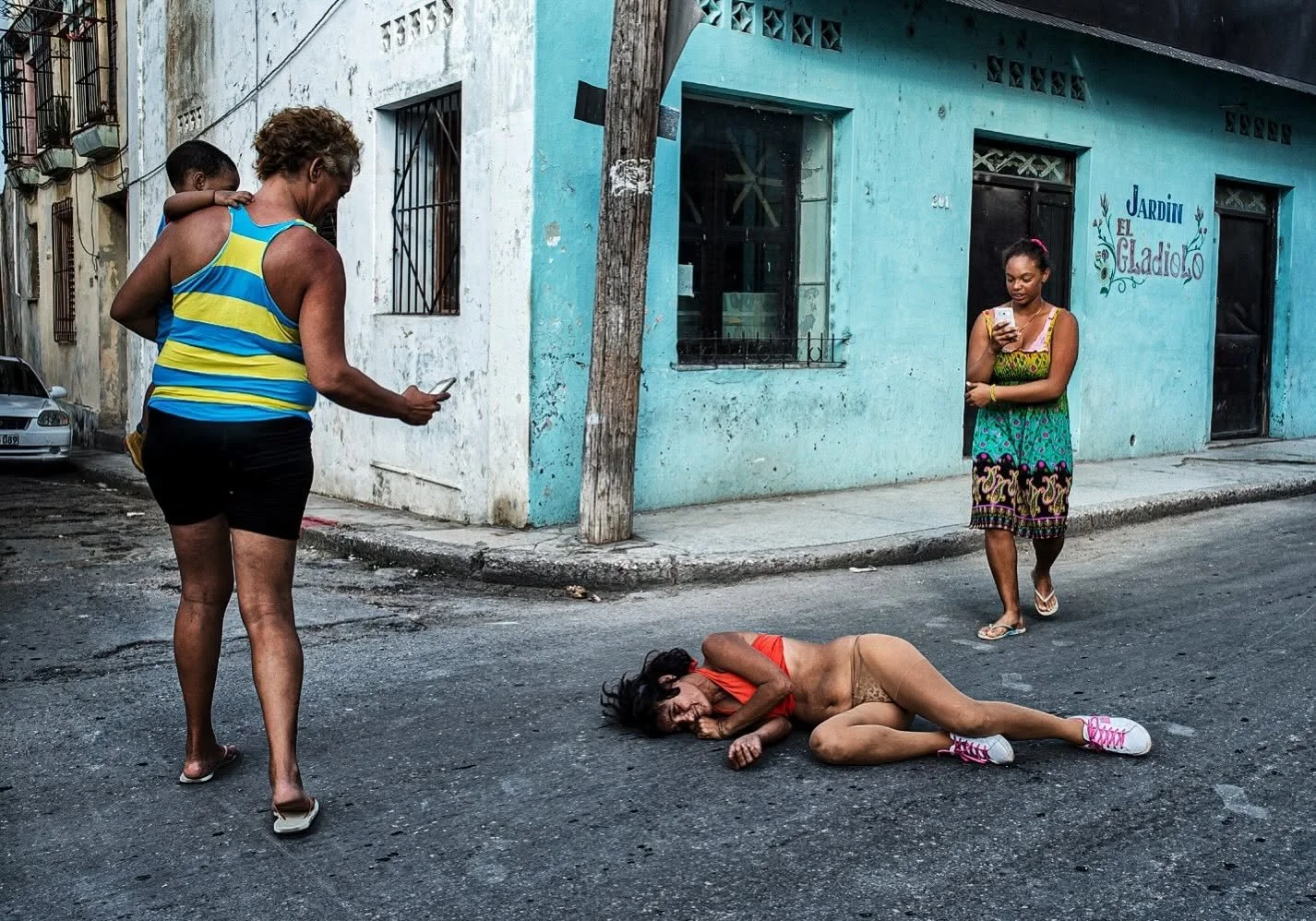
© Margarita Mavromichalis
Margarita Mavromichalis's image immediately brings to mind the ethical issues surrounding street photography. The photographer first asked herself whether or not to publish it. After deciding, she asked her followers what they thought. This immediately shows the image's power. And it confronts us with the familiar question: where are the boundaries of street photography? Broadly speaking, these are the differences between street photography and documentary or journalistic photography.
Street Photography: Capturing Life’s Moments. Street photography is a vibrant exploration of public spaces that captures life’s fleeting moments. It emphasises the "decisive moment," a concept by Henri Cartier-Bresson, highlighting how a single image can reveal striking geometry and poignant irony. Rather than delivering news, it showcases the drama of everyday life. For instance, a photo of a homeless person may focus on the interplay between their shadow and the wall, prompting deeper ethical reflection.
Documentary and Photojournalism: A Professional Lens on Reality. In contrast, documentary and photojournalism serve as essential historical records, informing the public about significant events like wars and protests, always adhering to high ethical standards. Photojournalism captures breaking news with context, while documentary photography often involves immersive storytelling over months or years, striving to raise awareness and inspire social change through in-depth engagement with subjects.
I wonder whether the first photographers described as street photographers really wanted to capture such significant images of historical moments and life on the streets of the great metropolises (where street photography was born) without wanting to show and document the reality they photographed.
Would you say the same of photographers such as Helen Levitt, Ernst Haas, William Eggleston, Fred Herzog, Joel Sternfeld, Joel Meyerowitz, Weegee (Arthur Fellig), Ralph Ellison, Gordon Parks, or Robert Frank? What is the difference between street photography and documentary photography in these images? Is it the intention behind them? I believe that intention lies at the heart of every great photographer’s work. Do we really need street photography that is detached from intention?
When I started taking photographs in the spirit of street photography, I met a photographer on DeviantArt who wanted to give his group a sense of purpose by dividing the photographs into different categories. I did the same when I inherited his Facebook group in 2018, creating several albums to collect the images and build a kind of thematic photographic archive.
All this is to say that today, when AI can do anything, perhaps we should take fewer photographs and give our photographic work a sense of purpose. We are surrounded by beautiful images, but also by mediocre and bad ones. Let’s take fewer photographs and make sense of reality, rather than feeding the unreality we are forced to live in during this techno-digital age.
Returning to Margarita’s image, let’s try to analyse it. A woman lies on the ground, while two other women look at her, their mobile phones in hand. Are they calling for help, or photographing her? And why did Margherita take the picture? Because she is a photographer.
Let’s return to the question: why did Kevin Carter take the picture that brought him the Pulitzer Prize and led to his suicide? Because he was a photographer, and all the cruelty that overwhelmed him, disguised as false ethics, is still just cruelty.
Margarita Mavromichalis is dedicated to capturing people's vibrant spirit, believing they bring a place to life. Each location she moves to offers a new adventure, whether on a trip or in her neighbourhood. She focuses on remarkable individuals and the environments they inhabit, which inspires her most. "I seek to capture the spirit of the people."
After living in several countries, she found an unexpected sense of belonging in New York City. "I experienced for the first time in my life the feeling of being “at home” in NY." Though only one part of America, the city is an extraordinary cultural melting pot where everyone can belong. Its vibrant energy offers a captivating, almost paradise-like backdrop for photography.
Travels to India introduced her to warm, friendly people who enriched her experience, while varying degrees of openness in places like Greece also shaped her journey as a photographer. She’s excited to embrace every moment of this remarkable adventure.
Buy Books, Not Cameras: Margarita Mavromichalis on Street Photography