Unsocial Media
A number of years ago, I found myself in Glasgow city centre doing a spot of street photography. It was a pre-pandemic midweek day, so the city was much busier than it is now. The offices were still heavily occupied, the pavements were crowded, and humanity was simply doing its thing. I had Flickr and Facebook accounts at the time, but I never really got into the habit of posting my work regularly. While out photographing, I met another street photographer who extolled the virtues of Instagram, so I decided to join the club.
His advice was simple: if you want to improve, you need to expose yourself to a wide range of work, and Instagram was the place to find it. To an extent, he was right, but what proved far more valuable was becoming part of a community. Through Instagram I met many excellent local street photographers, several of whom have since become close friends, and for that I remain immensely grateful. It also introduced me to some outstanding work from photographers across the world. From there I discovered dedicated street photography groups on Facebook, some excellent, others less so.
These platforms gave me somewhere to share my photographs, not in search of likes or praise, but simply to put my work out into the world in the same way members of any club or community share what they do. Having been interested in photography since my school days, I wasn't really growing up in public. Instead, I was exploring who I was as a photographer and discovering what I wanted my pictures to say. Social media also opened doors that would almost certainly have remained closed otherwise, leading to magazine interviews, published features and opportunities that I would never have expected.
There is, then, an enormous amount to appreciate about social media. It has brought photographers together, encouraged learning and made inspiration more accessible than ever before. Yet it also has serious downsides, and those downsides seem to become more apparent—and more destructive—as time goes on.
The opportunities that were once available only to a fortunate few are now available to almost everyone, and rightly so. I have little understanding of, or interest in, how social media algorithms work, but without some degree of self-restraint from photographers or more meaningful moderation from the administrators of large online groups, we seem to have reached a point of image saturation. Every day brings another endless stream of photographs competing for attention, and the sheer volume inevitably diminishes the impact of the genuinely memorable work.
Realistically, how many truly outstanding photographs do any of us make in a year? I'm talking about the images you return to time and again and think, yes, that's one I'd happily include in a legacy portfolio; one that represents my life's work after I'm gone. Five, if you're lucky. Probably fewer.
So far this year I've identified just one. That is from a little over eleven hundred photographs submitted to the news agency. Granted, I'm talking about photojournalism rather than street photography, but the principle remains the same. Those eleven hundred images were all pictures I was happy—indeed proud—to have my name attached to, and well over one hundred have gone on to be published in newspapers and media outlets around the world. Yet only one of them, by my own standards, feels genuinely exceptional.
Those images have already passed through a demanding selection process. News wire photography is unforgiving: no unnecessary duplication, no near-identical frames and only the strongest photographs that best tell the story in as few images as possible. If I were to apply that same level of scrutiny to my old street photography archive, I suspect the ratio would be even more severe.
None of this is intended to dismiss the value of the everyday work, nor the opinions of the editors, judges and publishers who have chosen to use or recognise my photographs. Quite the opposite. But I do think that, if we are genuinely honest with ourselves and willing to be ruthlessly self-critical, most photographers eventually reach a similar conclusion. Truly exceptional photographs are rare. That's precisely what makes them exceptional.
This year I've deliberately scaled back my use of social media. There are several reasons for that. One is an increasing awareness that much of the subject matter I now photograph provides ammunition for the keyboard warriors who use comment sections to ridicule, abuse or dehumanise the people in my pictures. One thing that really pisses me off is seeing my photographs - or those of friends - used simply as vehicles for people to argue about the issues being documented, whether that is immigration, anti-racism, pro-Palestine demonstrations or any number of other seemingly contentious subjects.
My other concern is the unnecessary contribution we all make to the ever-growing volume of digital noise and everything that accompanies it. Every image uploaded has to be stored somewhere, and collectively that means an increasing reliance on vast data centres consuming land, resources and energy. It's easy to forget that our digital lives still have a physical footprint.
Perhaps it is worth asking ourselves why we are sharing a particular photograph. Is it because it genuinely says something worth saying, or simply because we can? If we all raised the threshold of what we considered worthy of sharing, the experience of social media might improve for everyone. After all, it isn't just our personal gallery; it's a community space that we all occupy together.
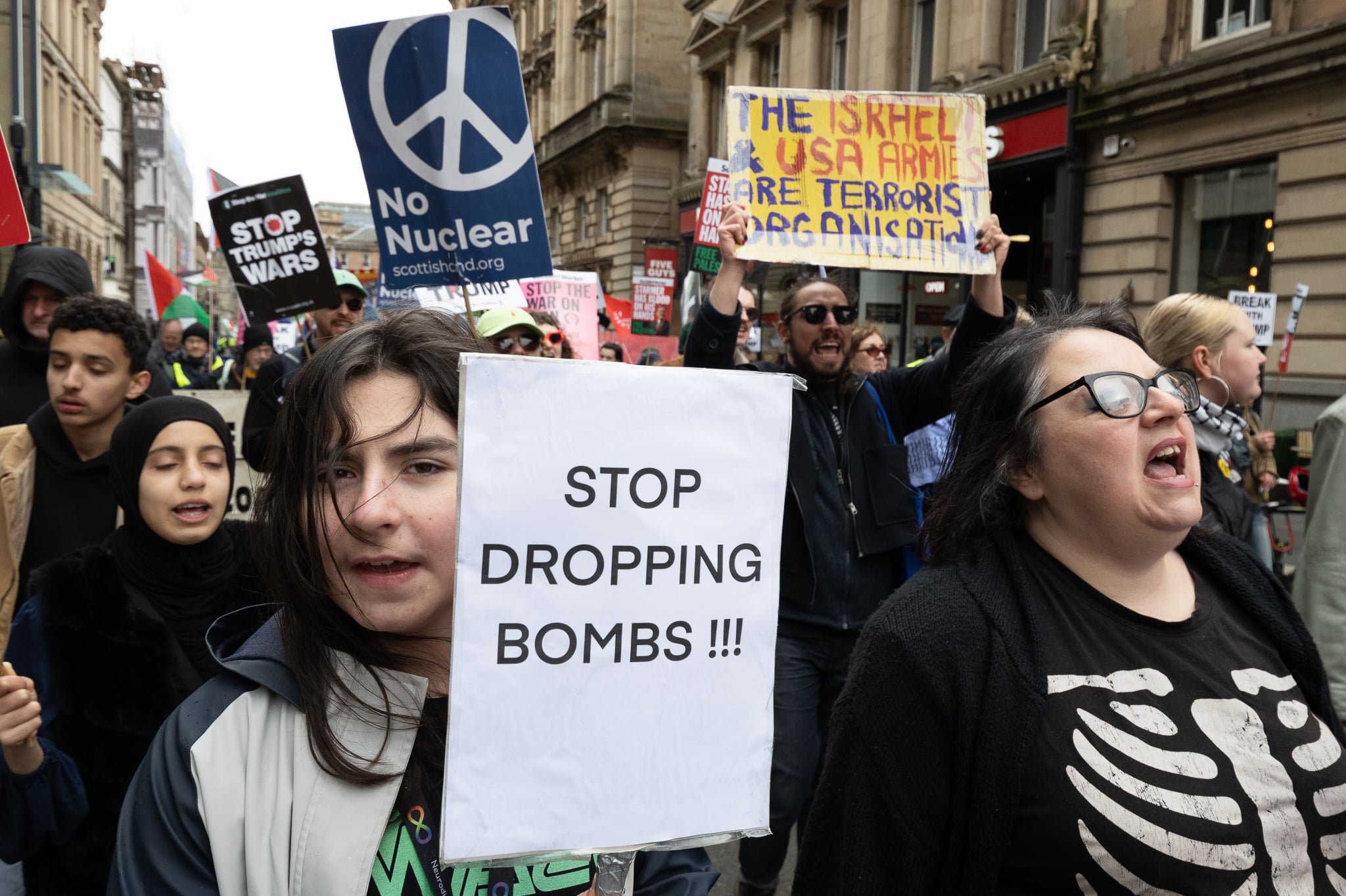
This is the picture. It's a simple plea from a younger generation. Our generation are destroying their future, and so much of that destruction involves the arms industry.