Recording the life at hand through photography
Hyperscale Data Centre Protests
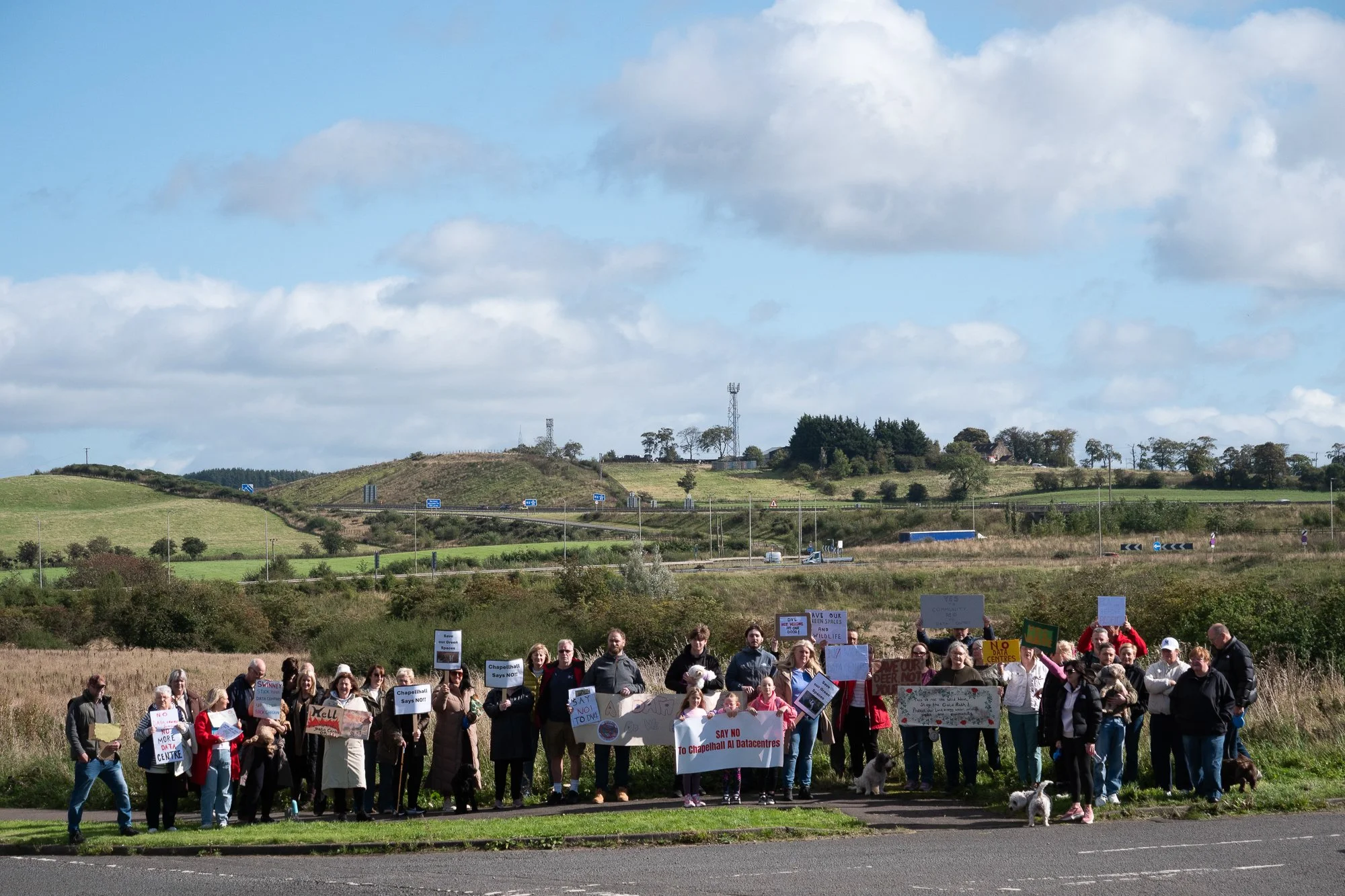
This week, a planning application was validated for a 1GigaWatt (GW) hyperscale data centre development at Chapelcross, near Annan in the south-west of Scotland. It is just one of around 28 proposed sites for similar developments across Scotland, all of which are being hotly contested by local campaign groups. If approved, Chapelcross would be the largest hyperscale development in the world. If all of the proposed developments go ahead, their combined energy demand would be somewhere around 9GW. Scotland’s current peak winter electricity demand is around 4GW.
All of these developments are usually measured in megawatts (MW) – an indication of their power requirements and, consequently, their scale. For some commentators, it is also an indication of their potential impact on the environment and the communities nearby. For clarity, the 1GW definition used above is 1000MW.
I’m no stranger to conventional data centres. During my working life as a senior IT network engineer, I regularly worked with corporate data centres both here in Scotland and around the world, mostly using remote access mechanisms. However, measuring the scale of these developments in terms of power requirements rather than bandwidth was new to me.
I was surprised, and not a little shocked, to find that the commercial facilities I was familiar with had power requirements measured in low single figures, typically 1 or 2MW. These facilities seemed massive to me, so I have some difficulty visualising what a facility measured in hundreds of megawatts would look like.
Granted, we are not comparing like with like. These new developments are designed for AI computational processing rather than traditional client-server models. Nevertheless, it has given me some appreciation of the remarkable understanding that campaign groups have developed in a matter of months. Ordinary people who are opposed to these developments have become experts in navigating complex planning systems, simply to raise objections and help others to do the same. They have also had to develop an understanding of the highly complex proposals themselves, all of which takes considerable time and effort.
Some of the planned developments have a physical footprint greater than that of the nearby communities, with green-belt land and historically significant structures potentially being lost in the process.
At the forefront of the campaign is a small charity, Action to Protect Rural Scotland (APRS). APRS recently held a workshop in Glasgow to help local campaigners and continues to provide assistance with everything required to enable local campaign groups to operate effectively.
APRS and the Scottish Greens have been at the forefront of recent calls for a moratorium on planning applications, arguing that local councils lack a unified national framework for evaluating these massive developments. The Scottish Government noted that a blanket moratorium might face legal hurdles, choosing instead to pursue what amounts to an effective pause through delayed decision-making and forthcoming guidance. At present, no planning decisions are expected before the end of the year, with appropriate guidance expected to follow.
There are also calls for the Scottish Government to define what constitutes a ‘green’ hyperscale data centre. Given the dwindling natural resources required for today’s processors and memory chips, and the colonial-style land acquisitions that this can drive – think Greenland – I very much look forward to that definition, although I strongly suspect it will only bring more despair.
Of course, this is not a uniquely Scottish problem. Community opposition in England, the USA and elsewhere is already well documented, and there is now a planned Europe-wide day of action on 14 November.
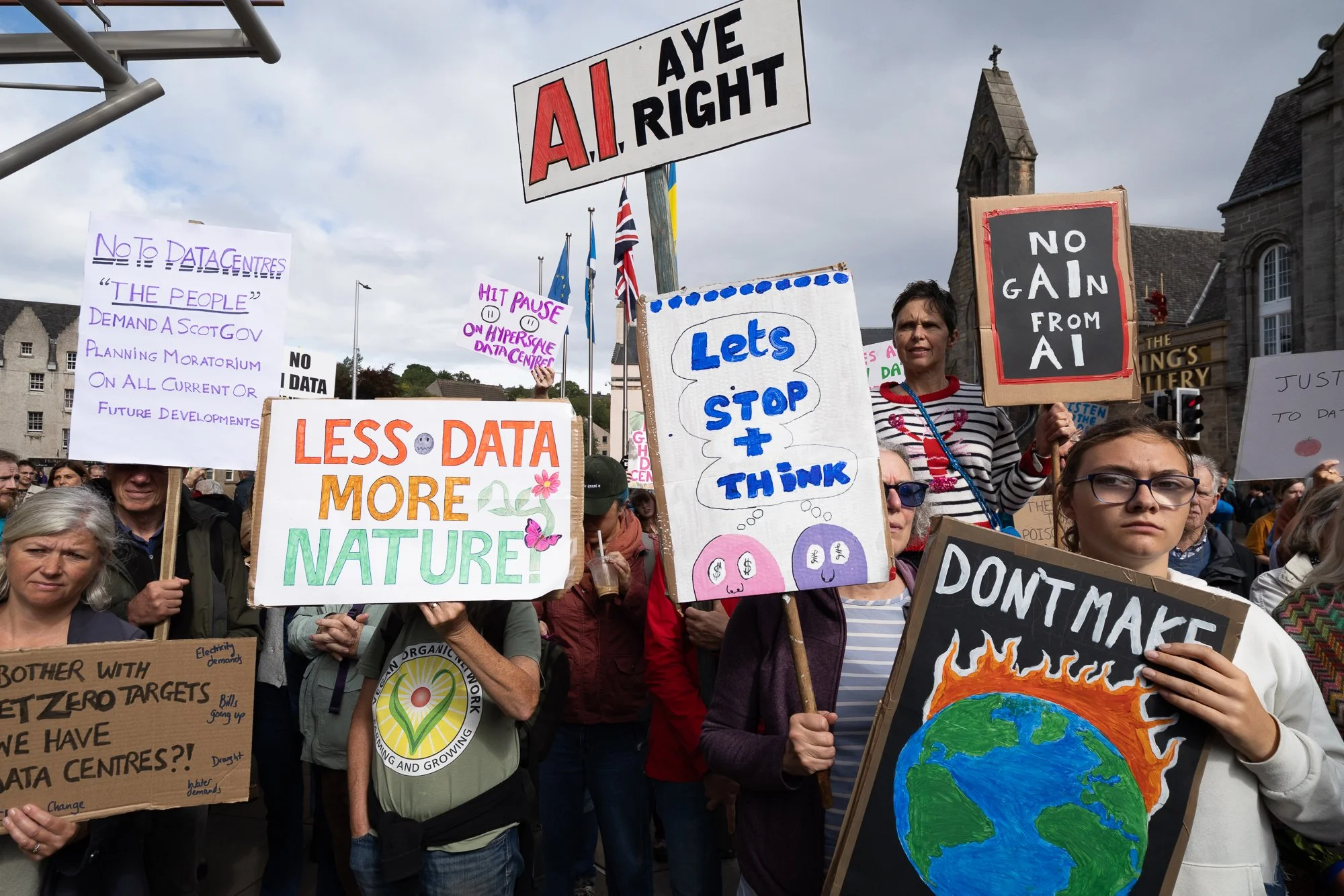
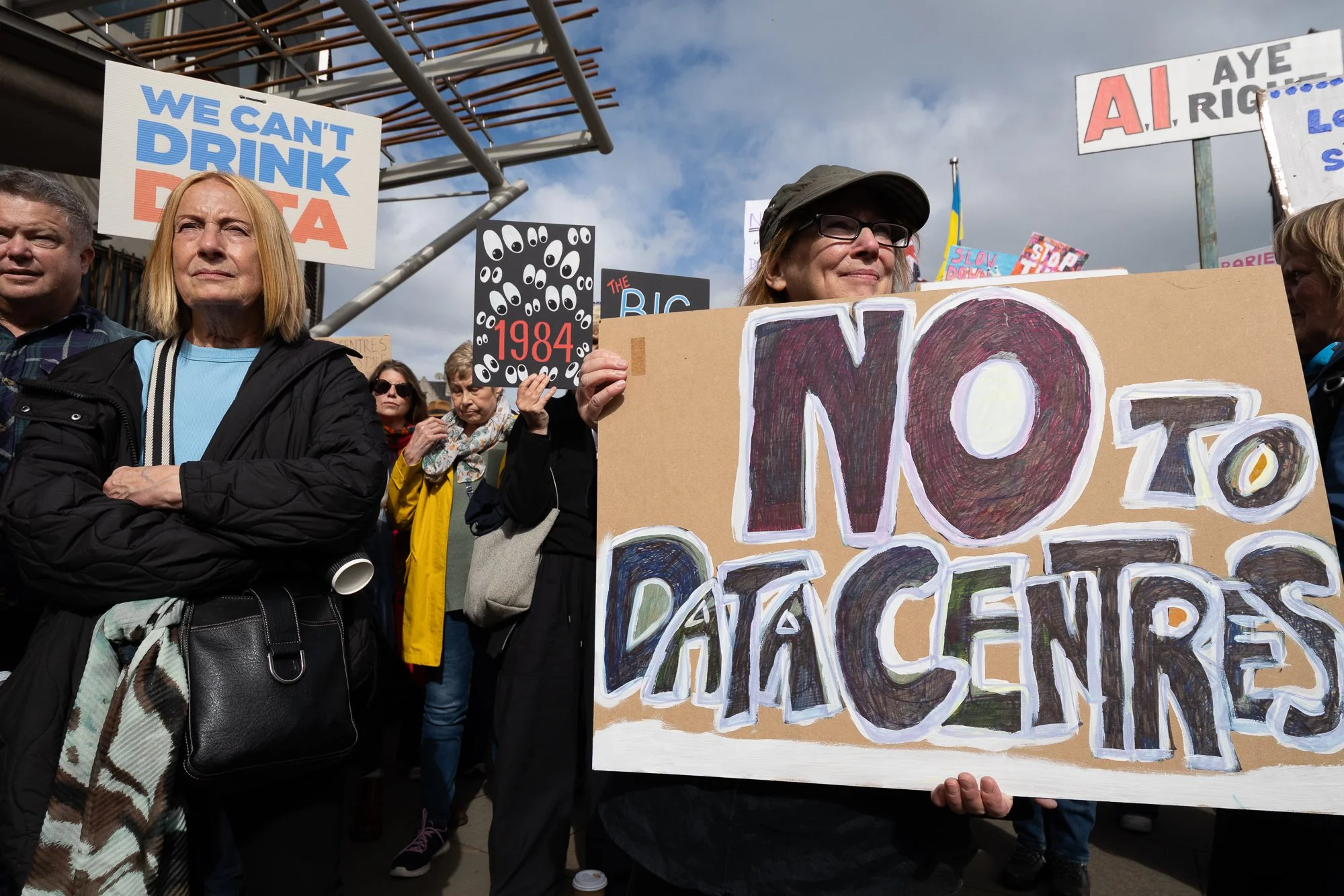
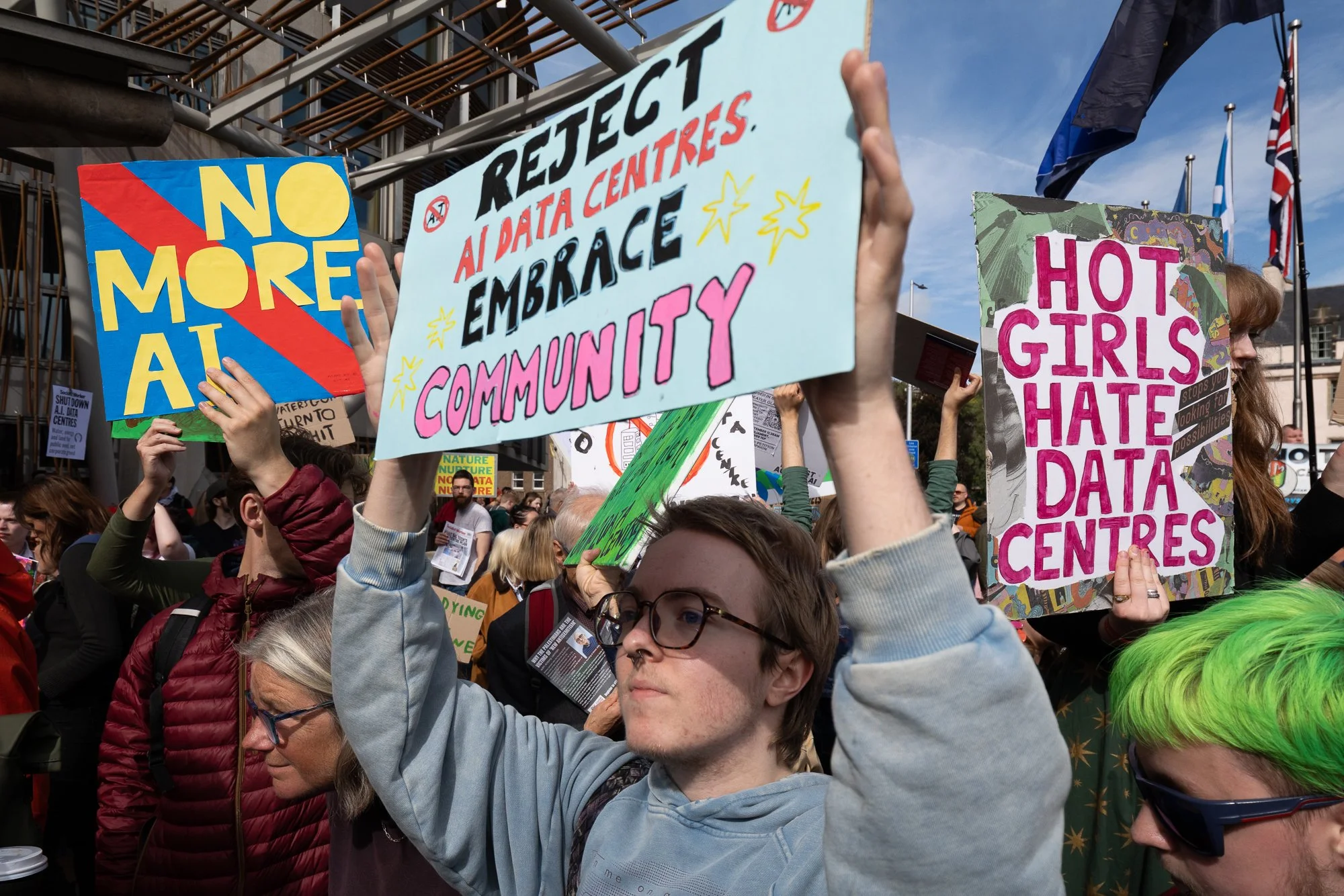
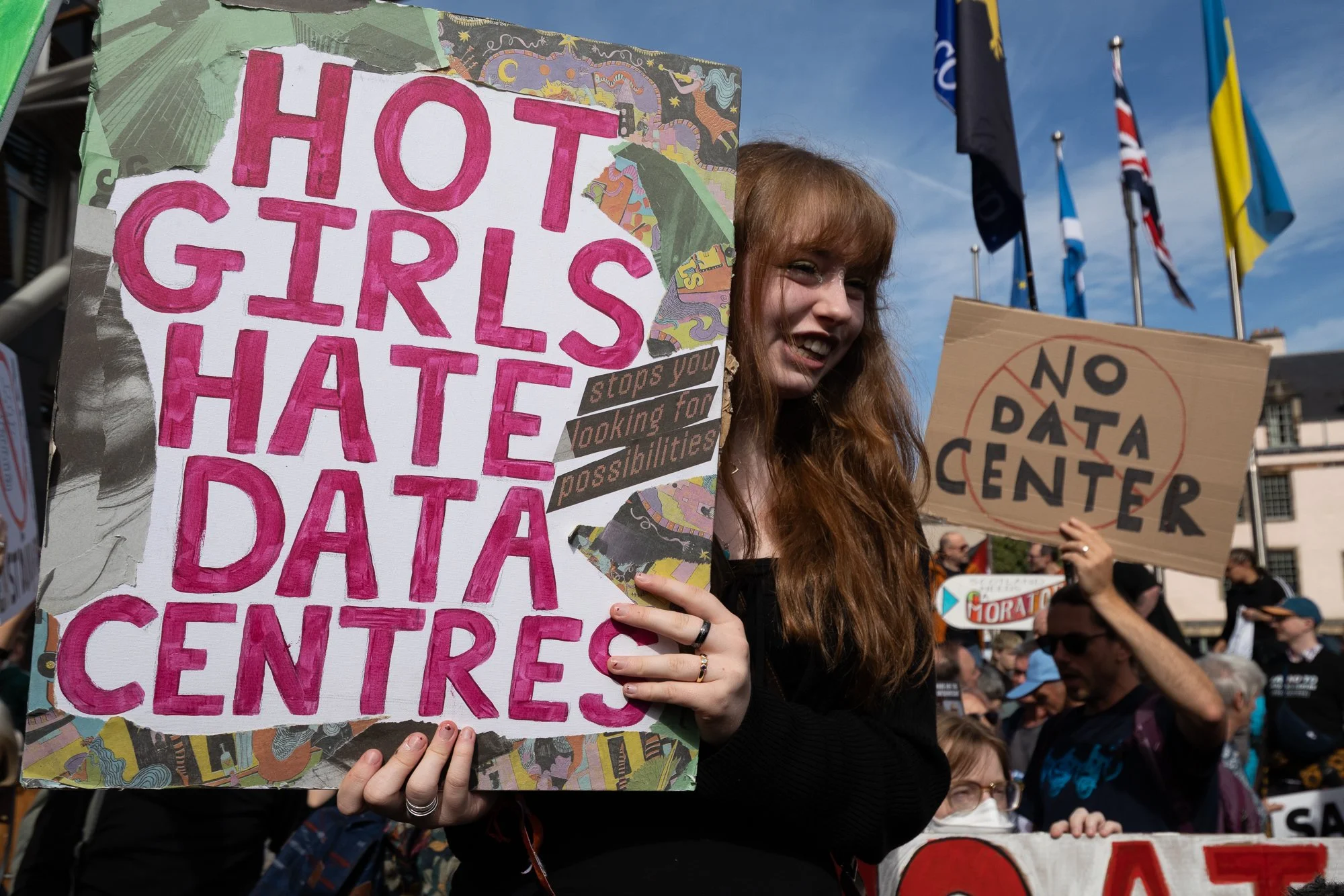
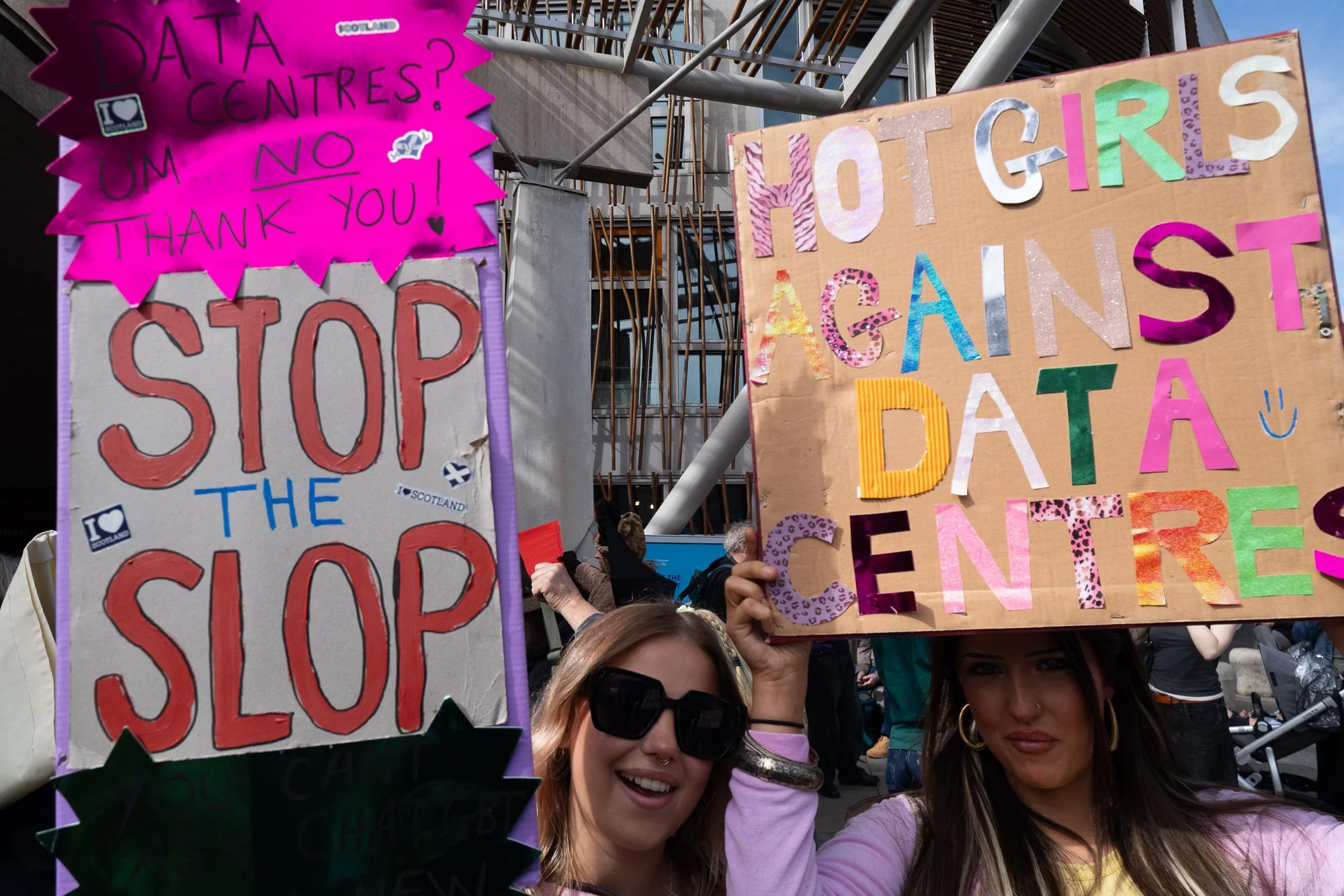
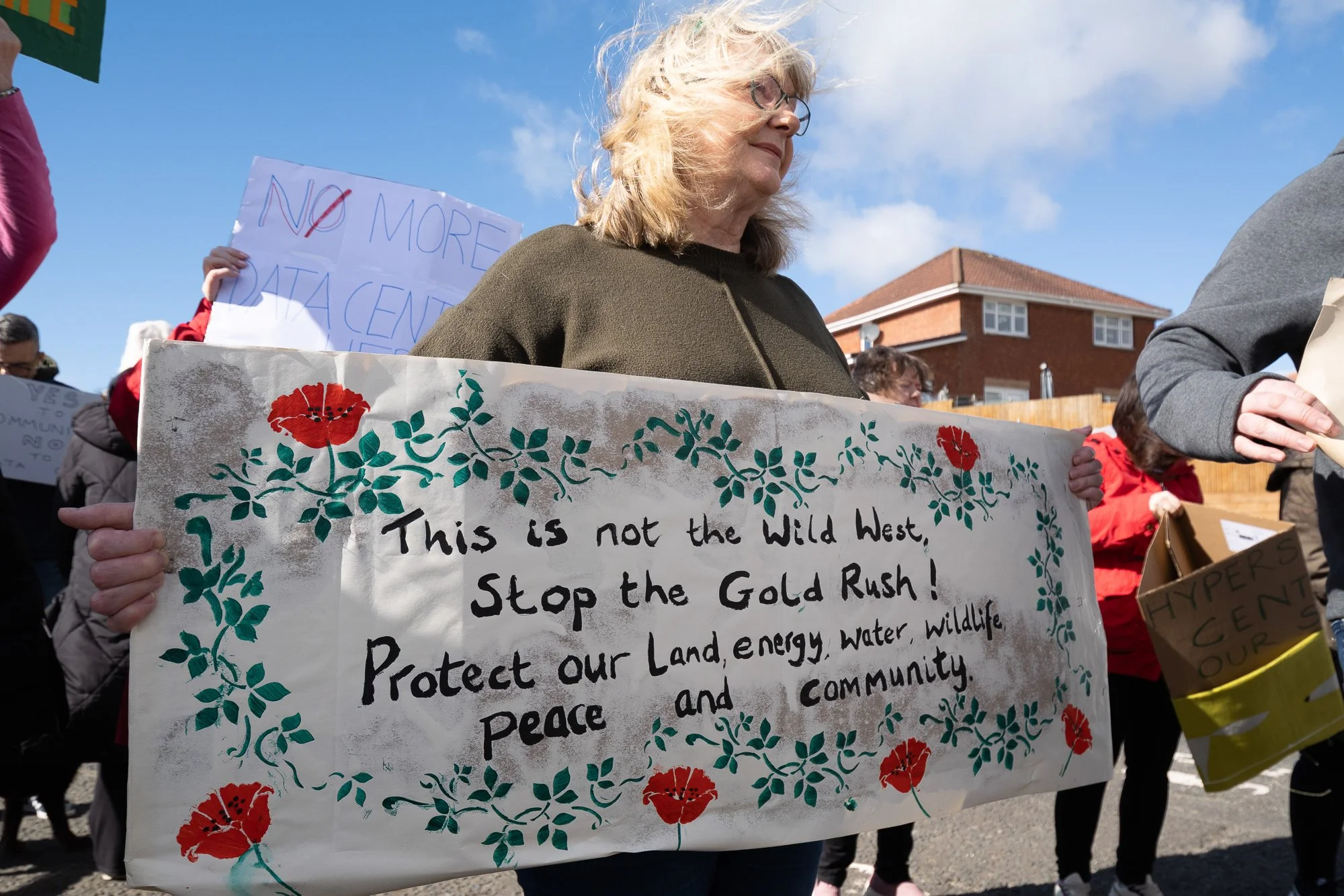
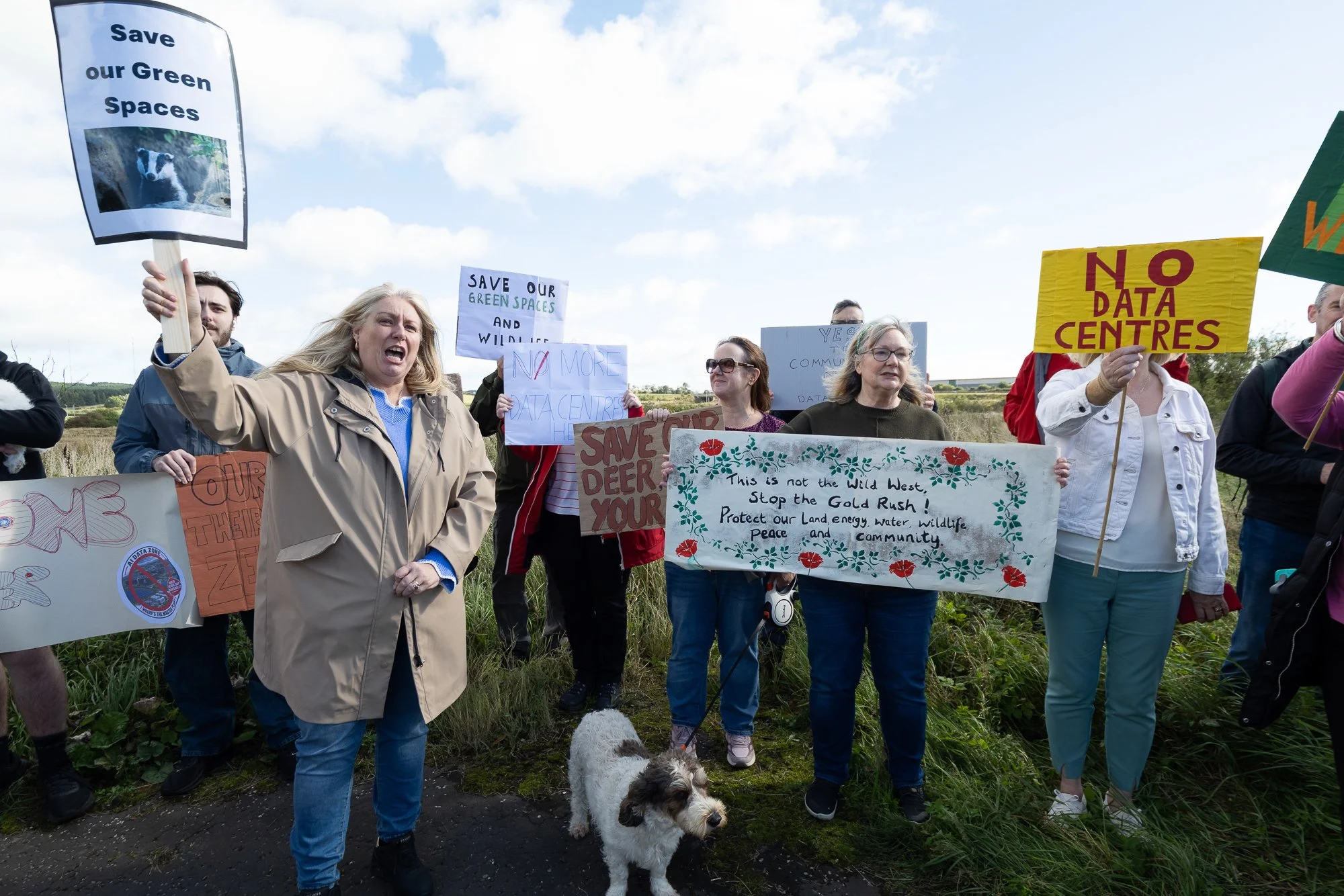
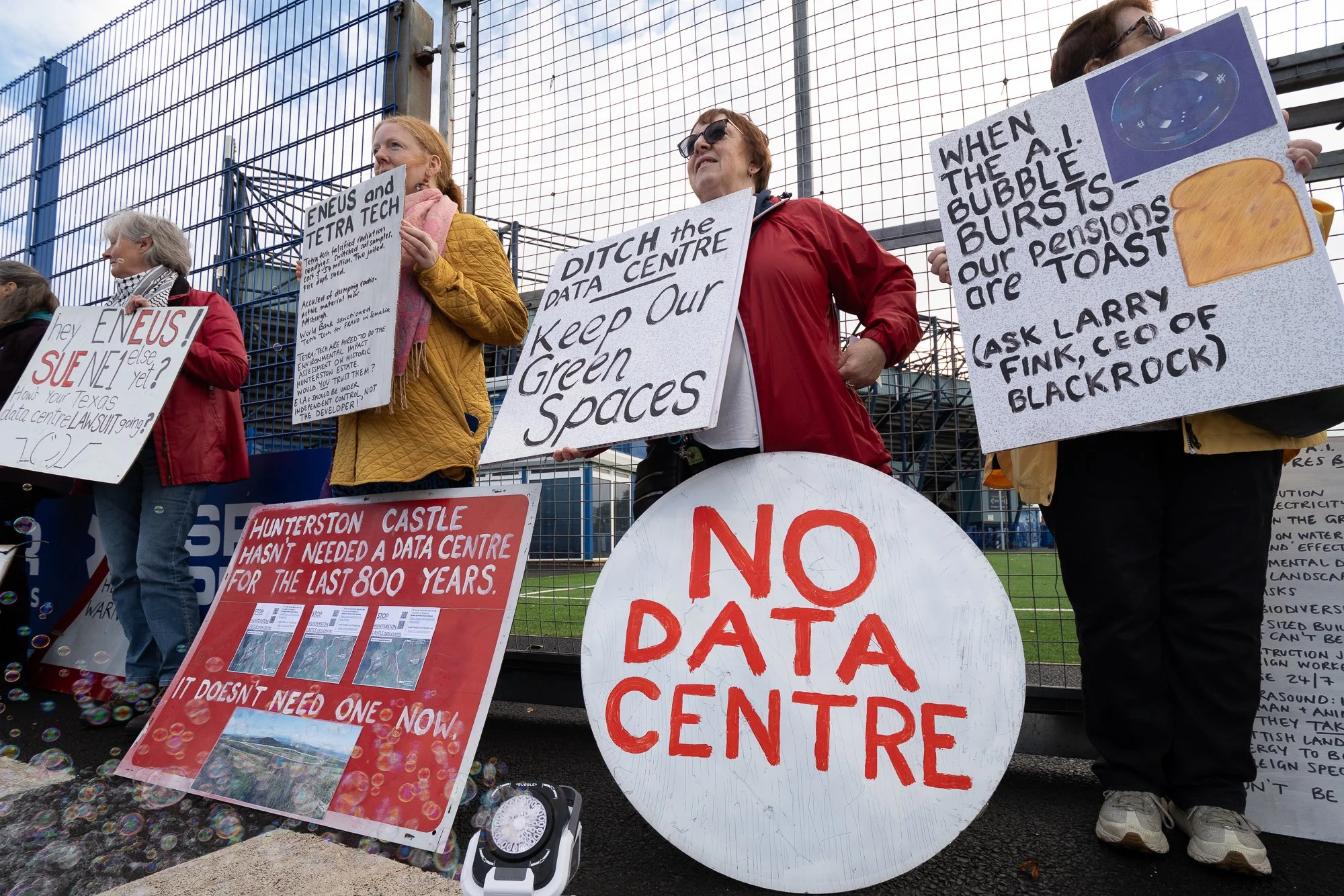
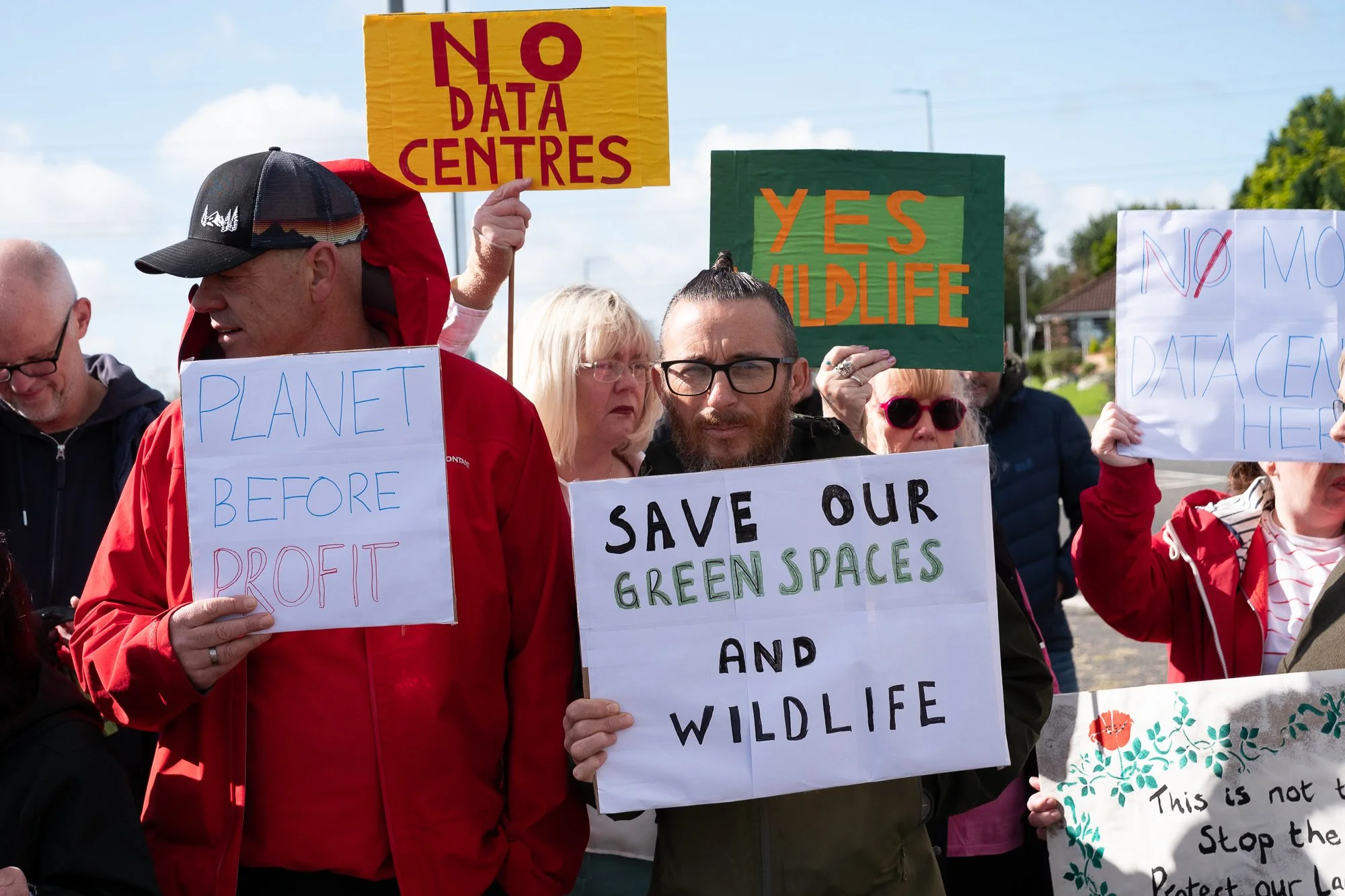
I attended the first national protest in Edinburgh at the start of September, when campaign groups from across the country joined forces outside the Scottish Parliament. Since then, I’ve attended a couple of more local protests.
From a photojournalistic viewpoint, the images might not be the most dynamic I’ve ever captured. However, there is more to photographic documentation than simply the immediate imagery. There is a real sense of community awakening and resistance within this campaign, and it is very important to me to be recording it from the beginning and using photography to help spread the campaigners’ message in any way I can.
This is quite possibly the most important documentary project that I have, or indeed will ever, undertake.