The Brightness of Grey
Chapter 2: The Magic of the Wheel
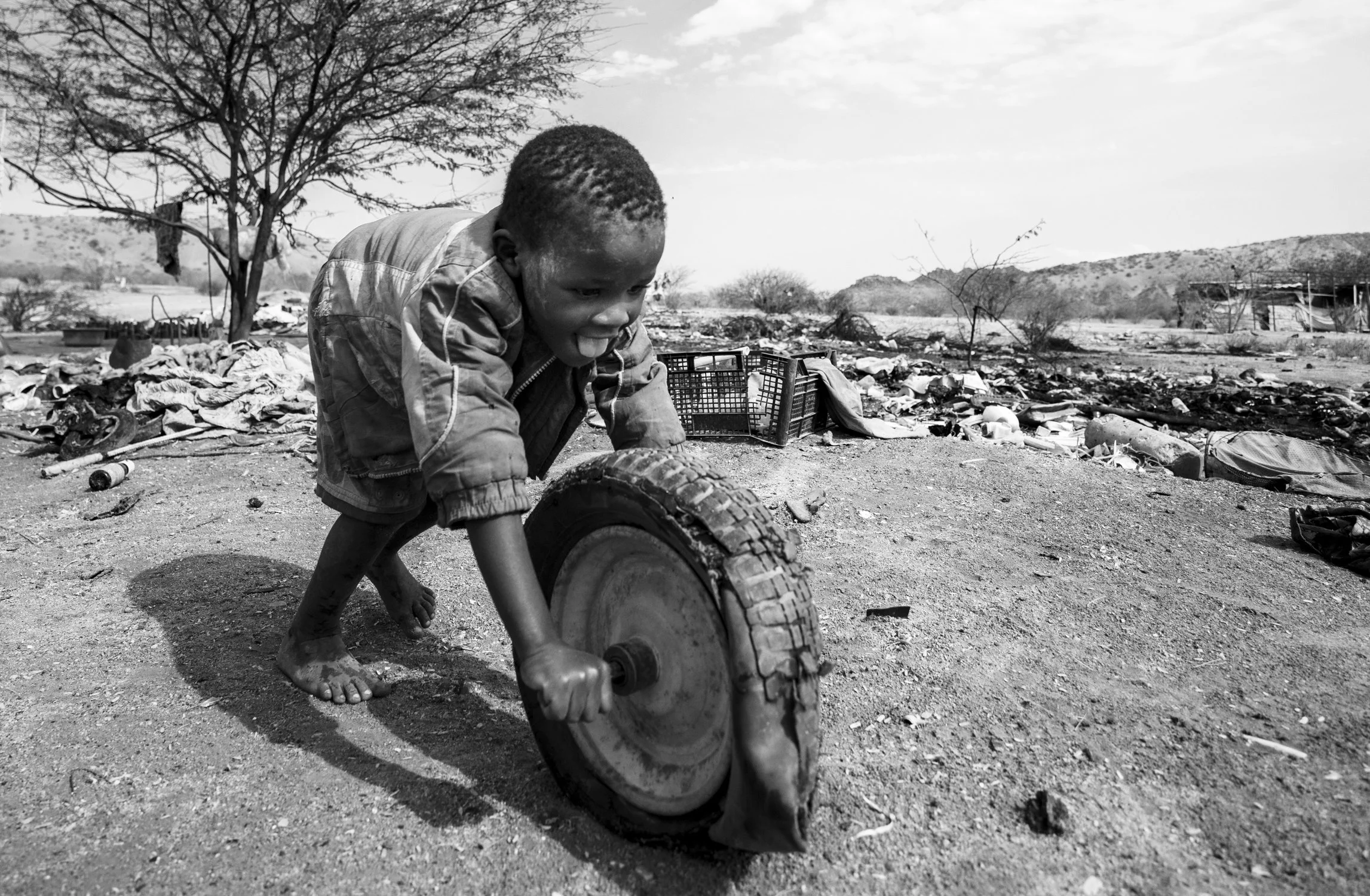
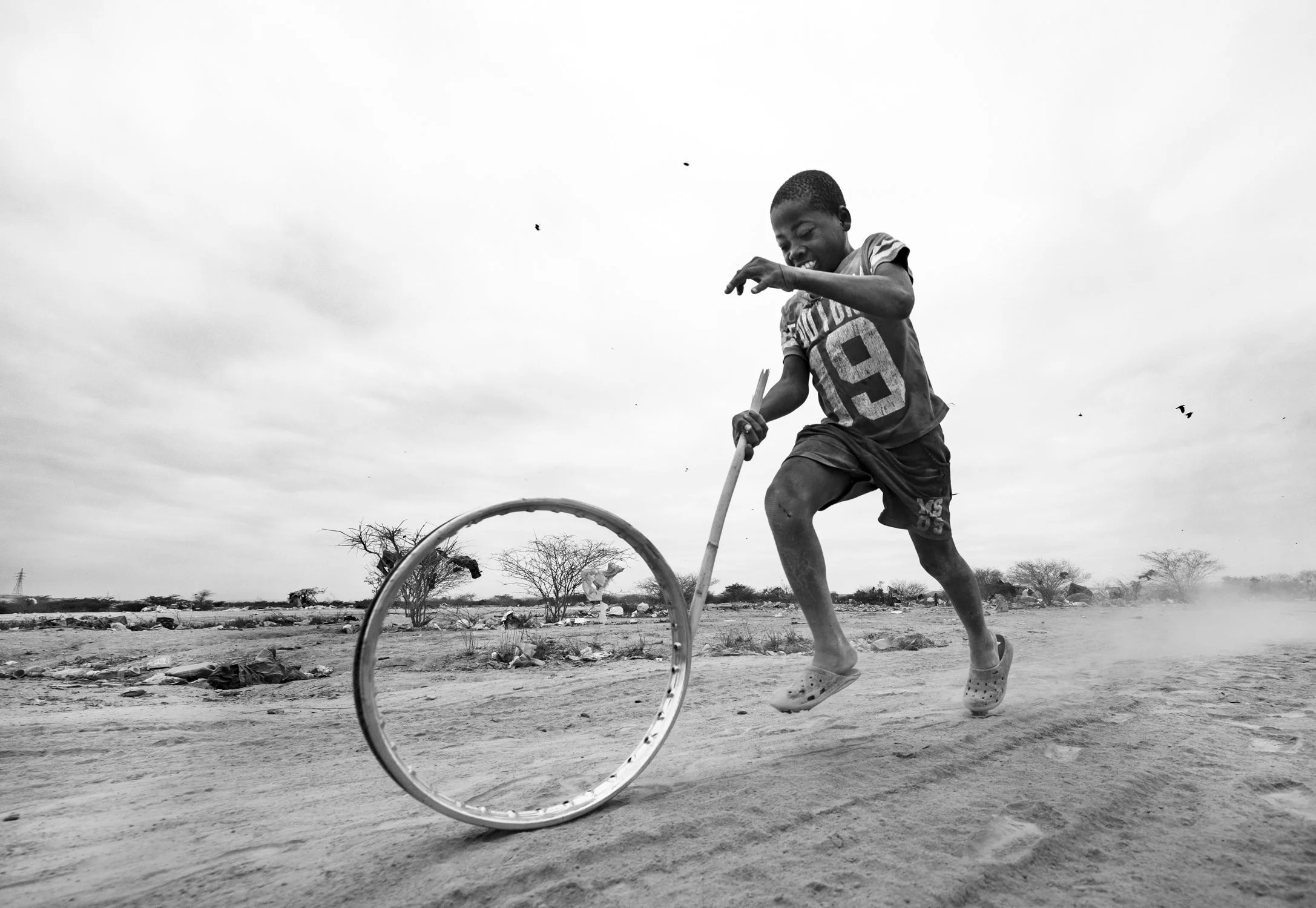
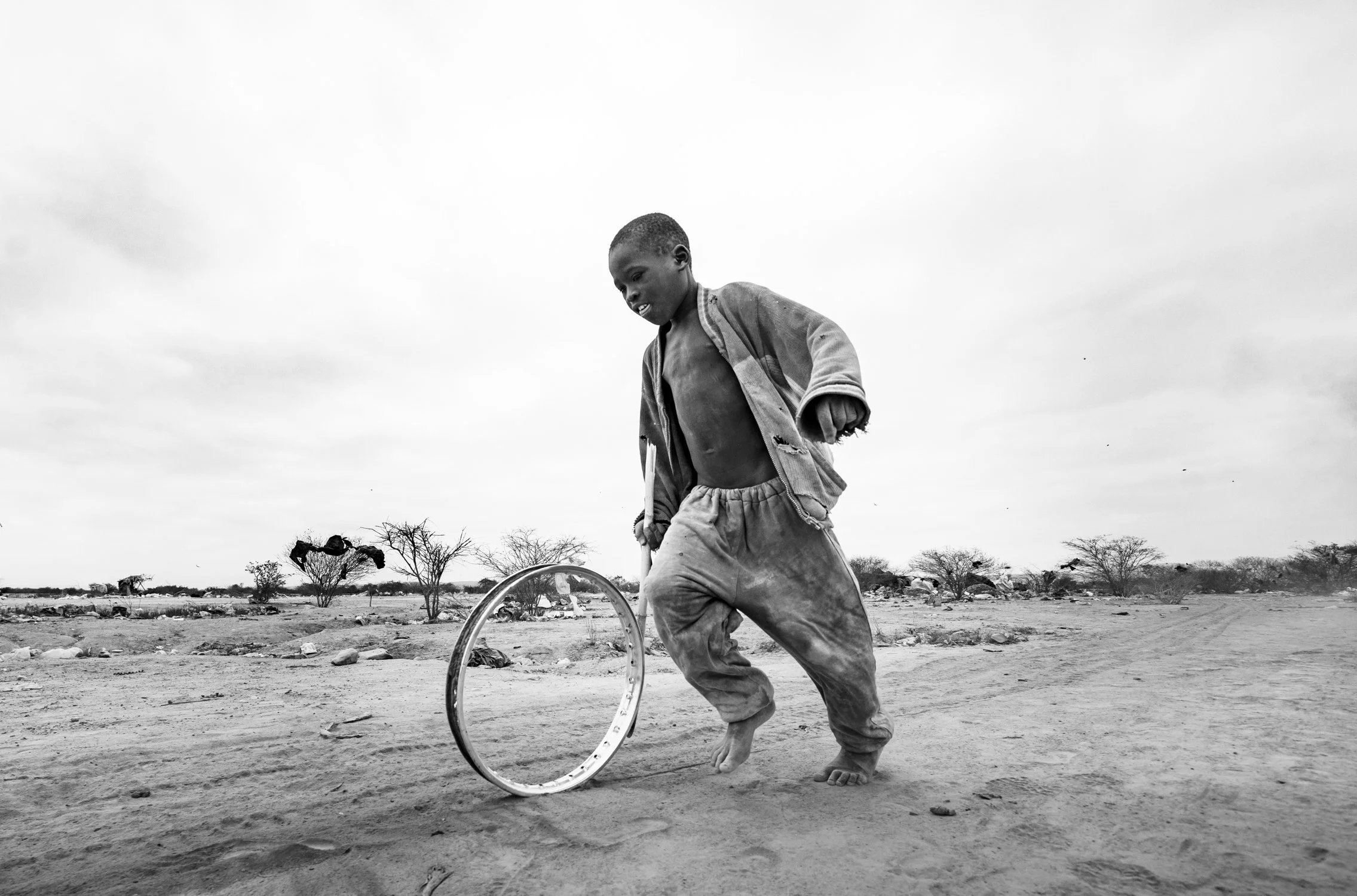
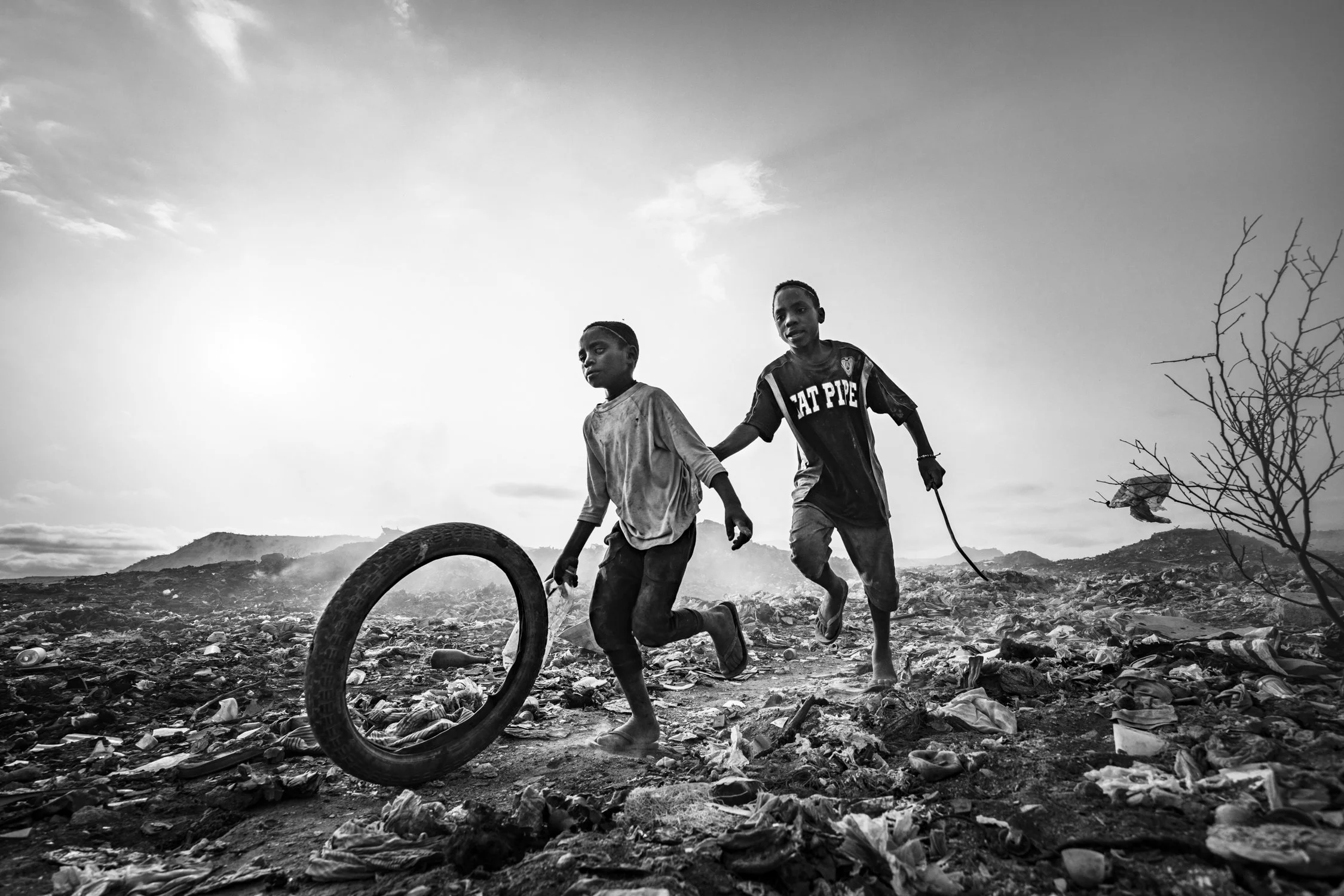
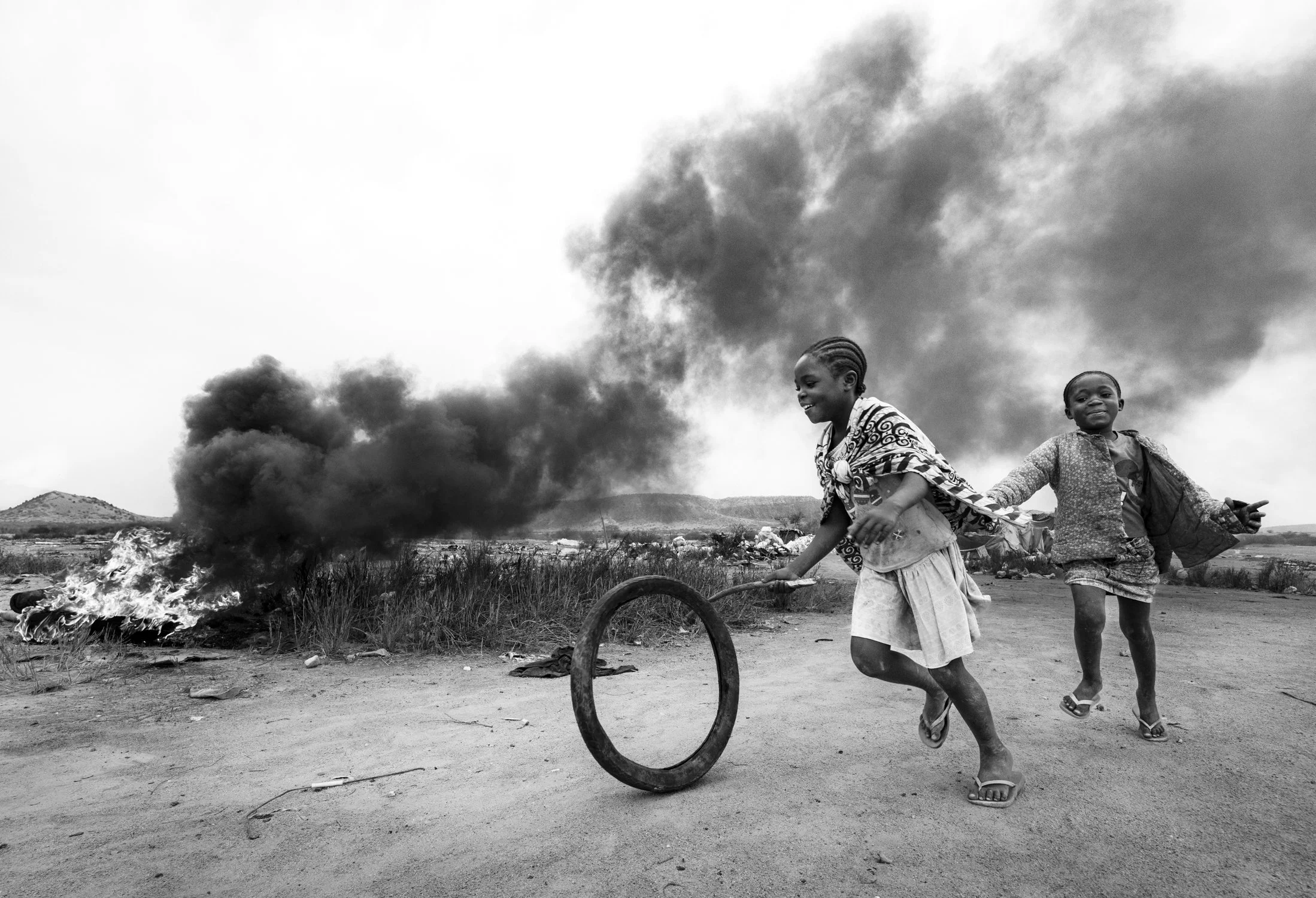
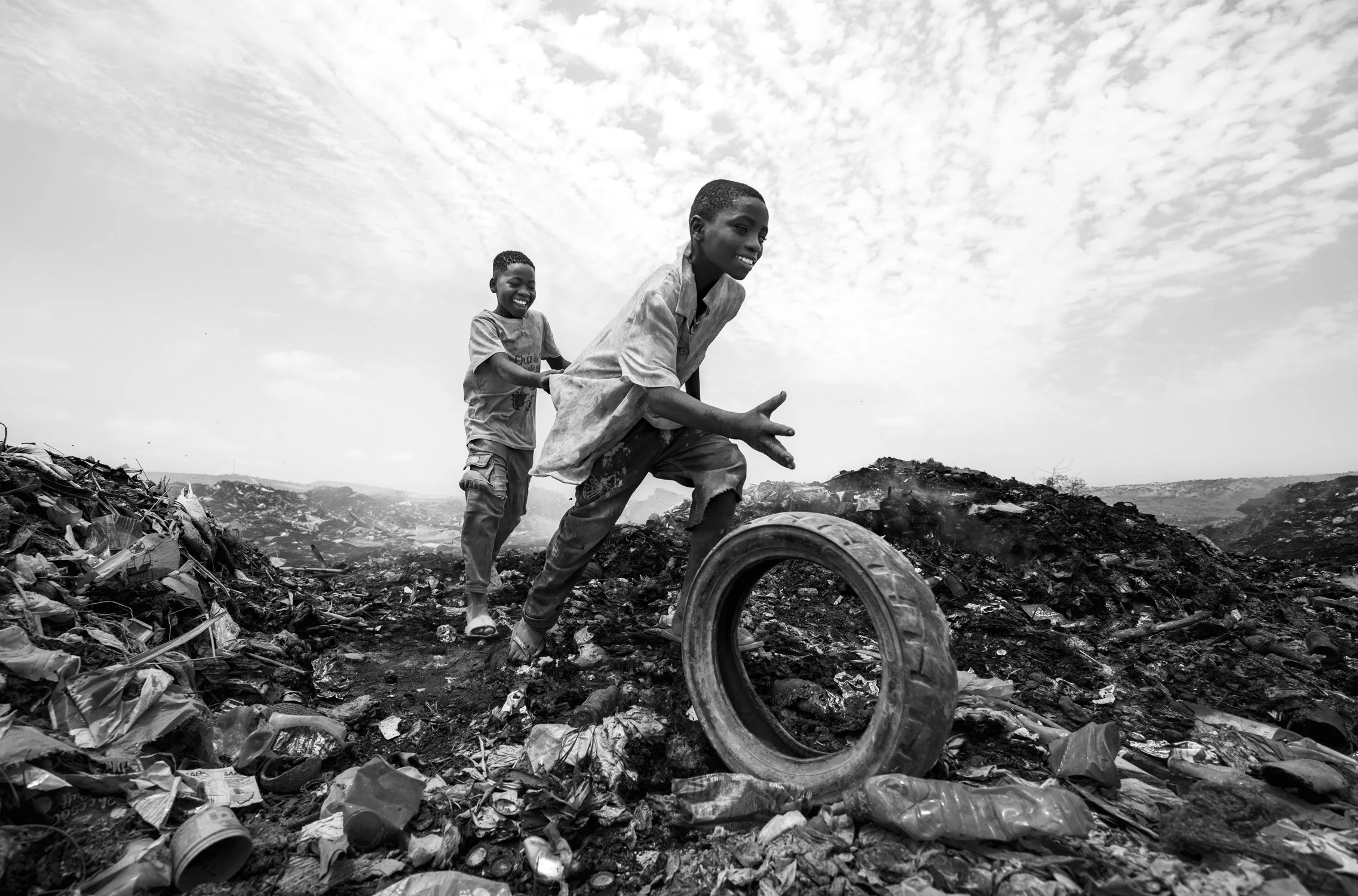
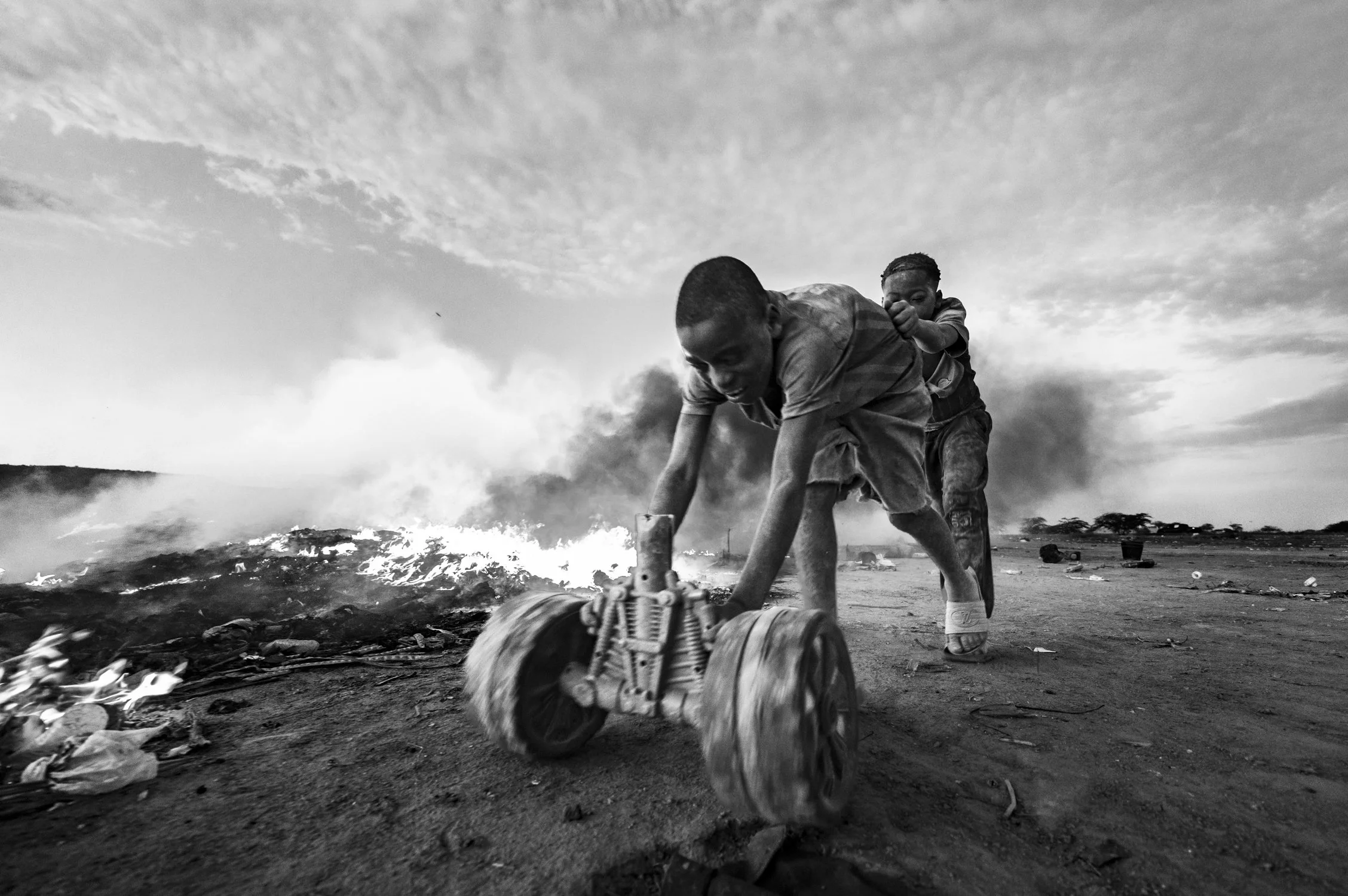
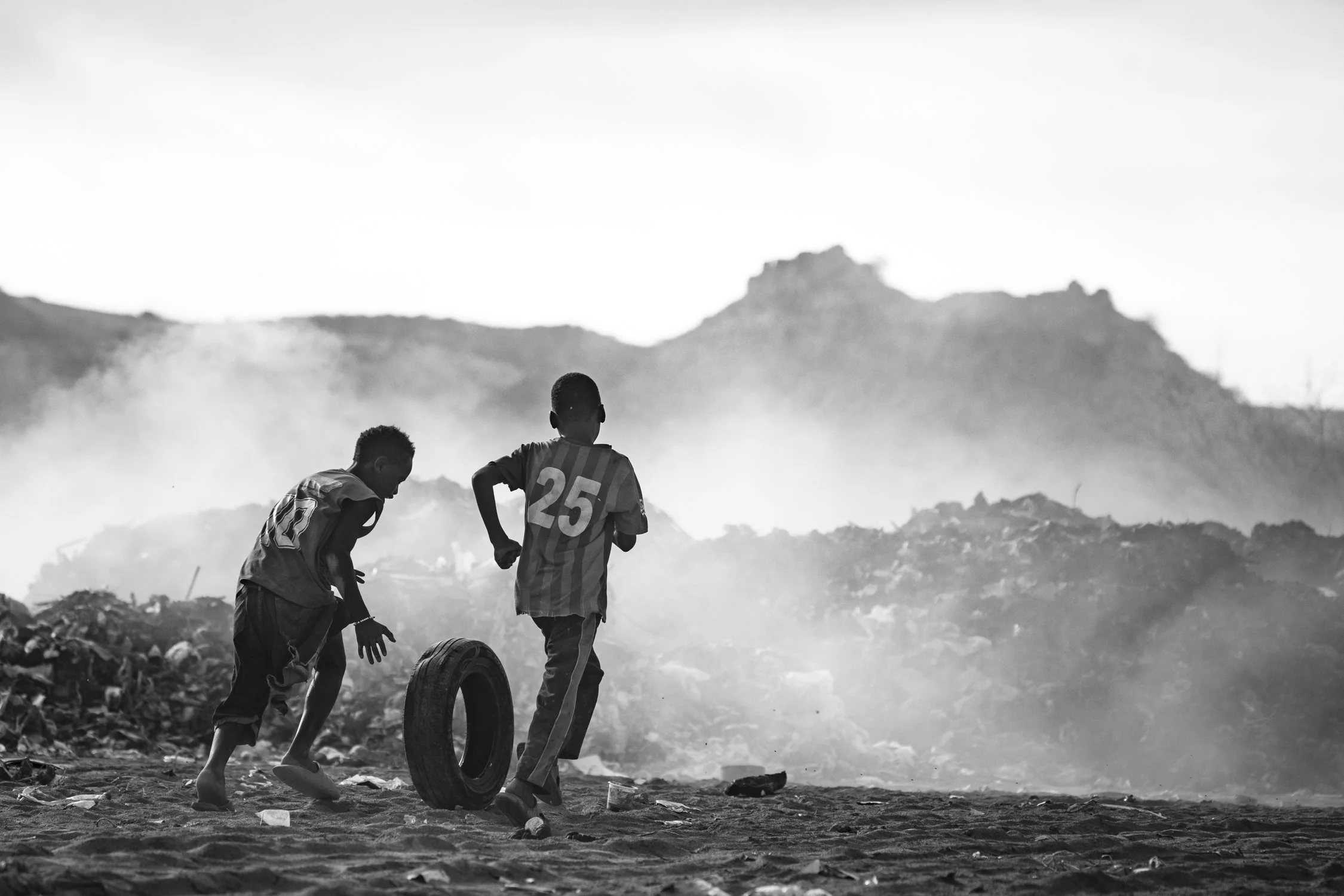
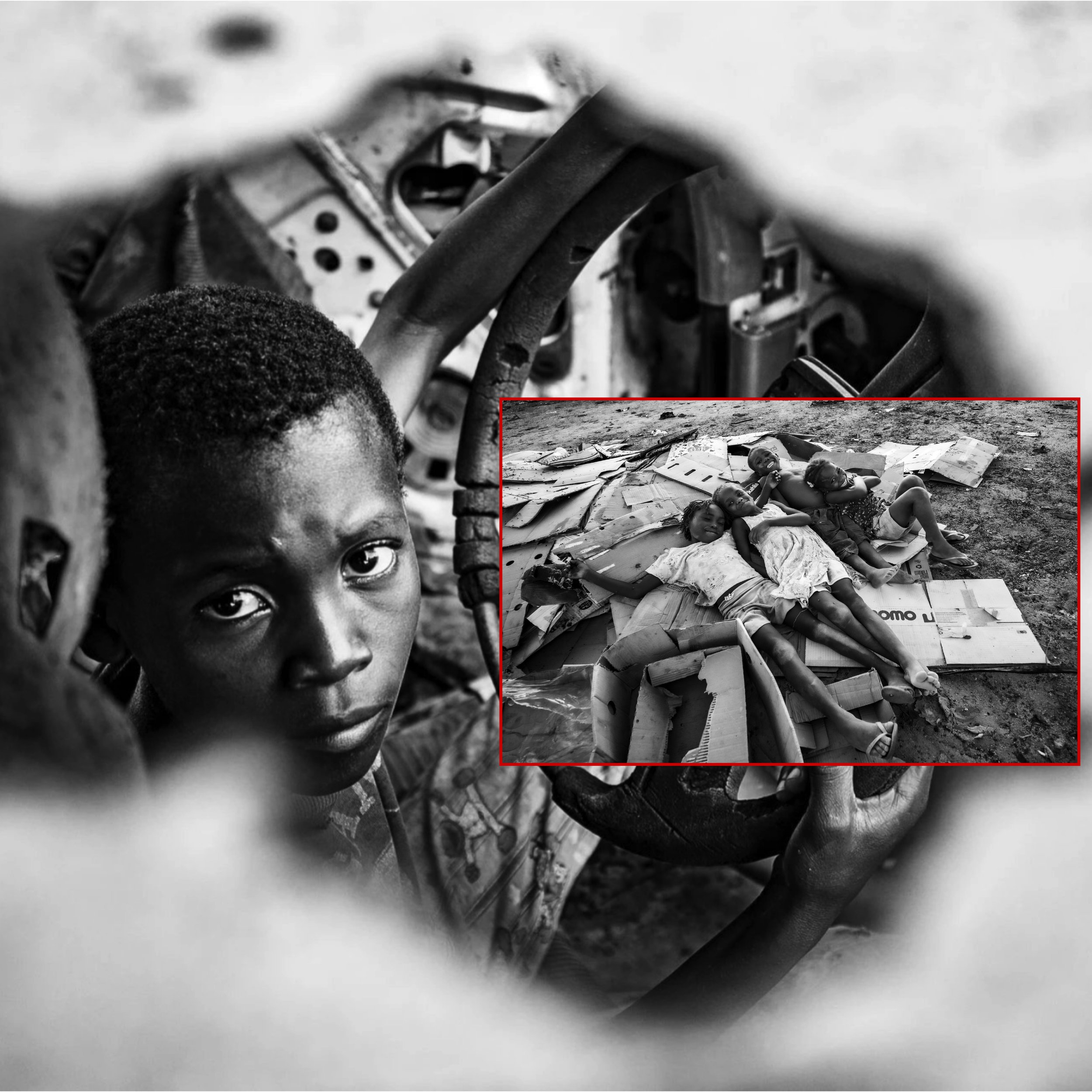
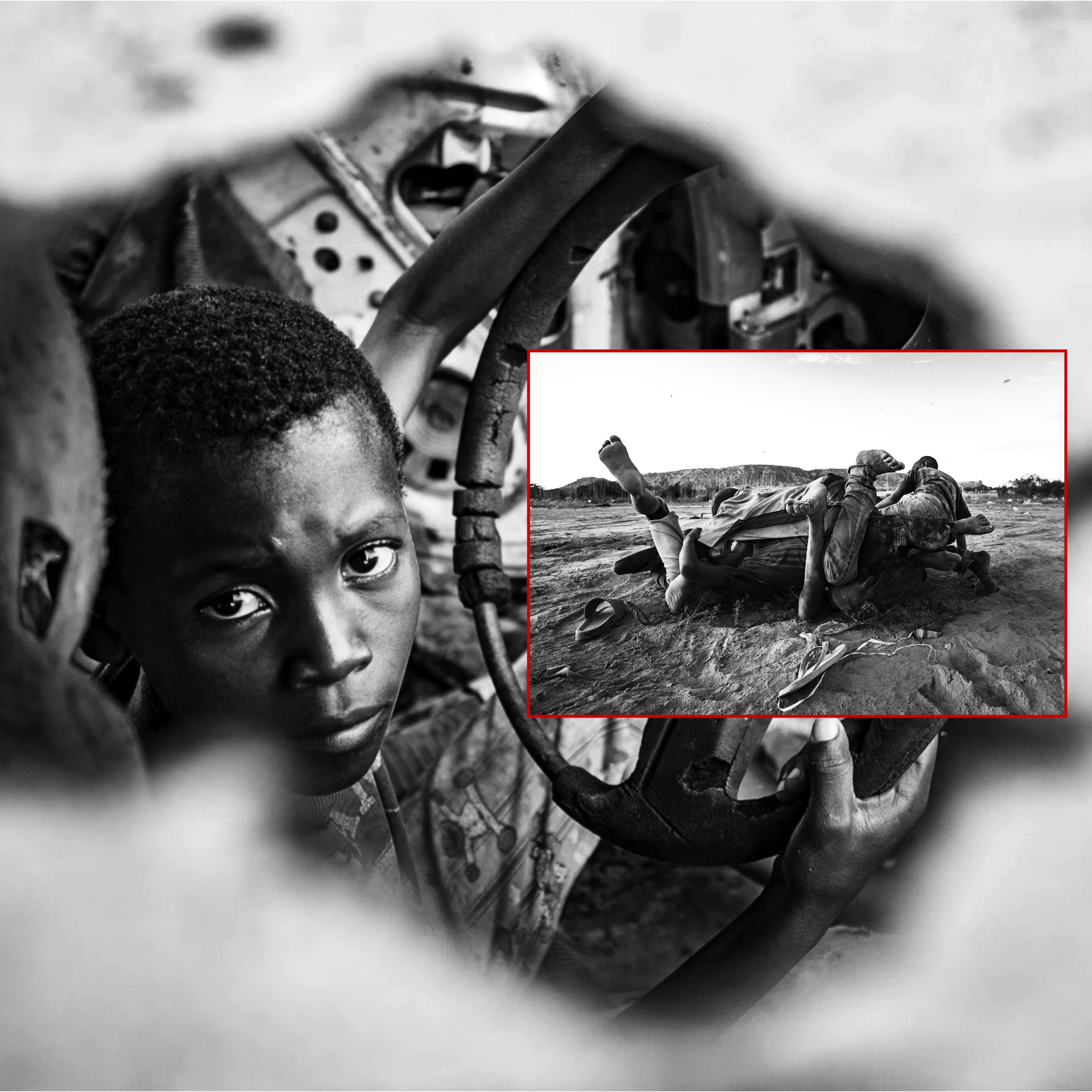
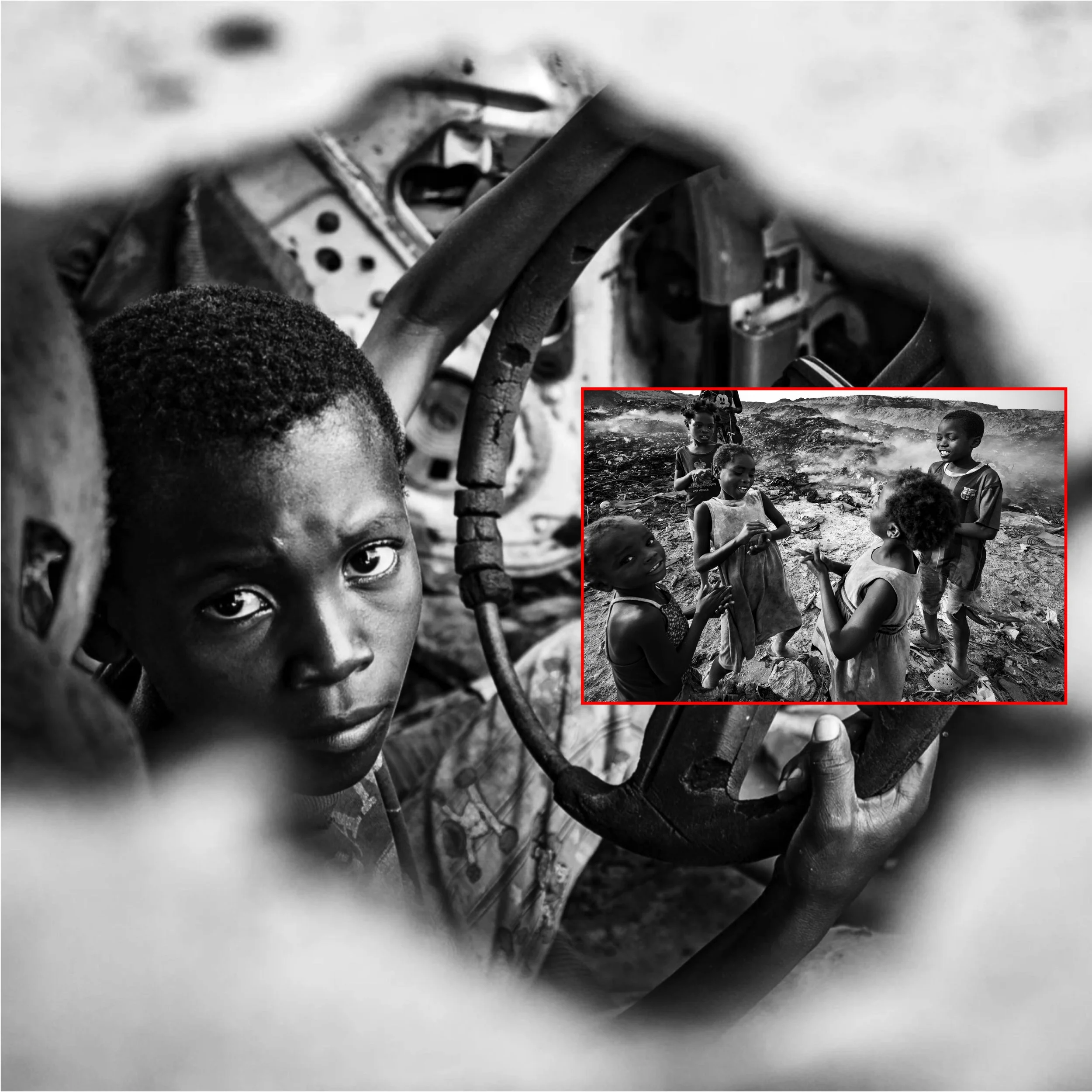
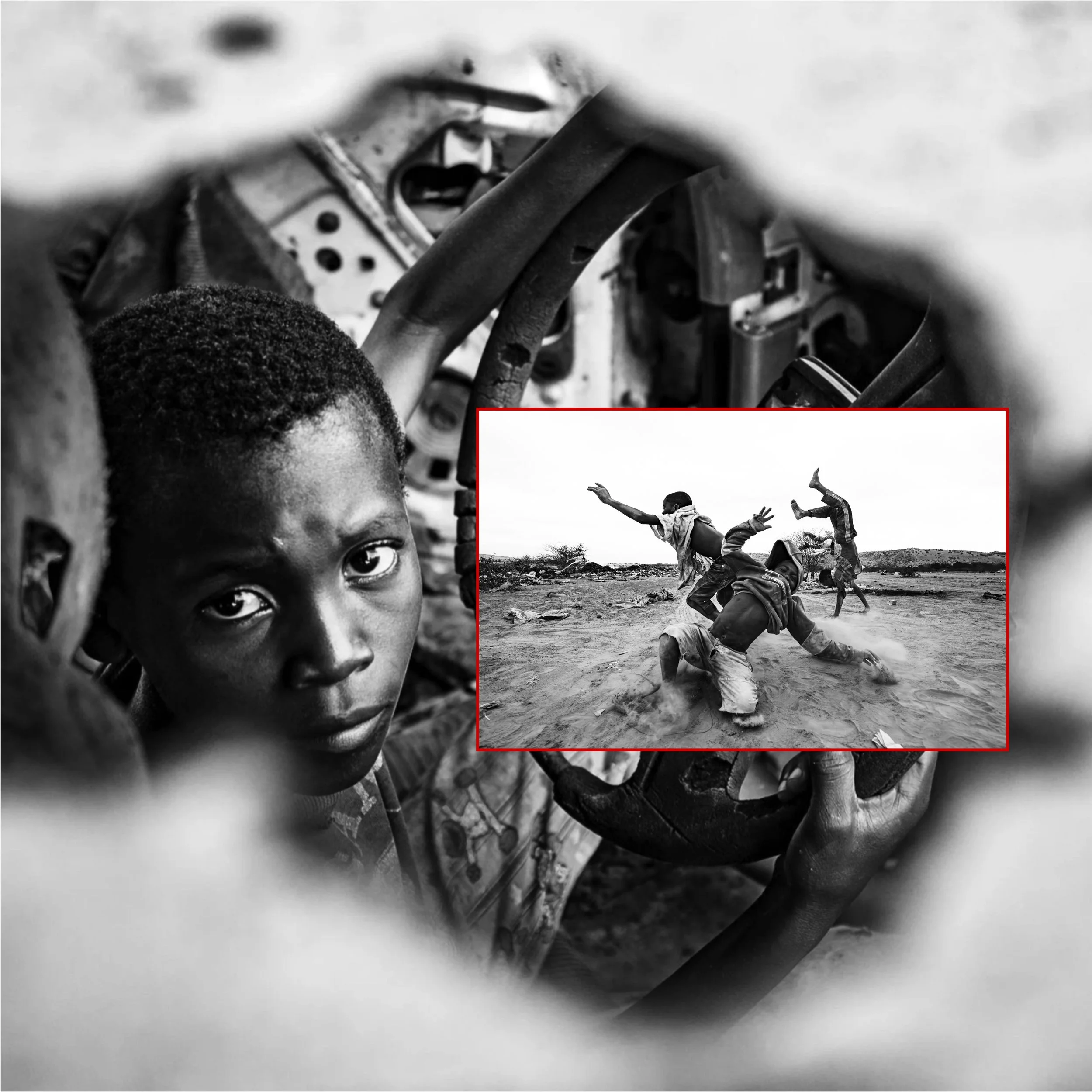
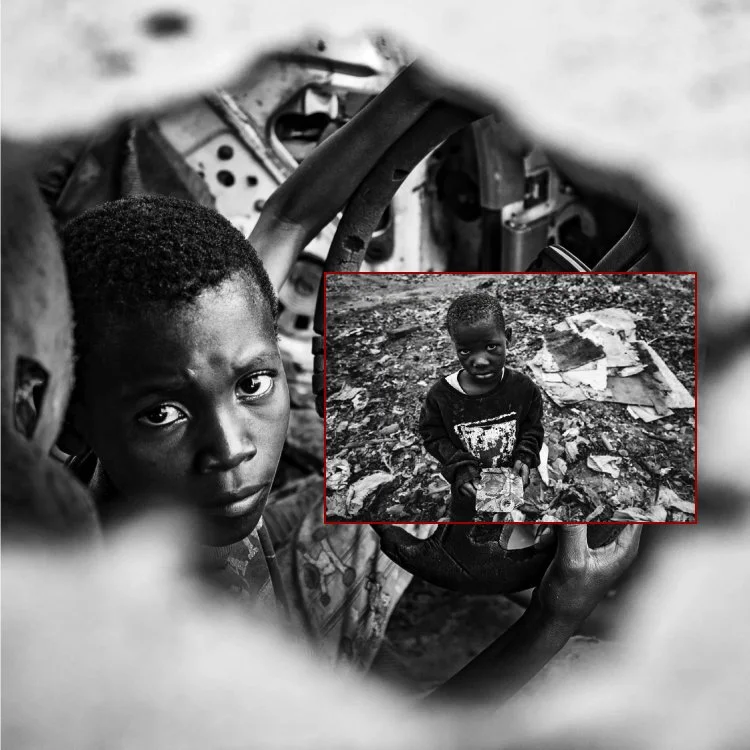
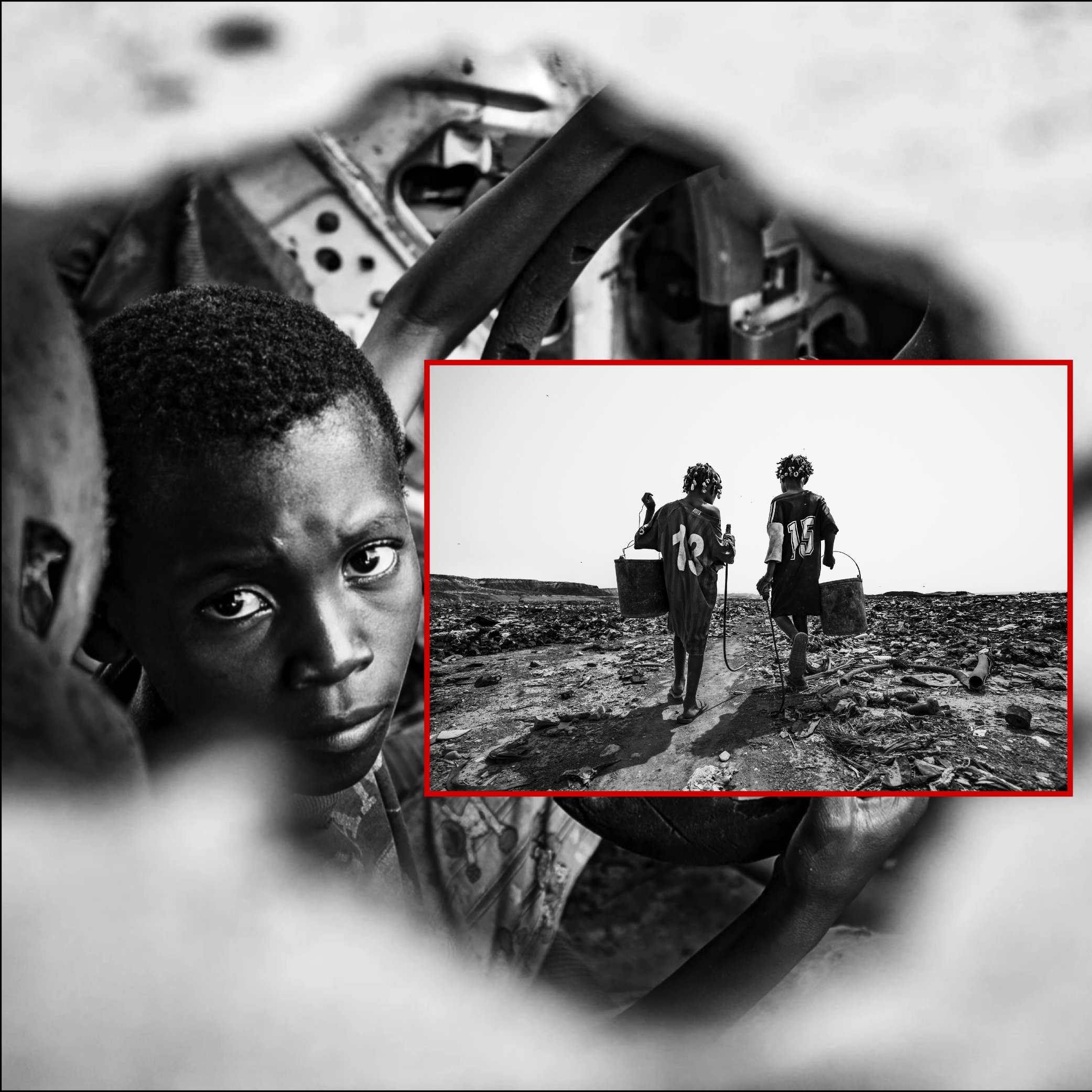
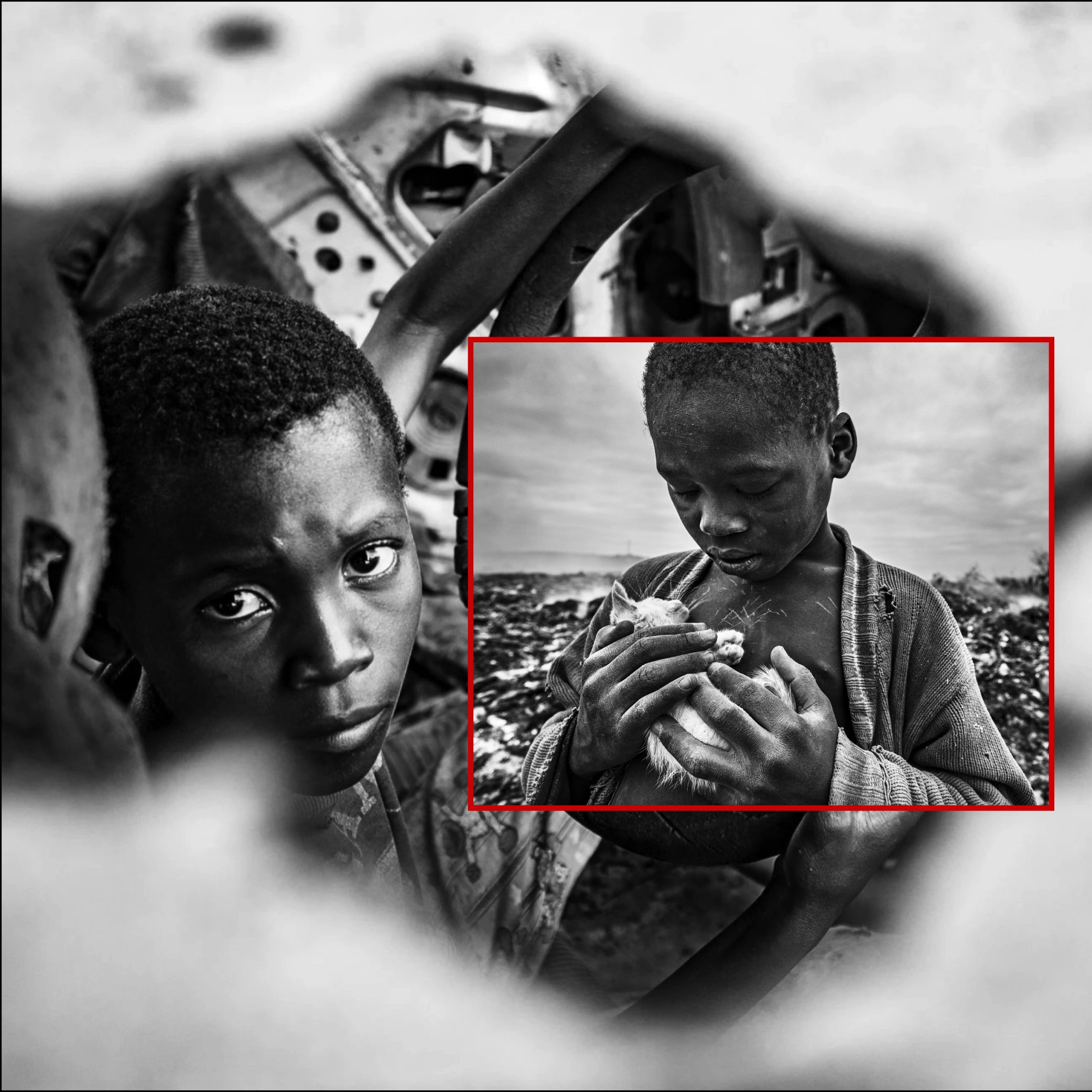
Under the same dull sky that shapes the landfill where they were born and raised, movement defies the stillness of despair. For these children, whose only known horizon is a labyrinth of waste, the world gains a new velocity when the oldest secret of humanity is uncovered. There are no gleaming bicycles here, no pedal cars, or electronic circuits. There is only the landfill, vast and grey. And yet, a magnetic force is born when debris ceases to be refuse and becomes motion.
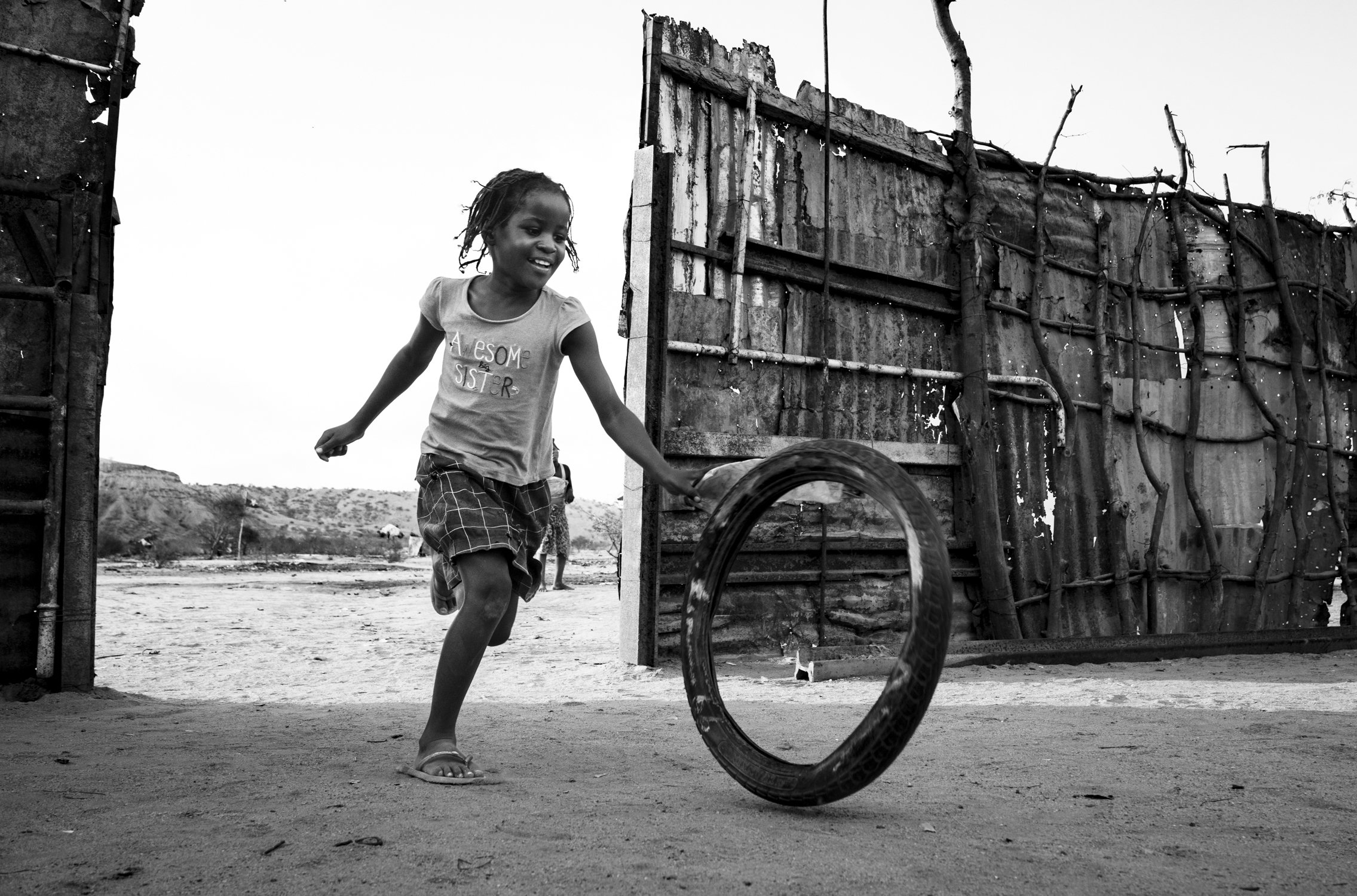
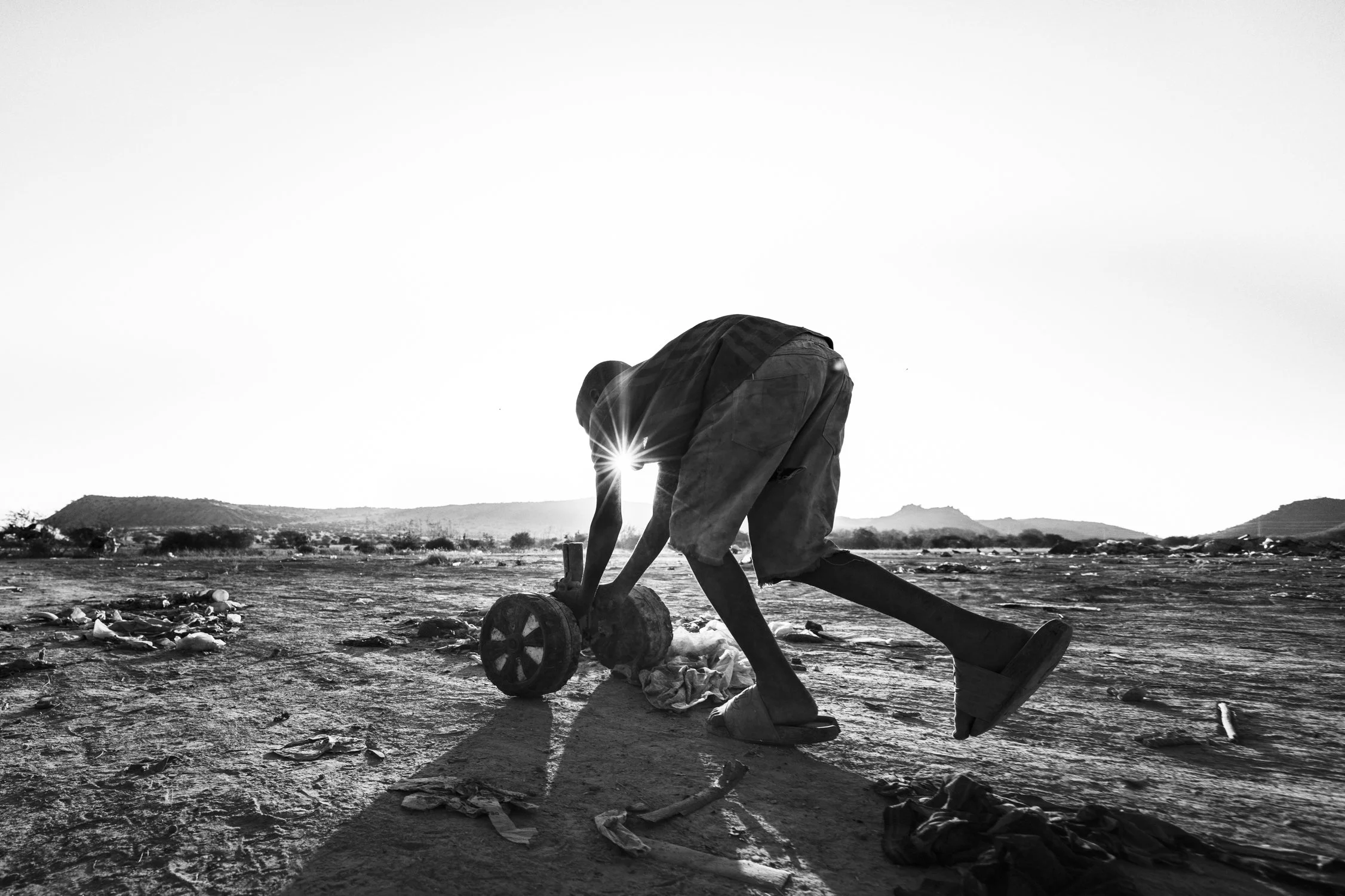
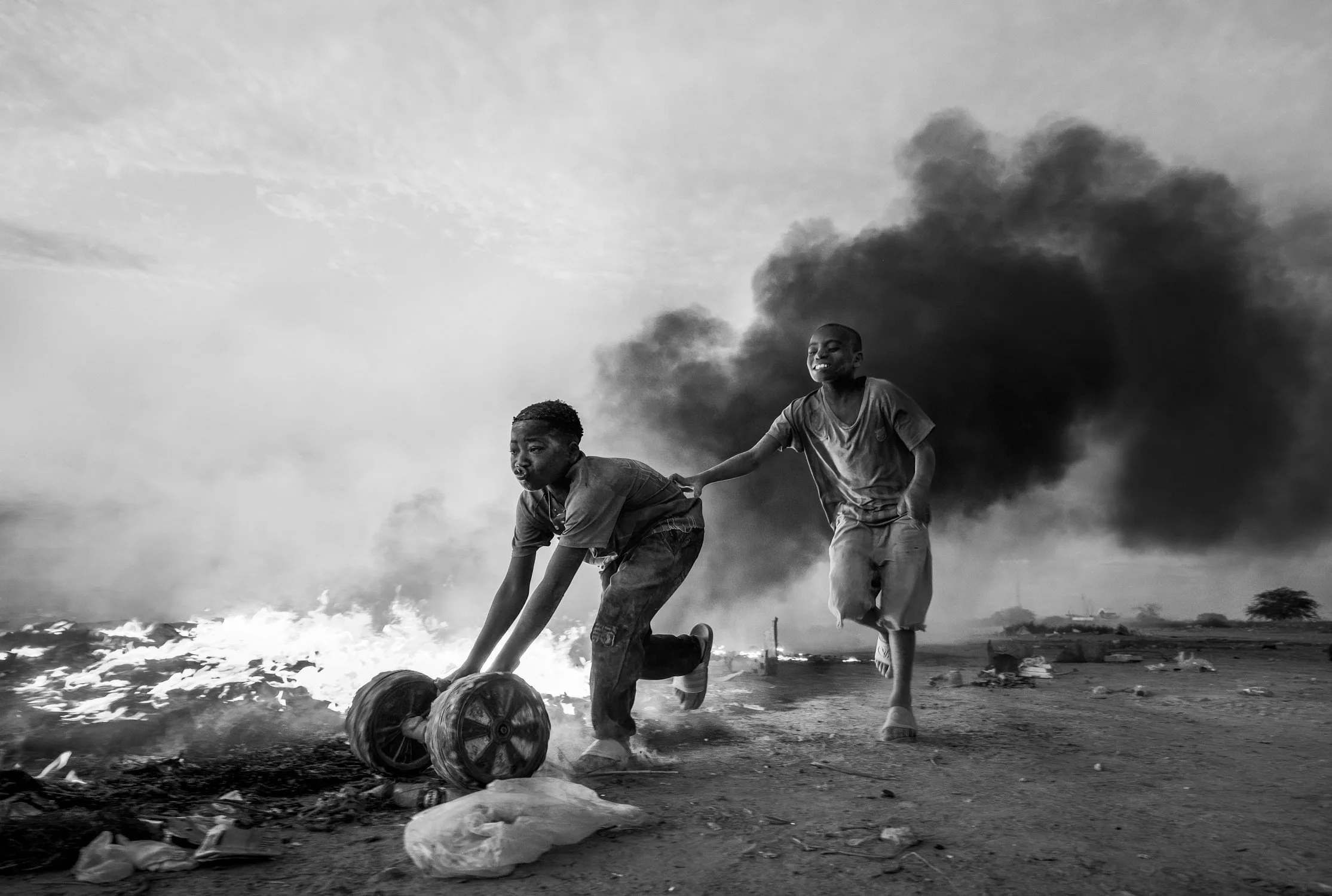
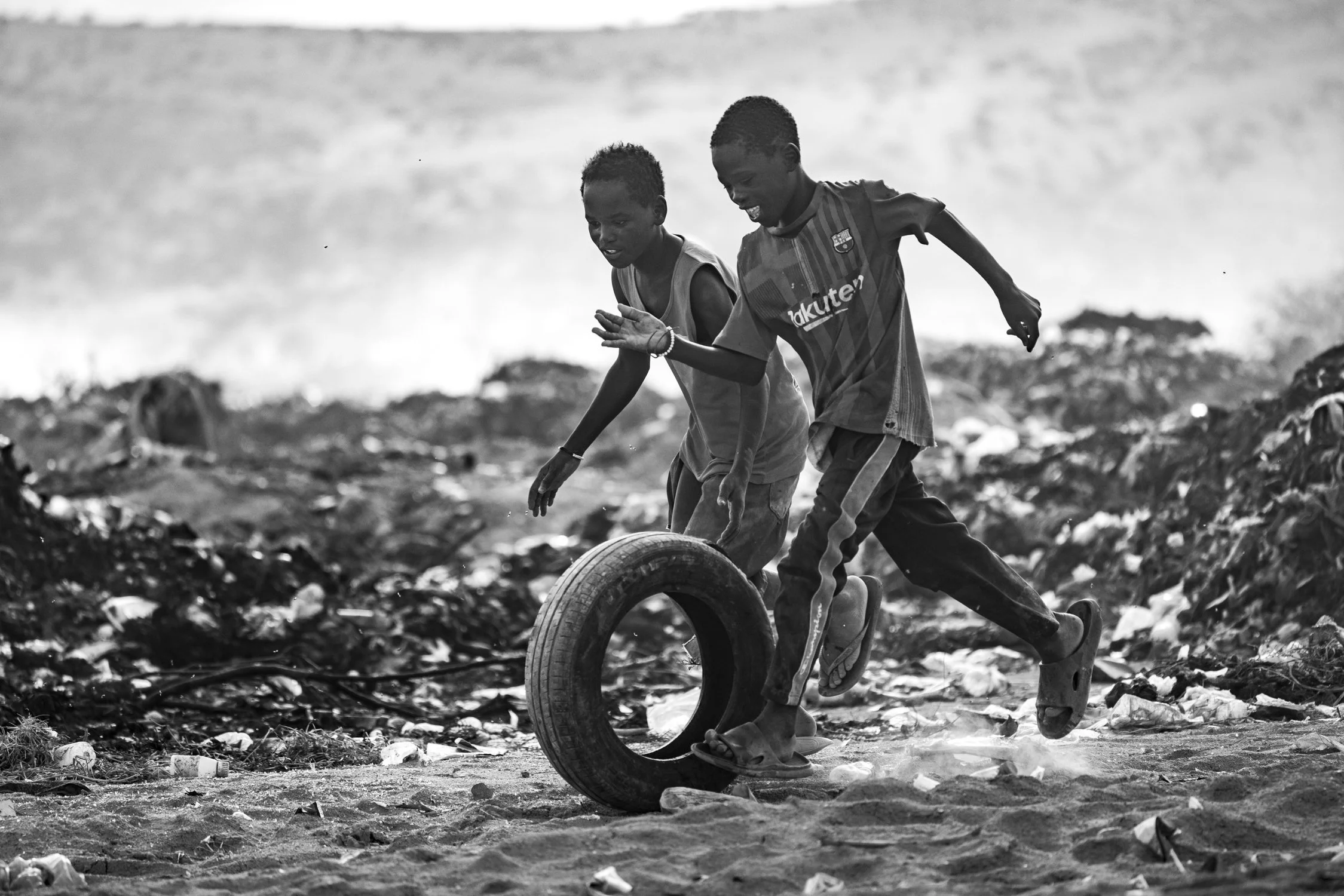
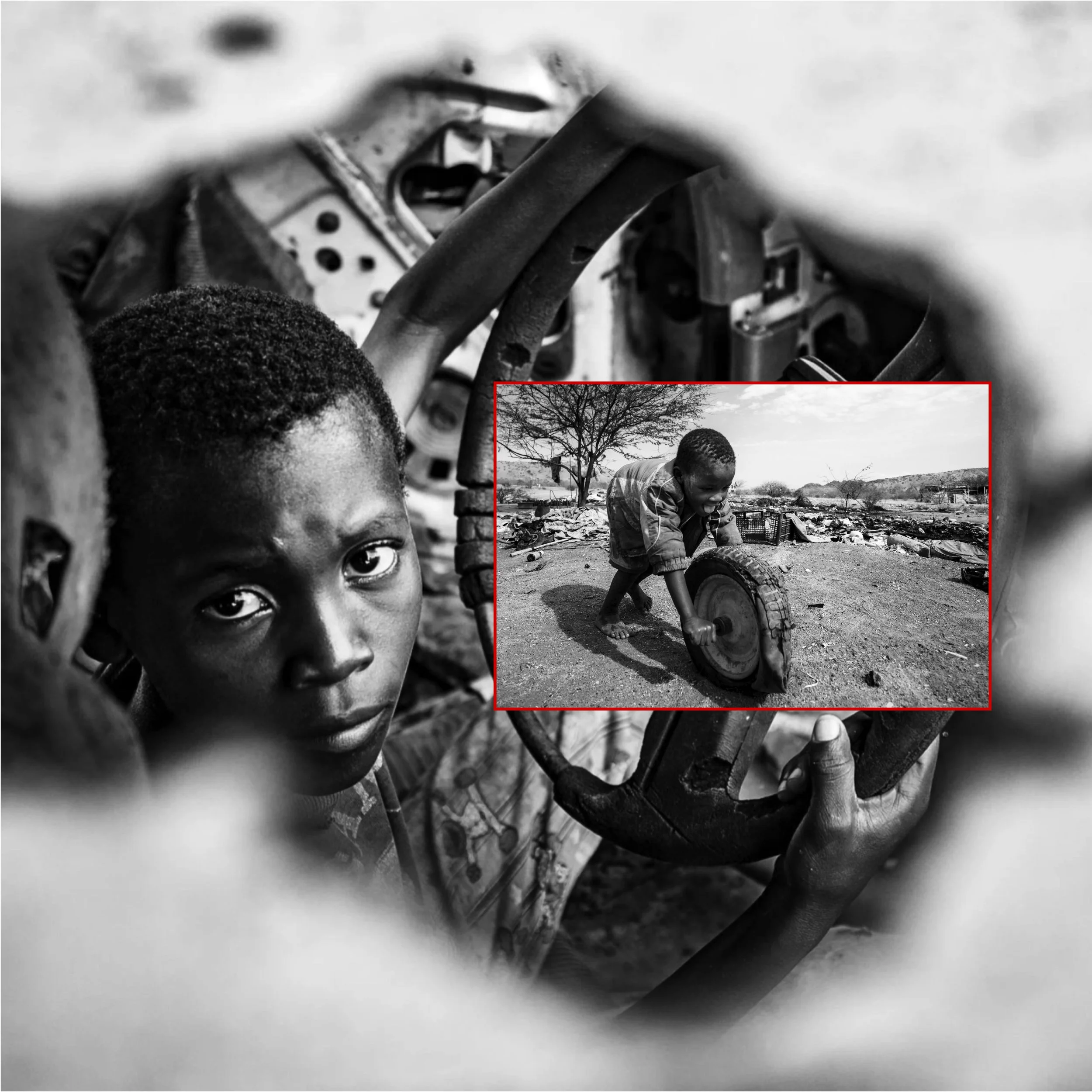
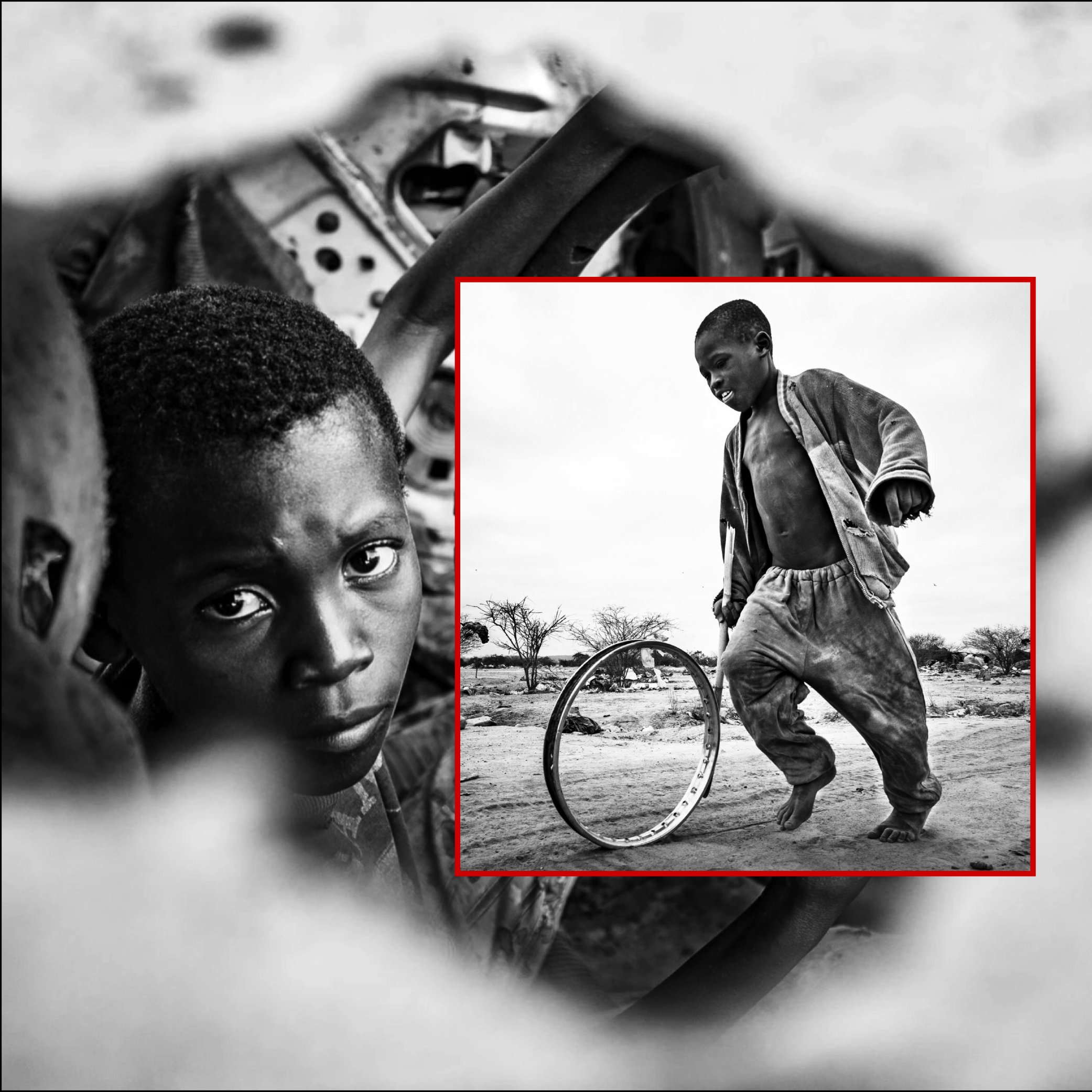
In this series, we witness the awakening of an ancestral fascination: the magic of the wheel. Armed with worn sticks, bare feet dug into the firm ground, and clothes carrying the patina of labour and time, these children run side by side with perfect circles of rubber and metal. An old motorcycle tyre, a warped bicycle rim, a broken plastic toy with its wheels still intact—everything discarded by the world of adults gains a second, noble life in the hands of childhood.
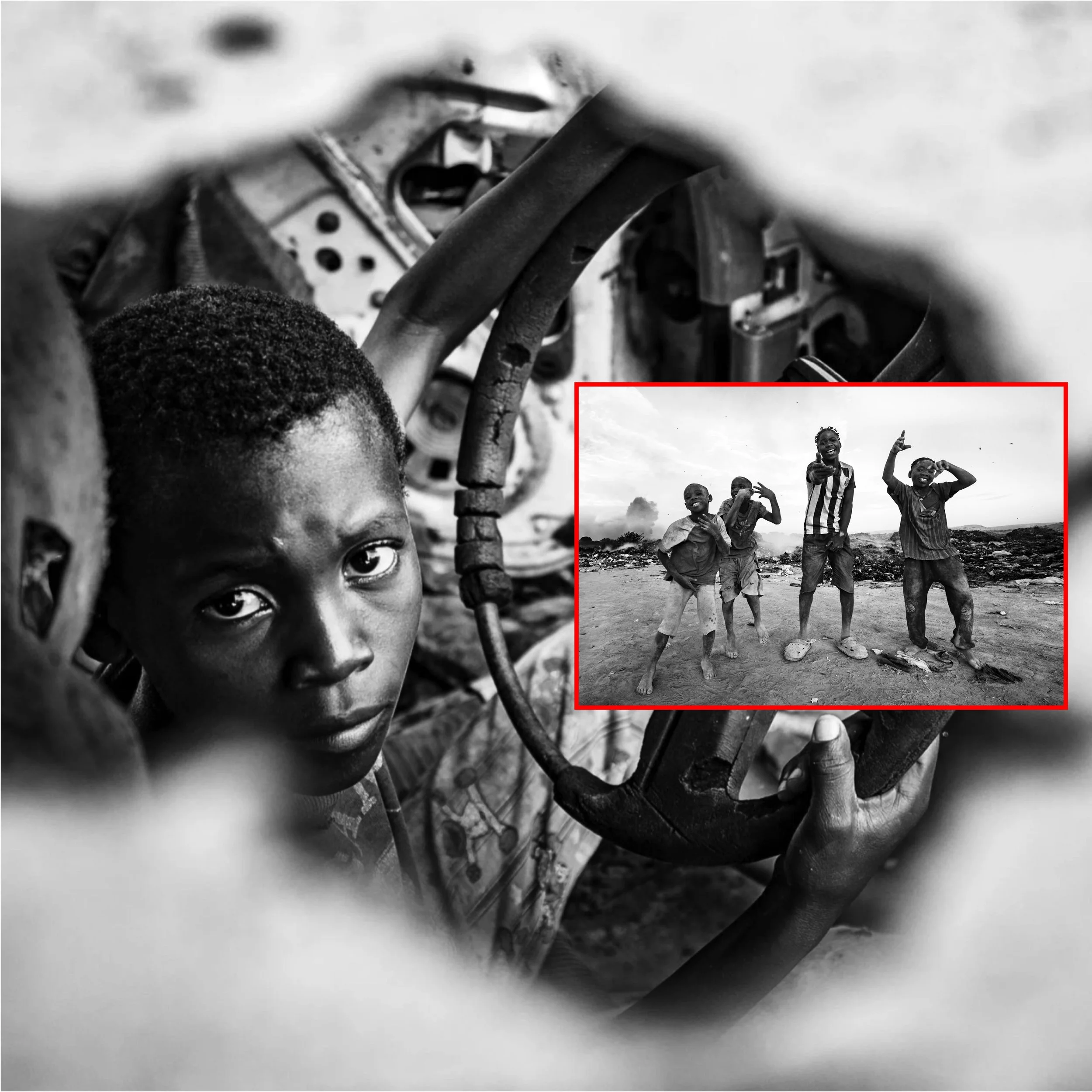
The wheel exerts an almost mystical attraction over them. It represents perpetual motion, the promise that one can go further, even when one's legs are tied to the same barren soil. As they push these treasures rescued from the mounds of garbage, their faces light up with an open, disarming laughter. The wheel spins, and with it, imagination spins too. The toy does not arrive in a perfect box; it is discovered, cleaned, and baptised by the ingenuity of those who have nothing, yet invent everything.
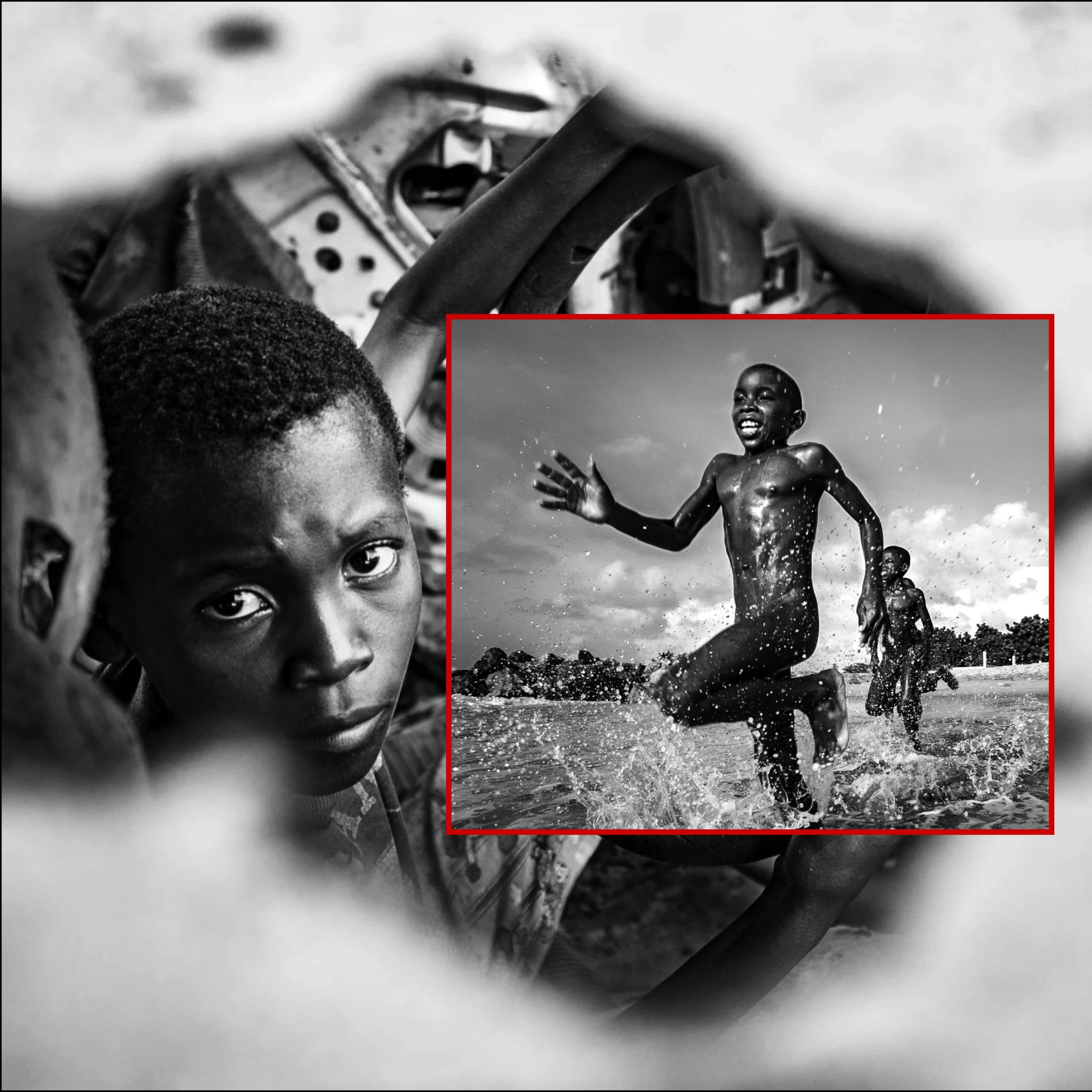
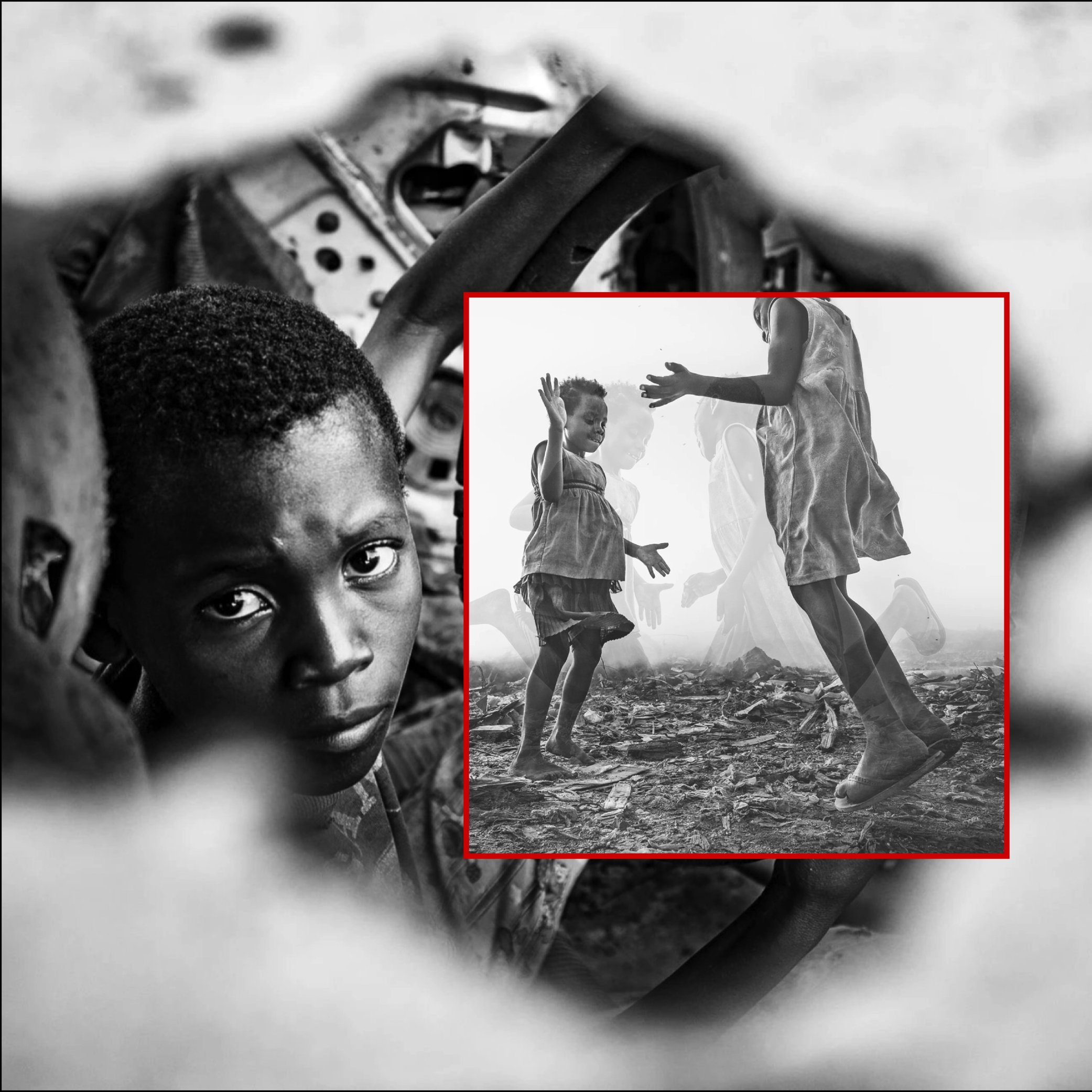
These images celebrate the victory of simplicity. Without the artifice of consumerism, these children prove that play does not reside in the object itself, but in the spirit of the one who guides it. As they roll metal and rubber through the dust, they are not merely pushing the world's garbage—they are spinning their own joy, transforming a landscape of abandonment into a playground of pure freedom.