The Brightness of Grey
Chapter 3: The Melody of the Rubble
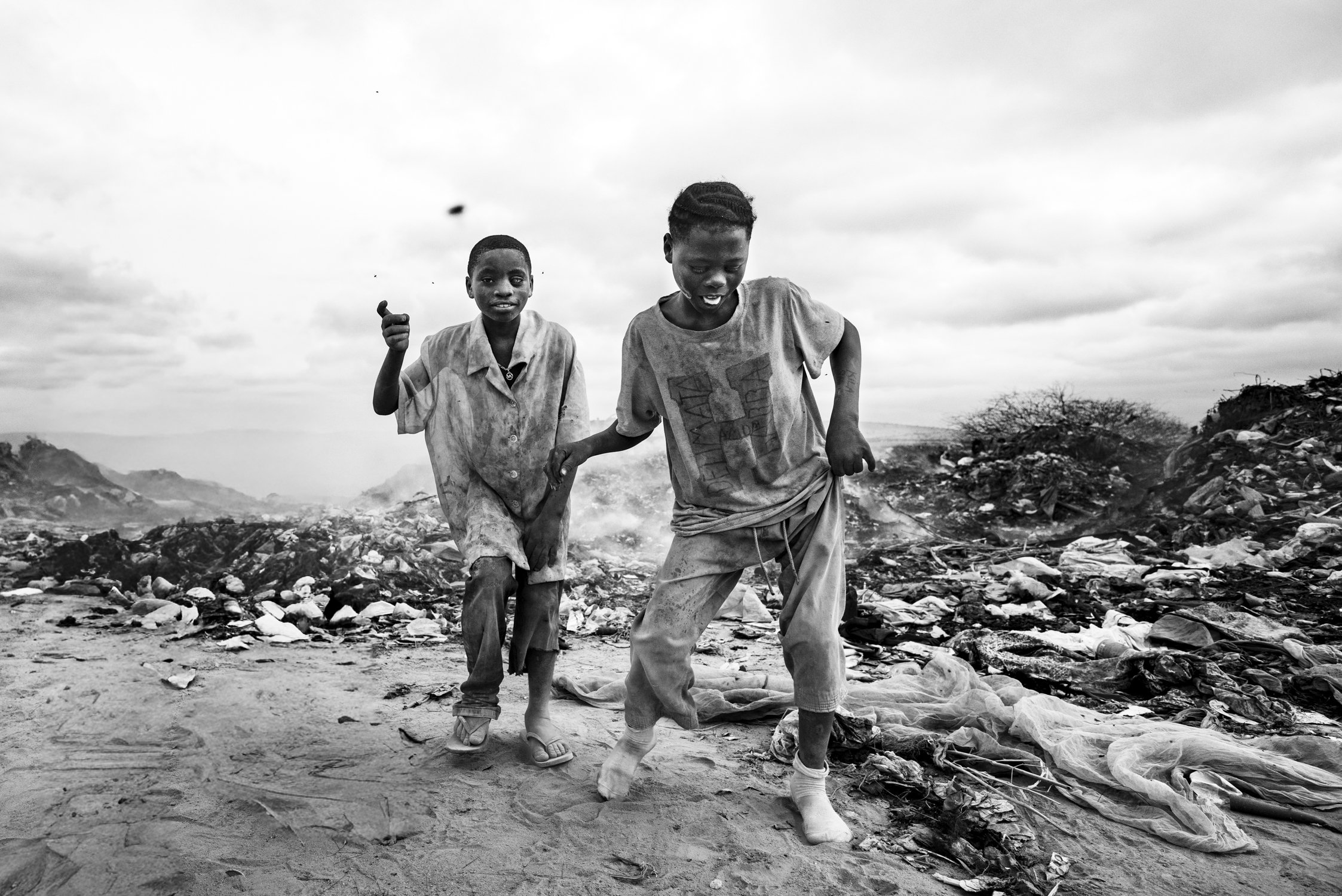
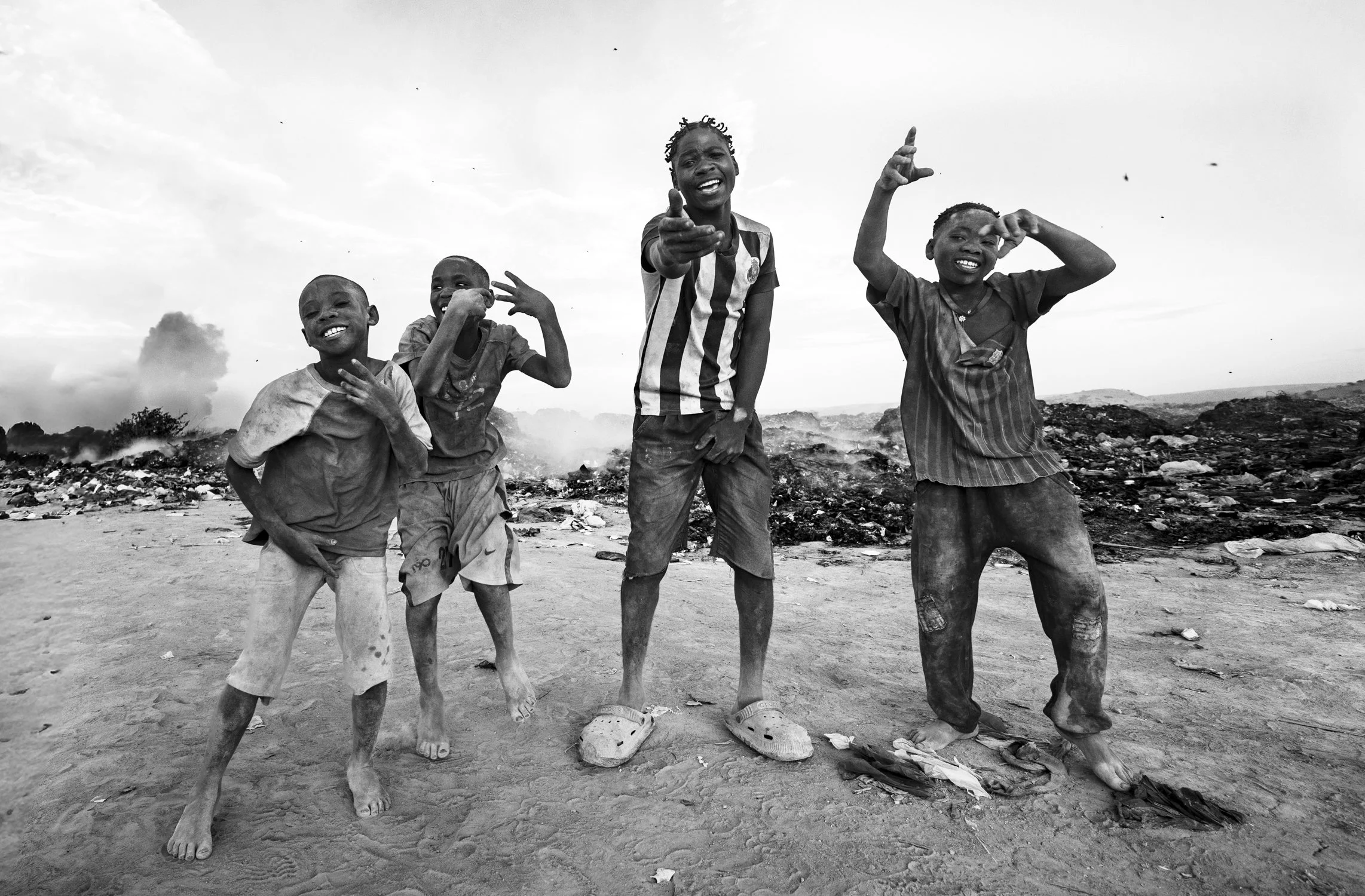
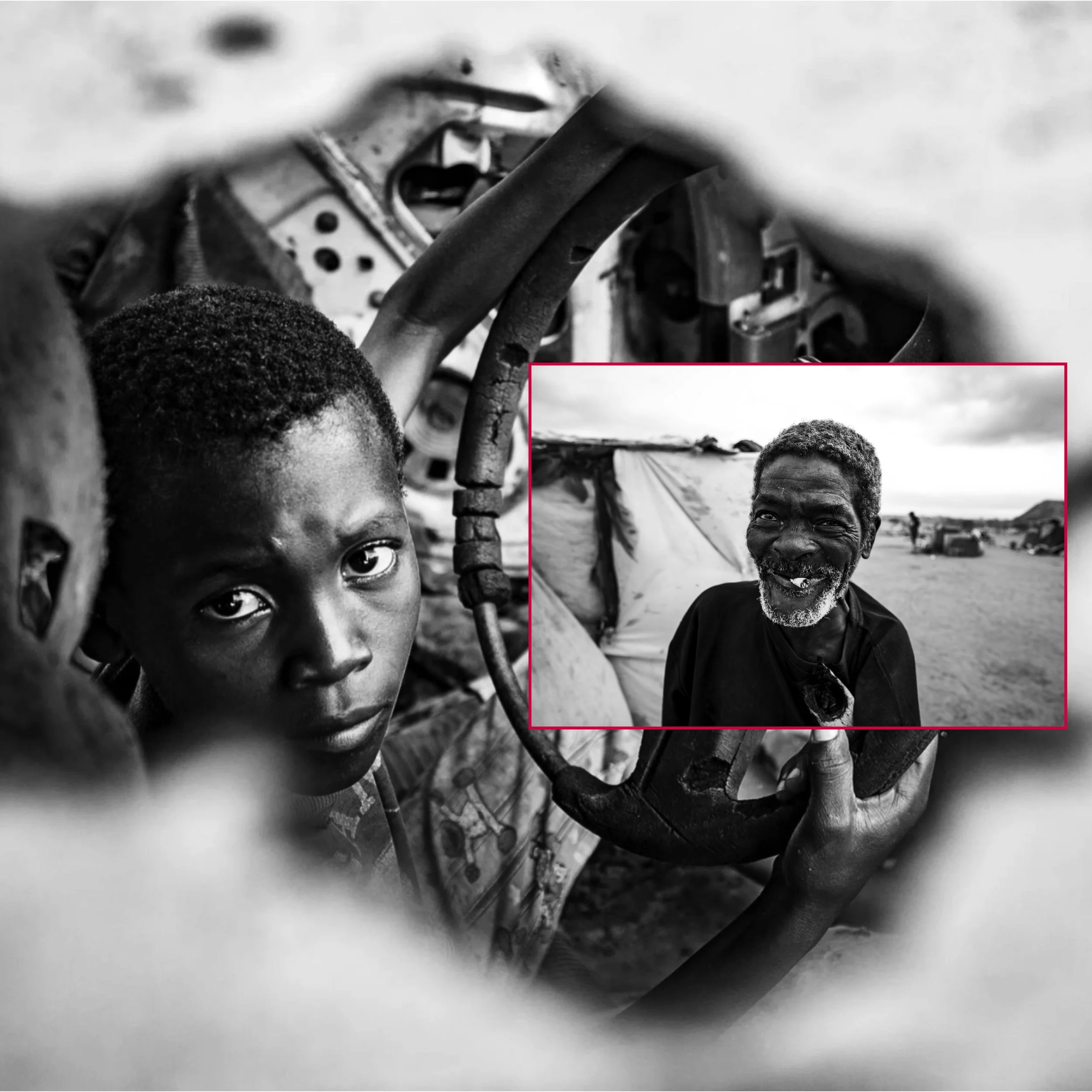
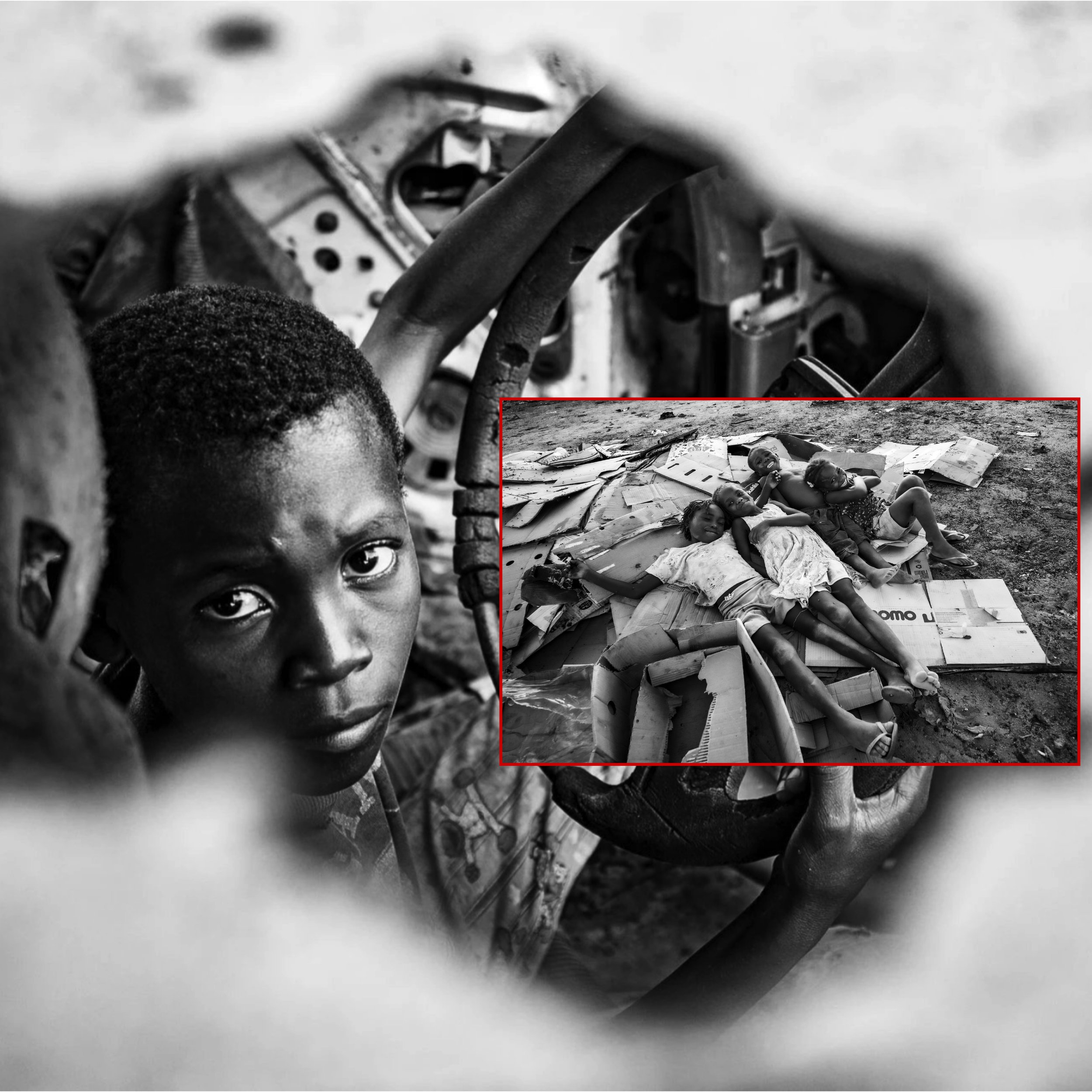
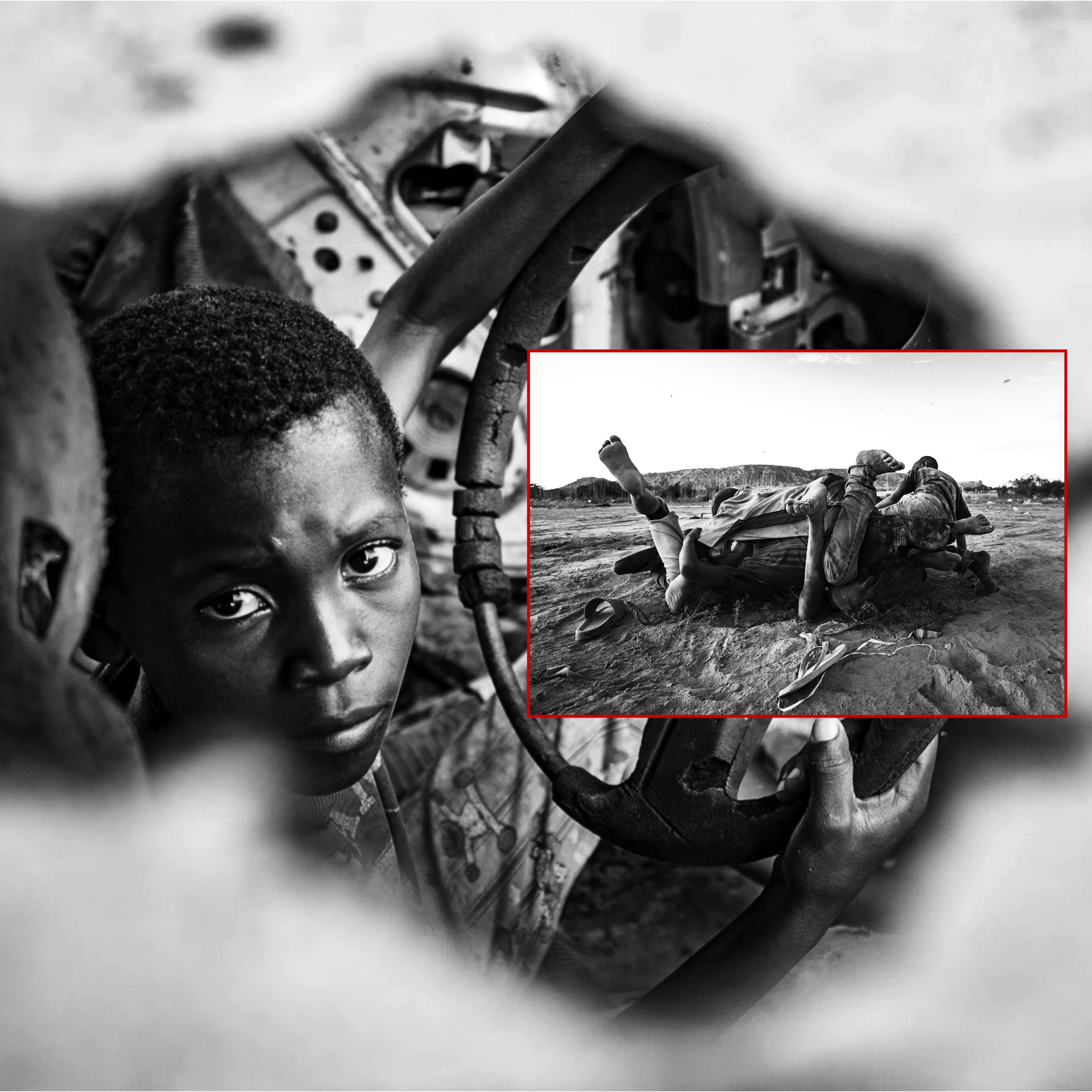
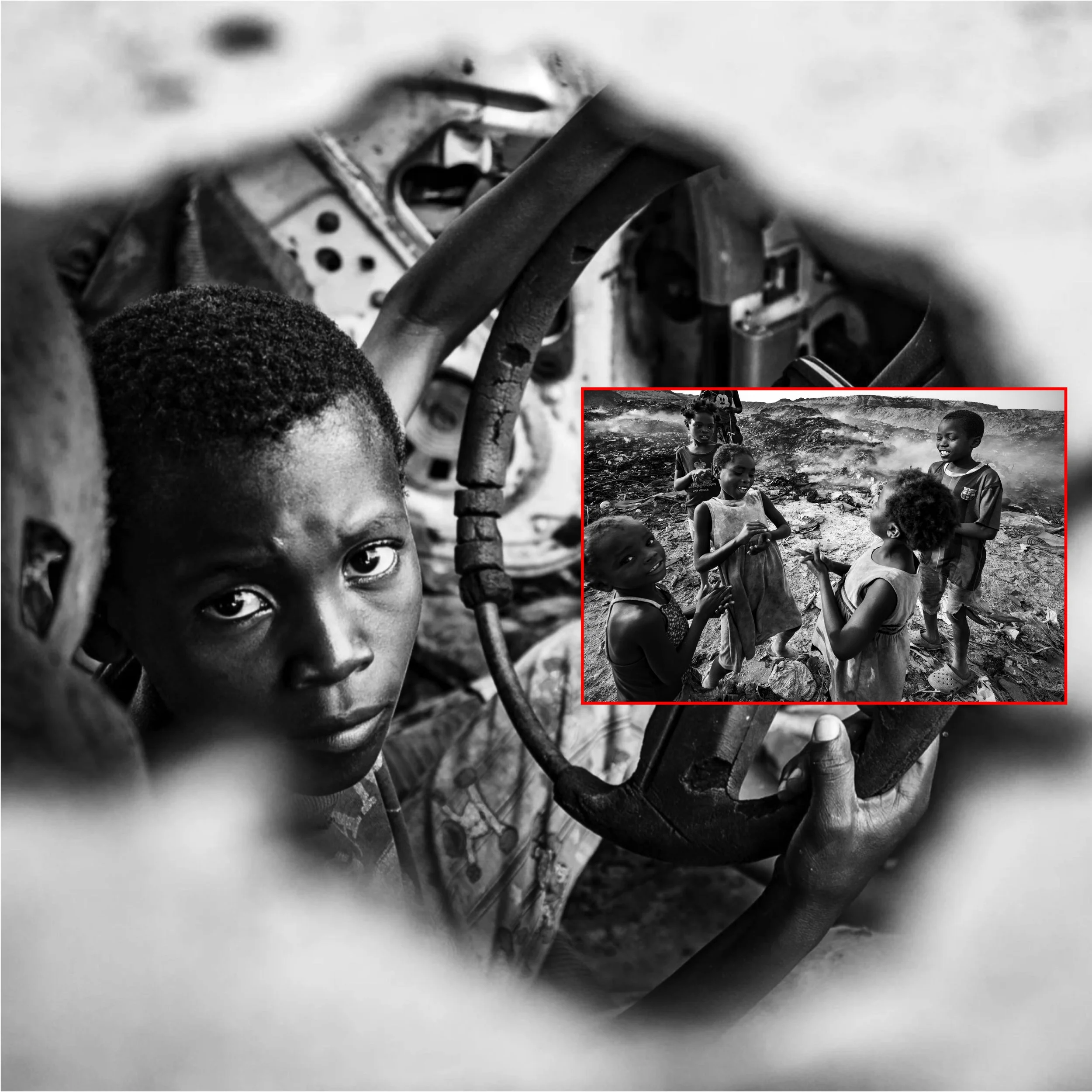
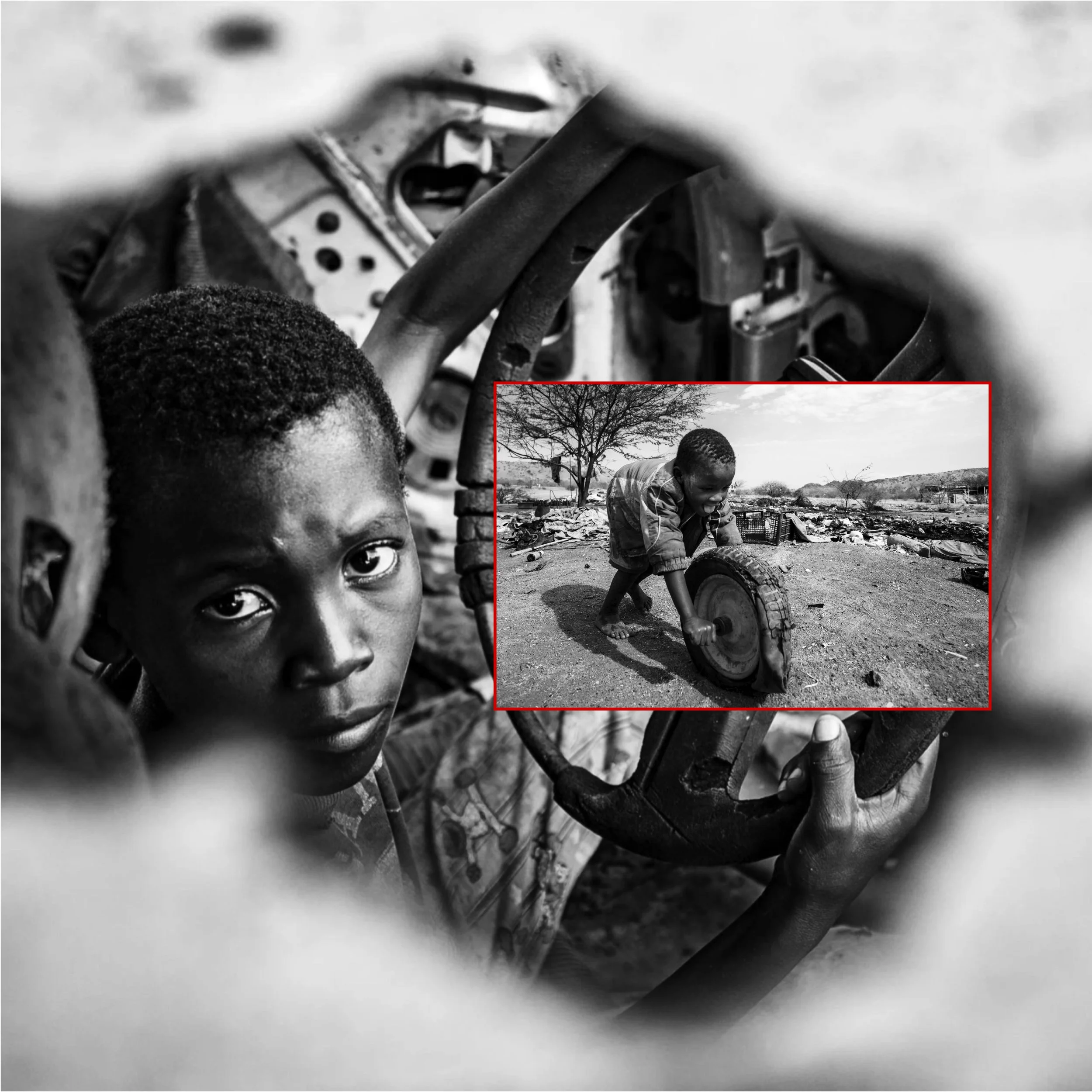
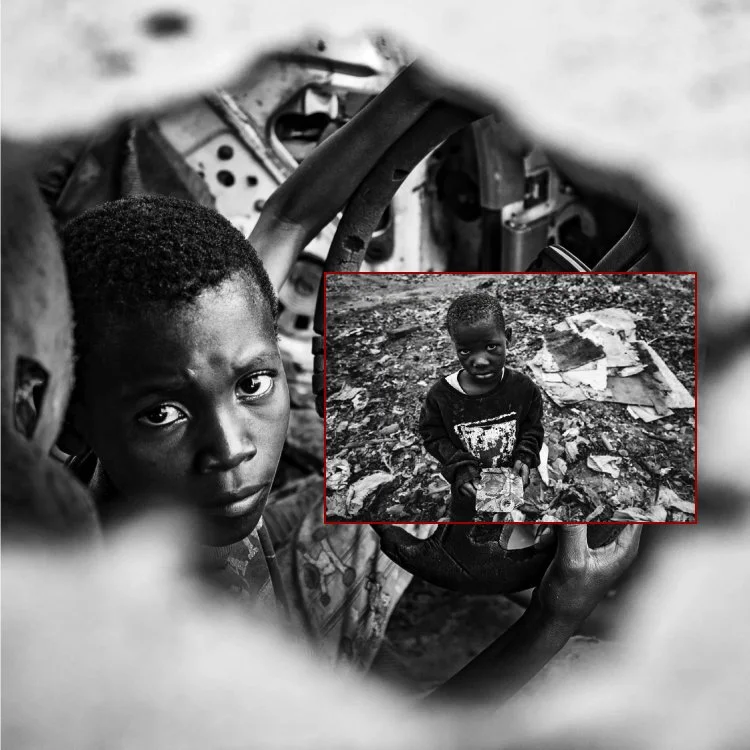
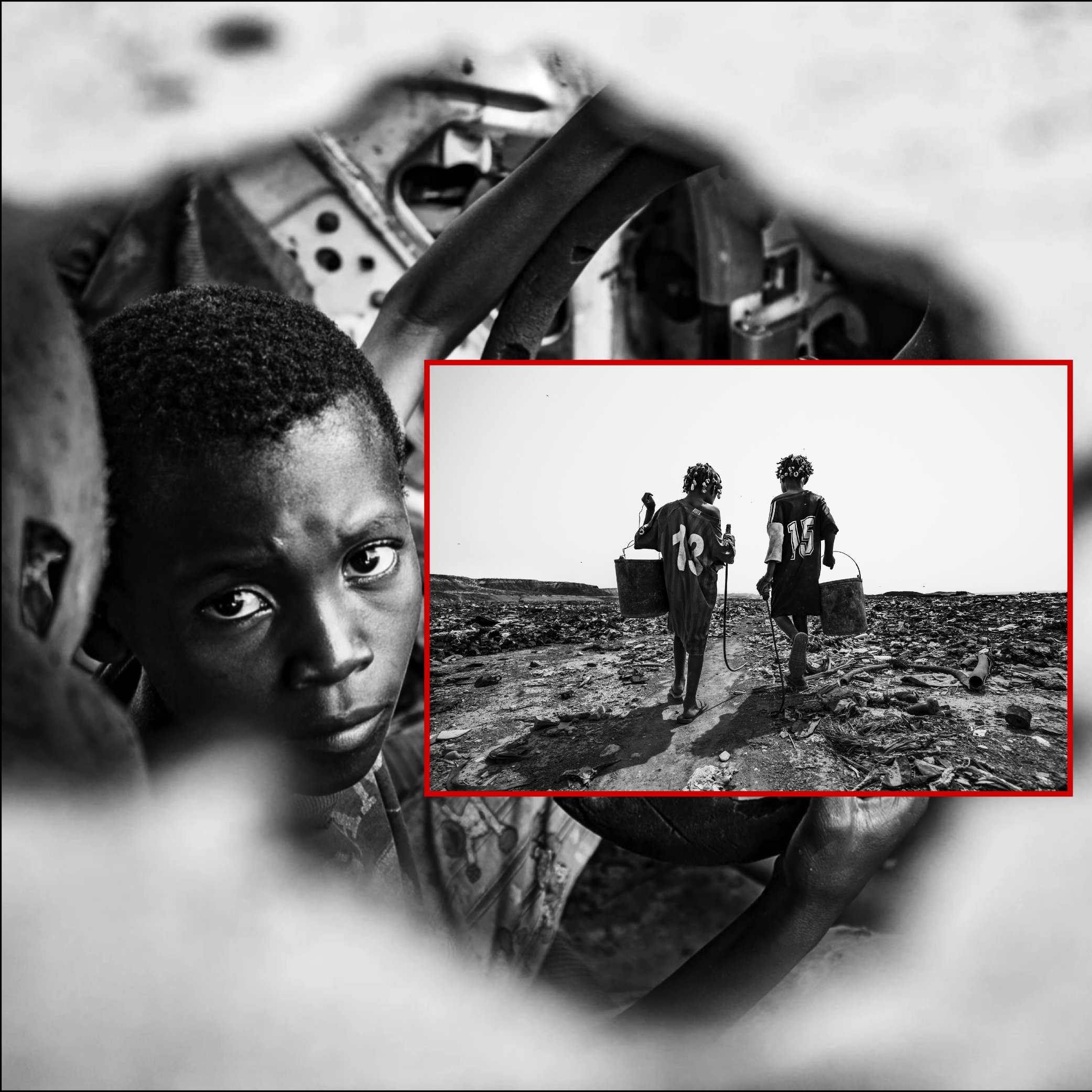
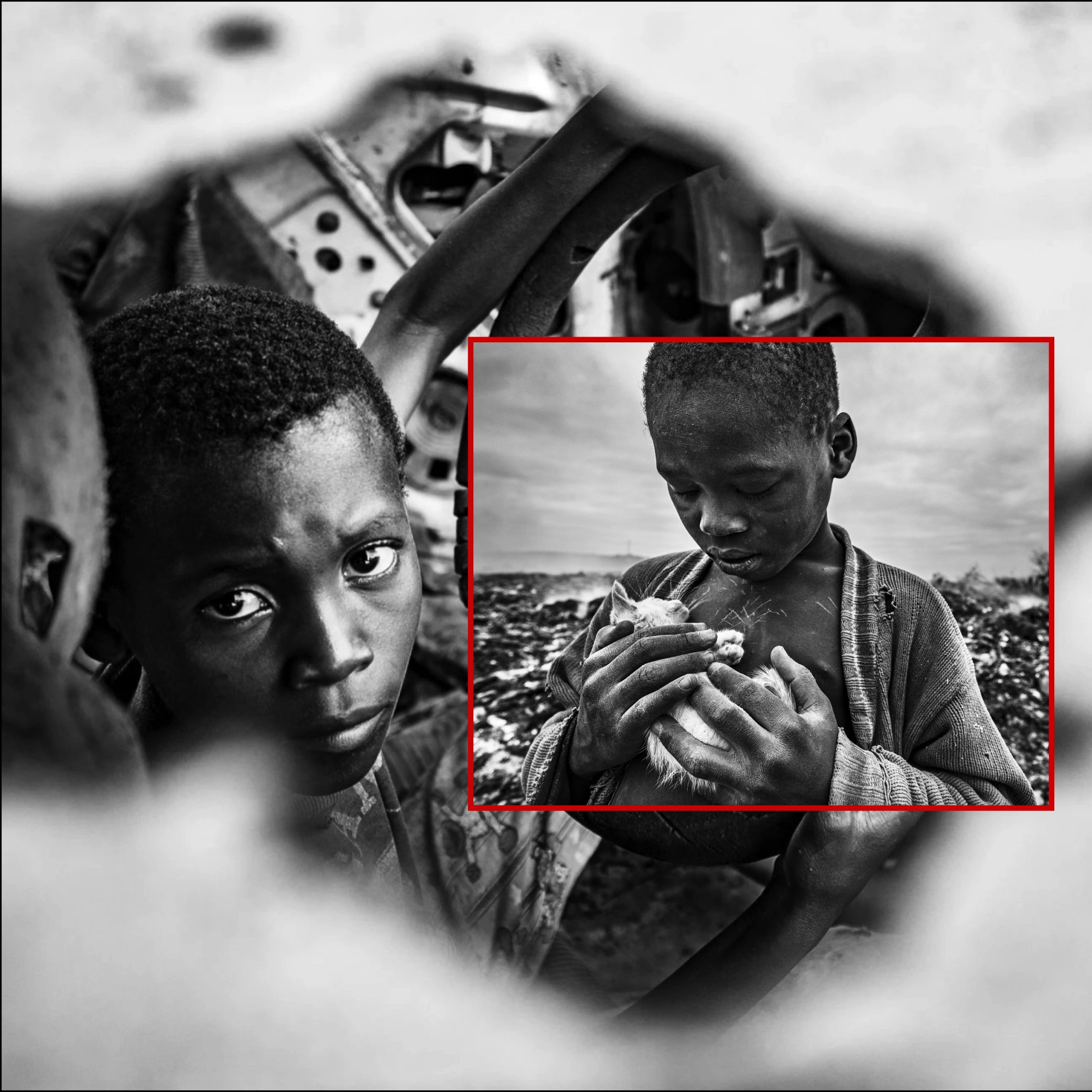
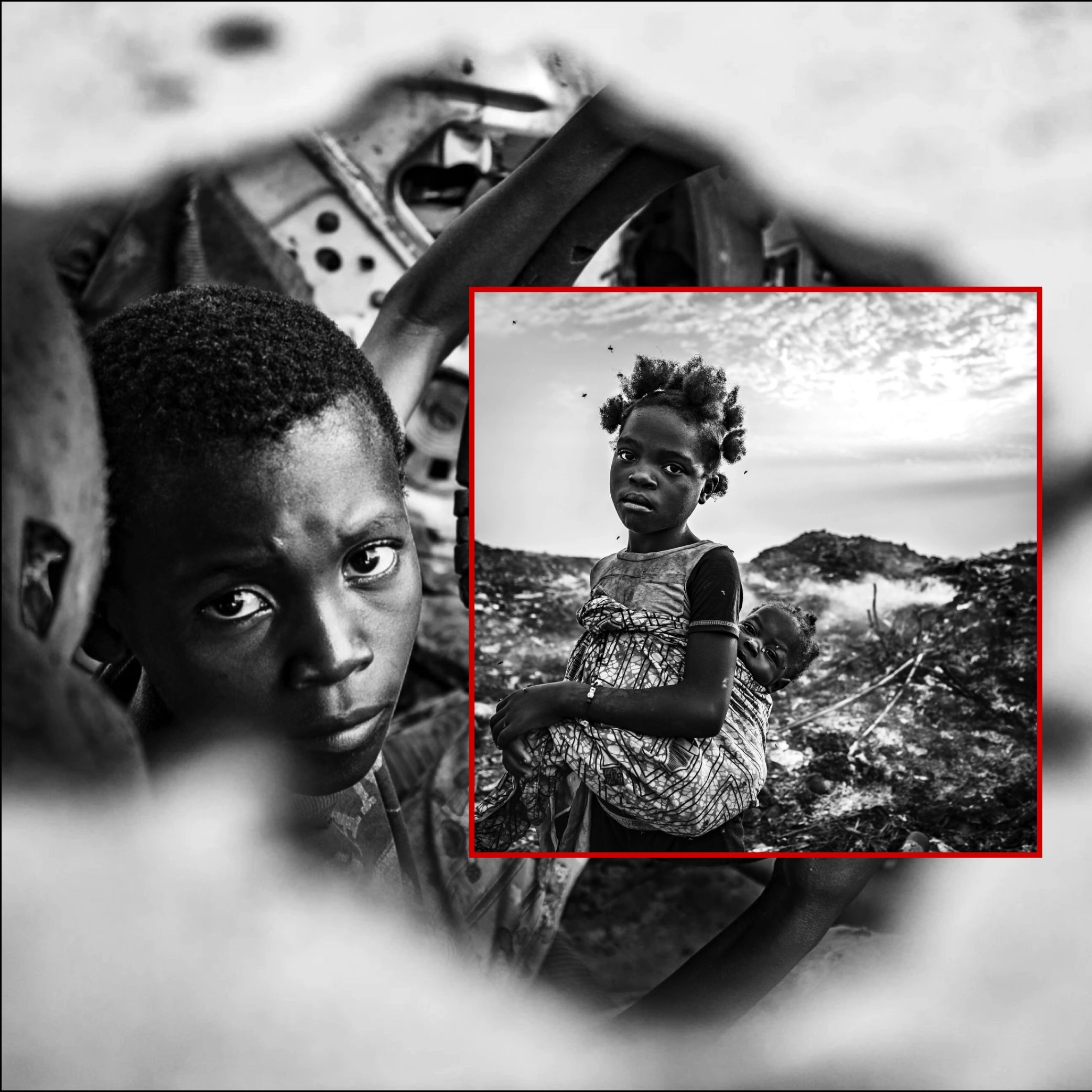
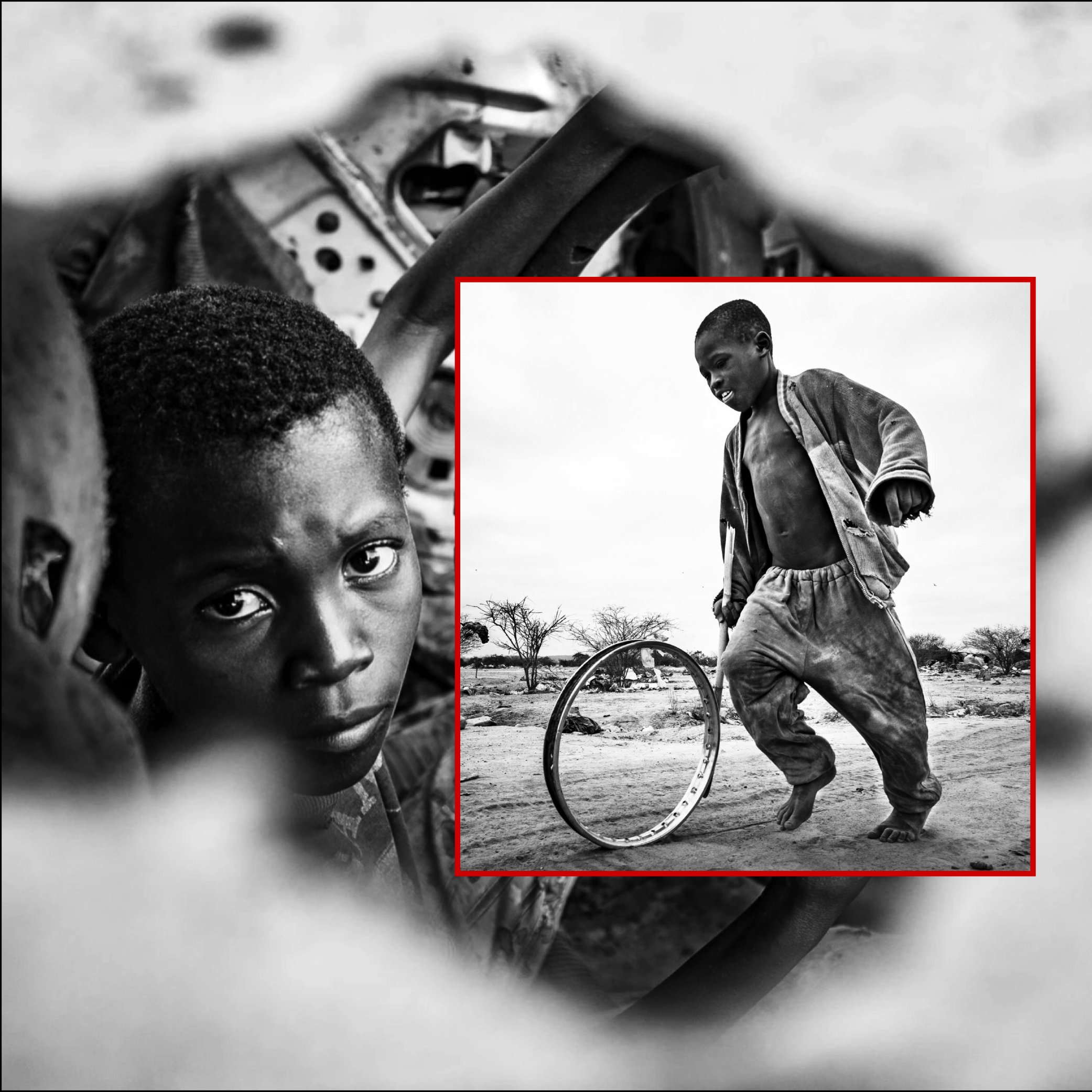
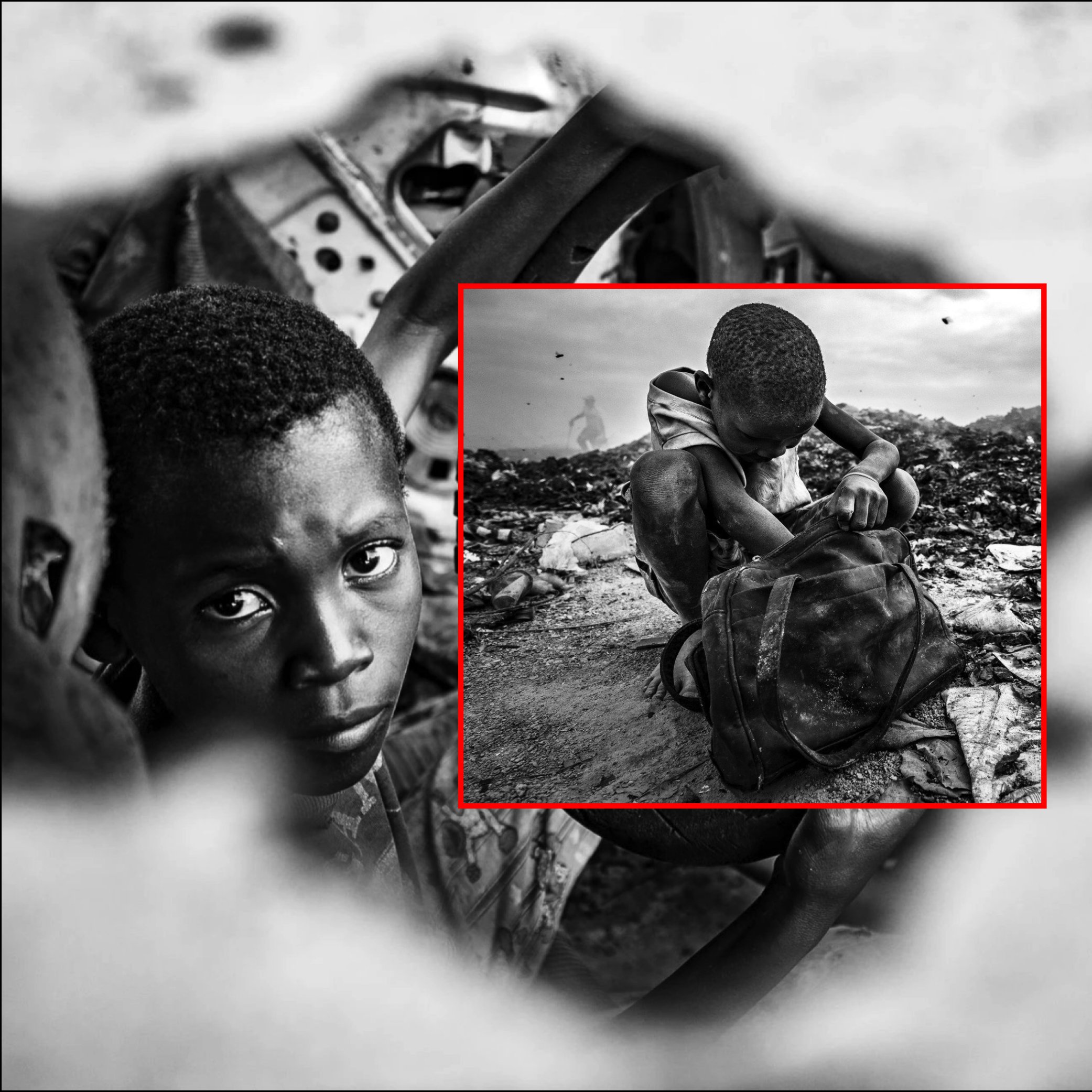
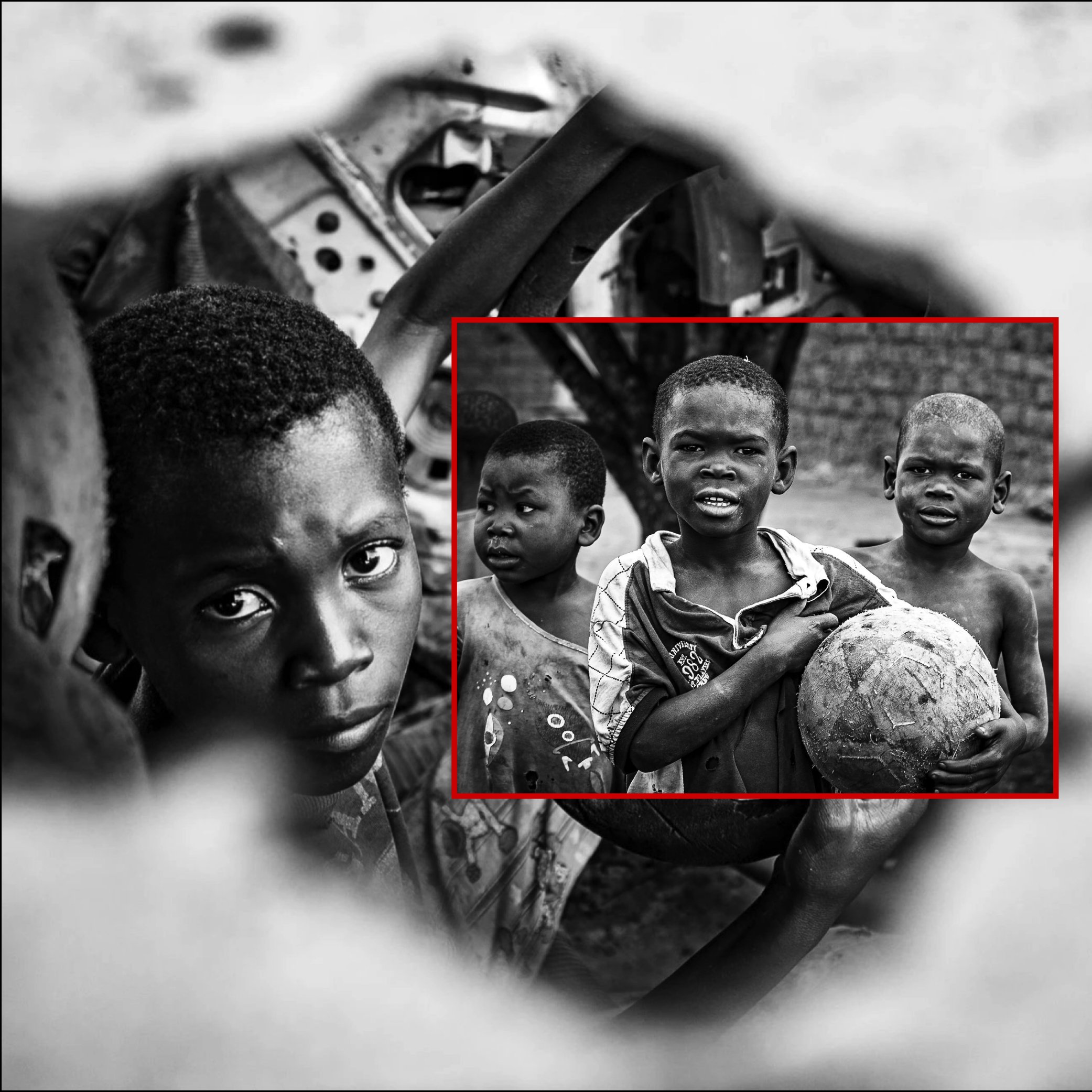
Amid the smouldering mounds of an endless landfill, where the air carries the weight of abandonment and the sky hides behind heavy grey clouds, life stubbornly refuses to fall silent. This desolate landscape is both the birthplace and the only world these children have ever known. There are no screens, televisions, or modern sound systems here to dictate the rhythm of the days. No illuminated stages or pristine music that cradles childhood in other corners of the world. Yet, against all the harshness of the scenery, the silence of misery is broken by a purely human force.
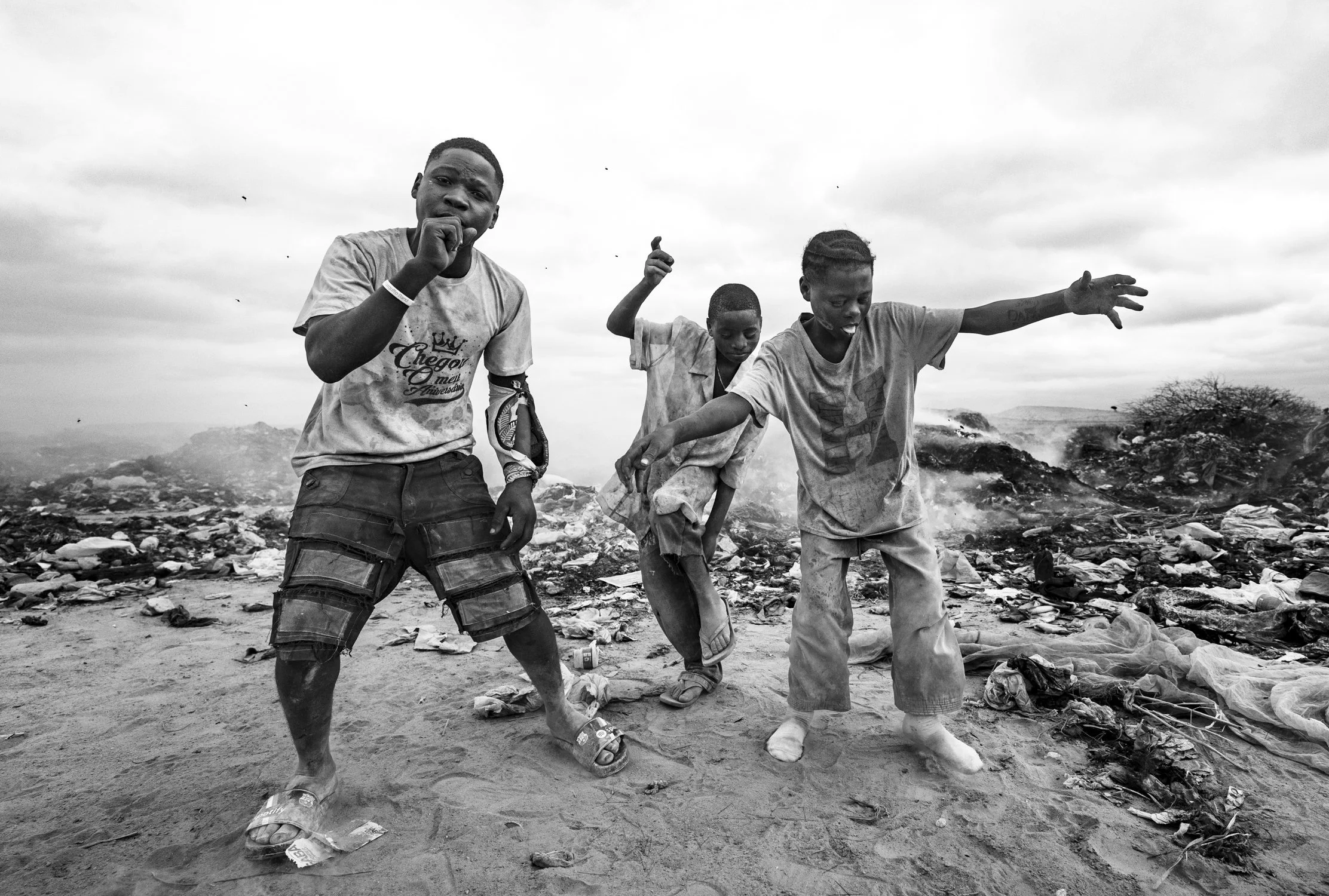
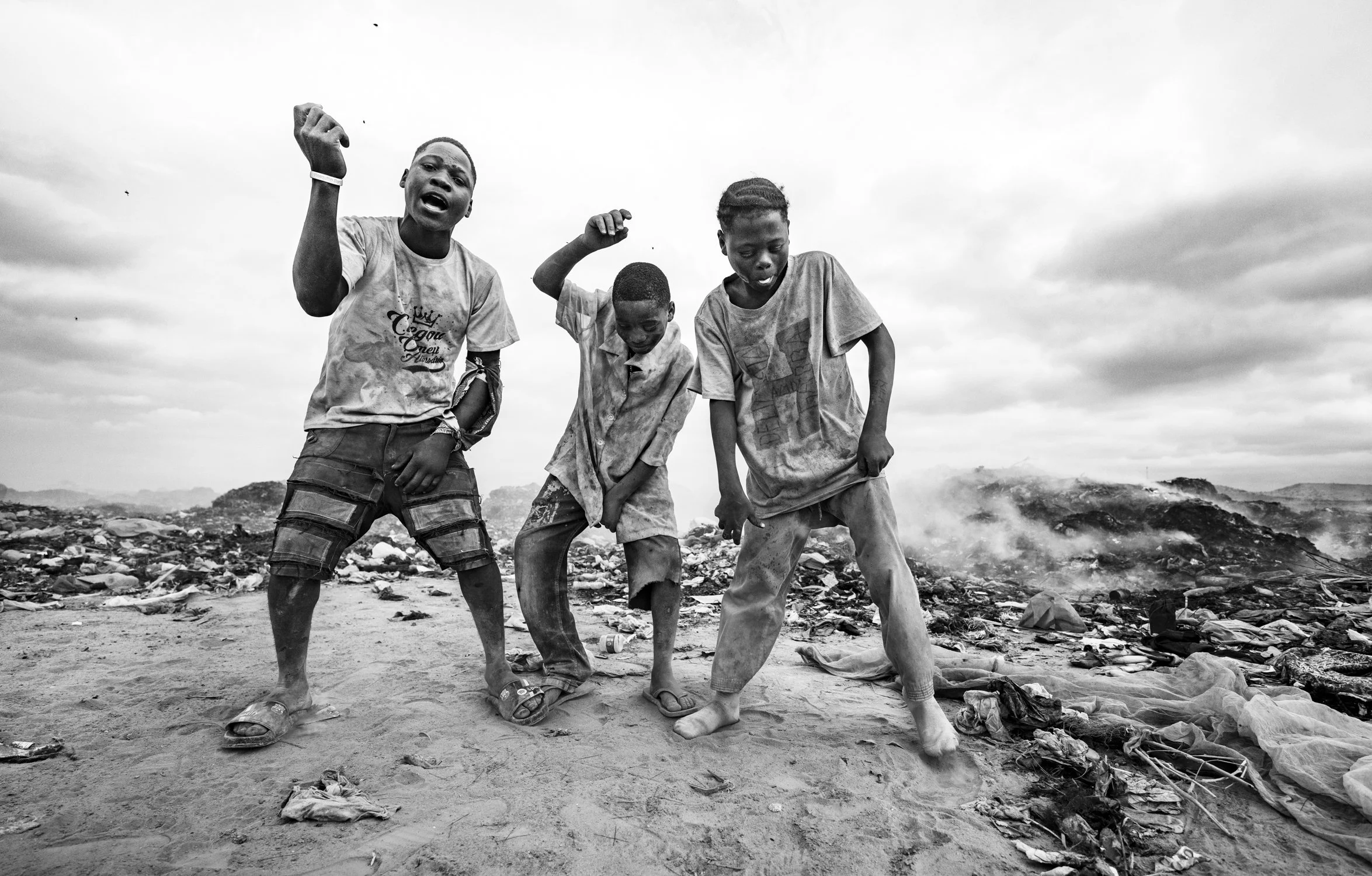
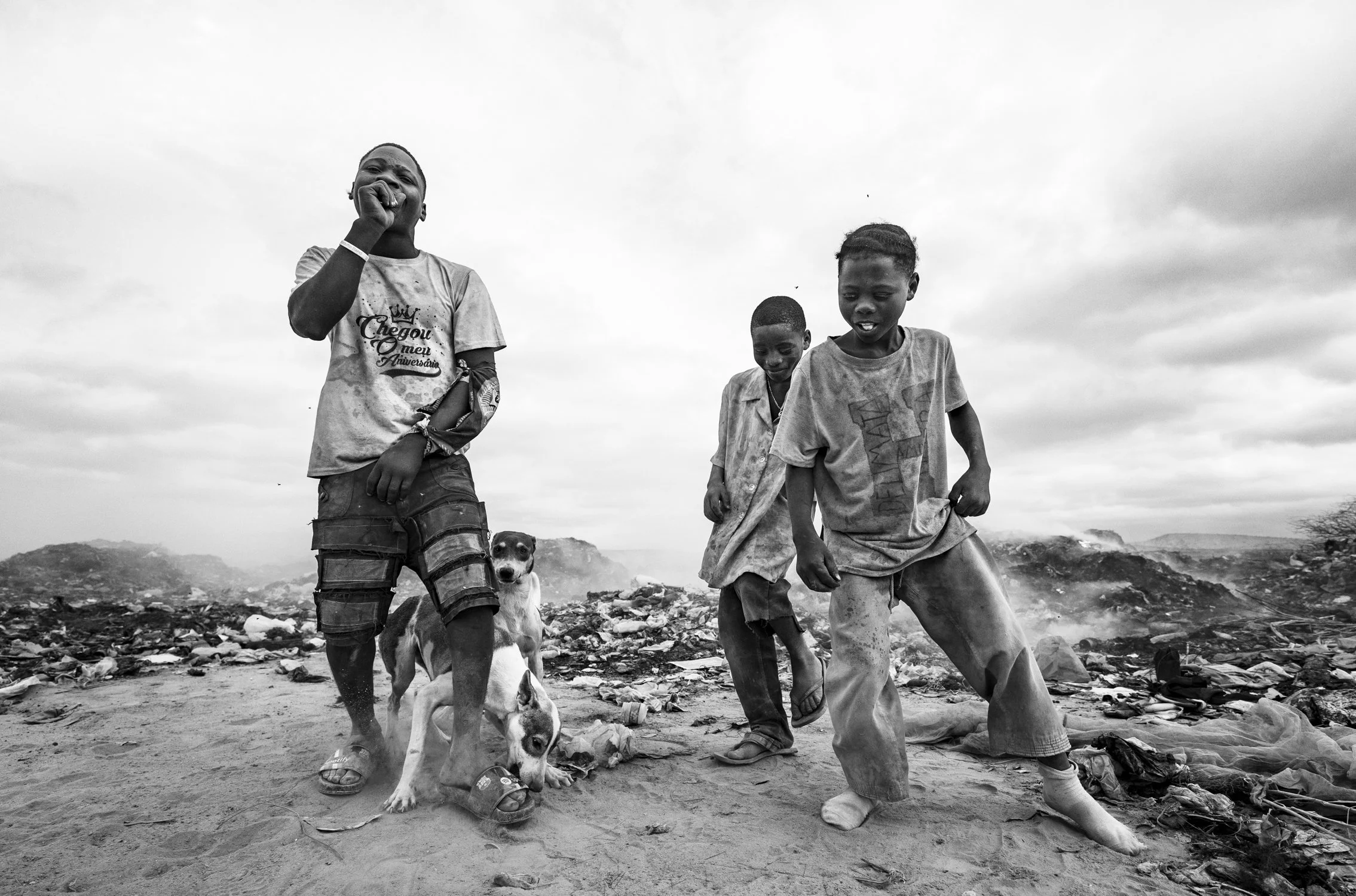
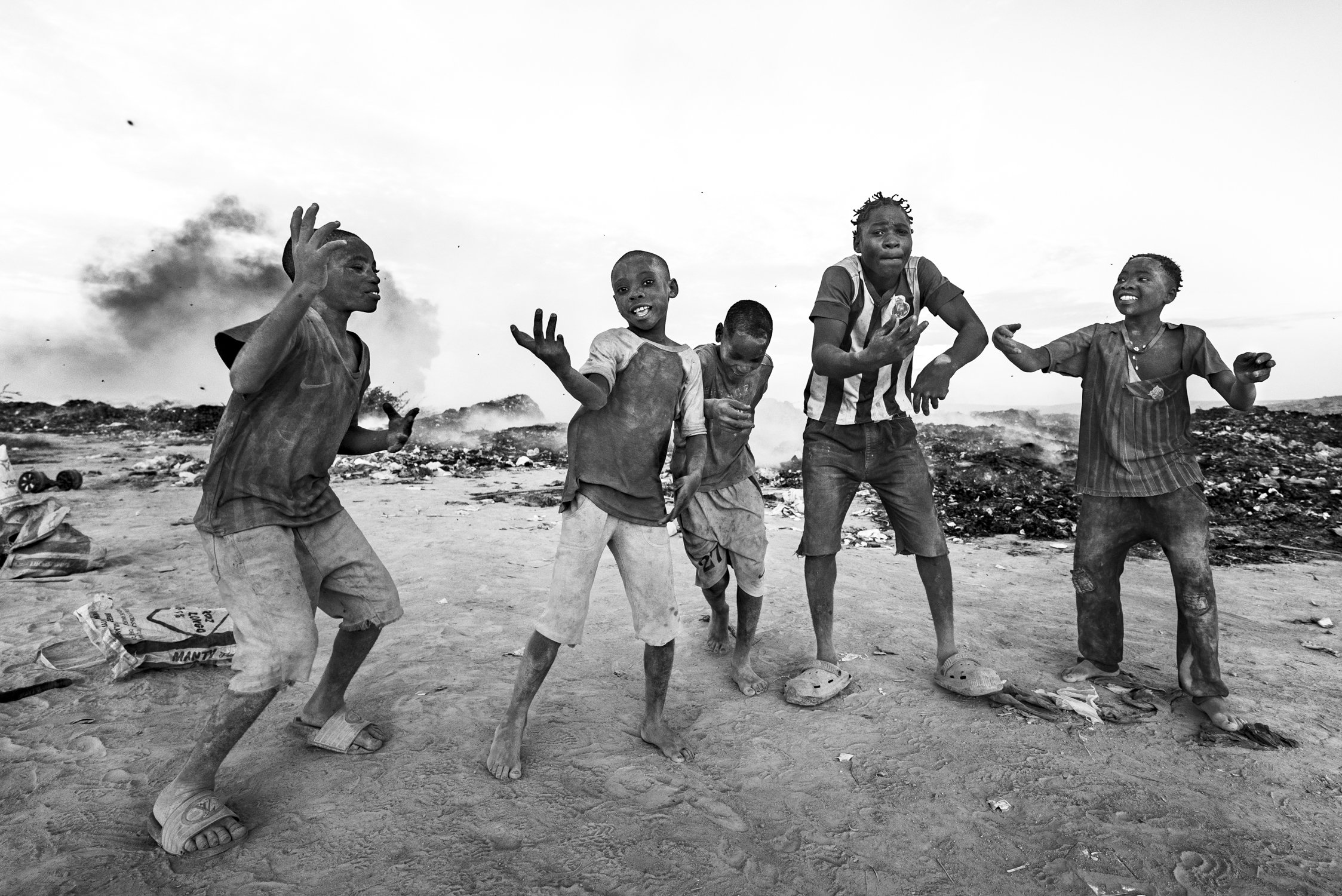
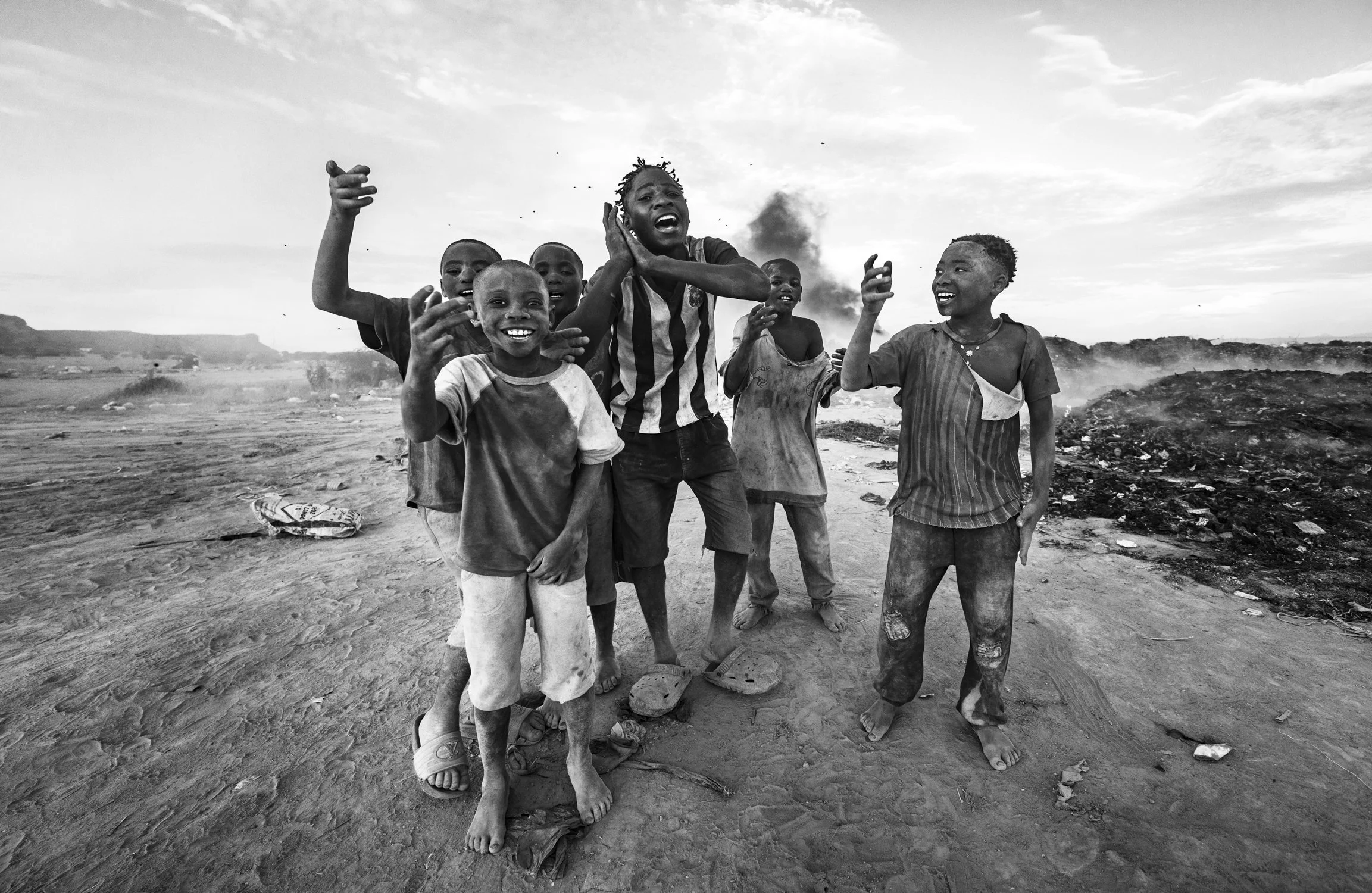
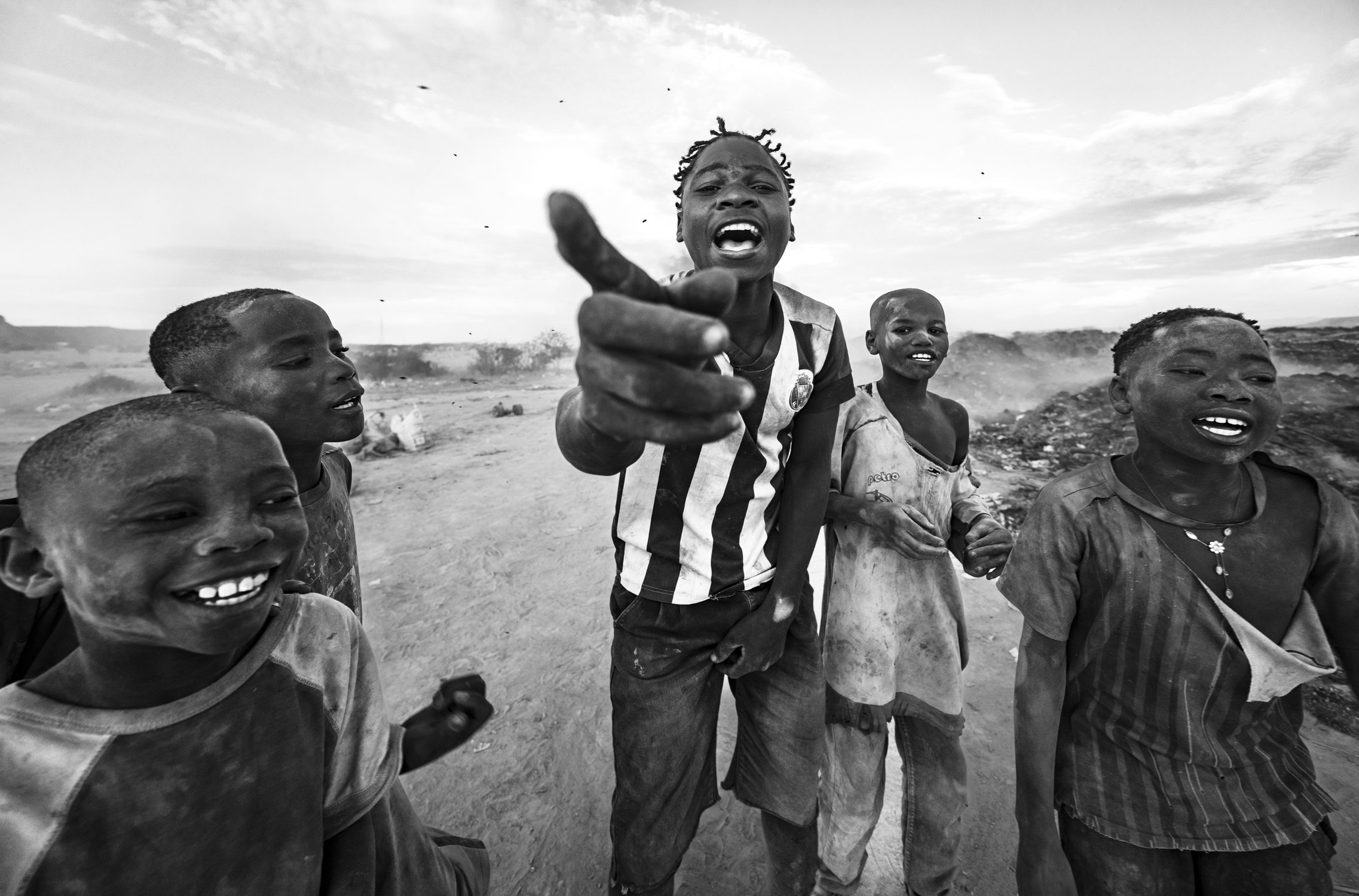
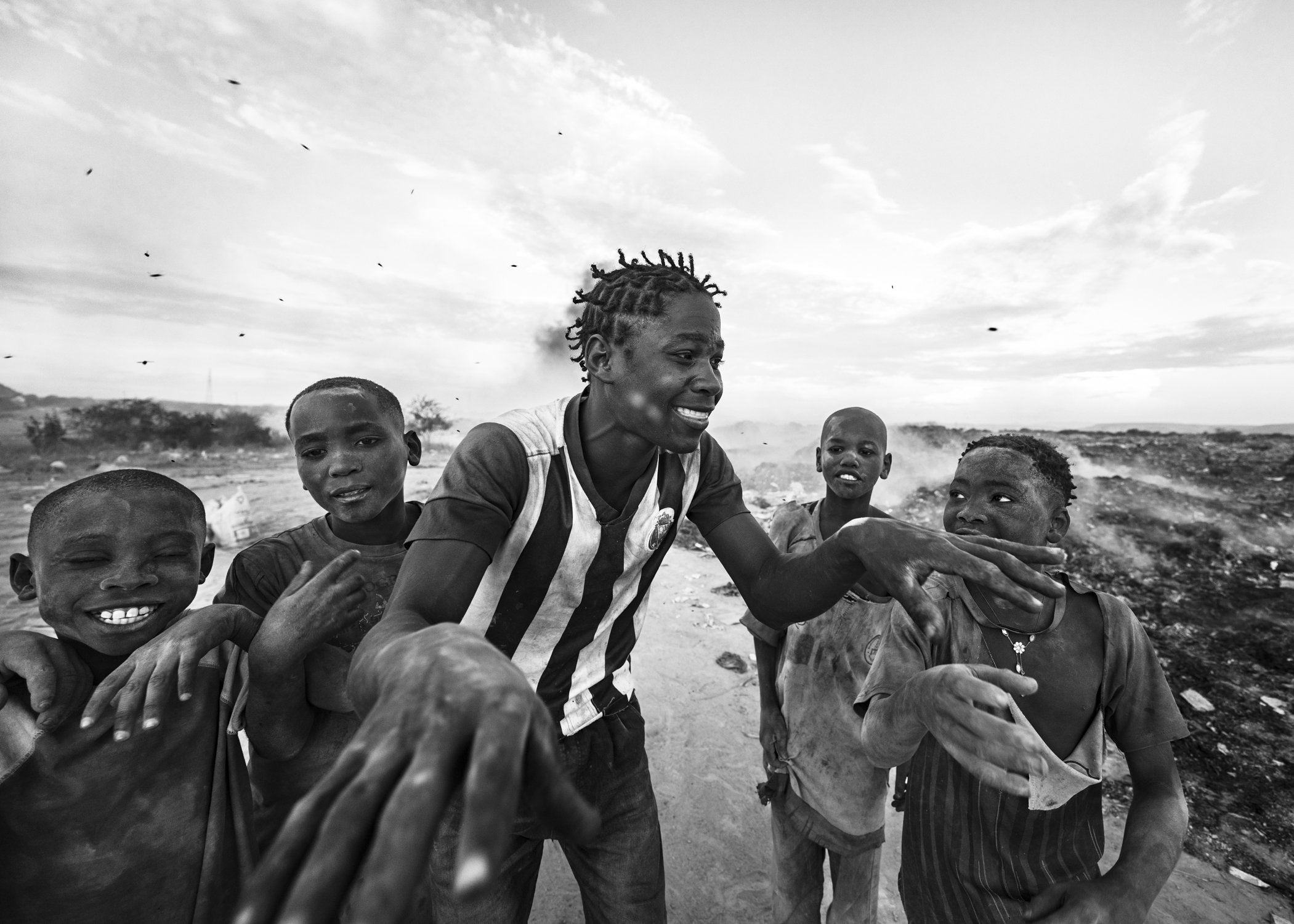
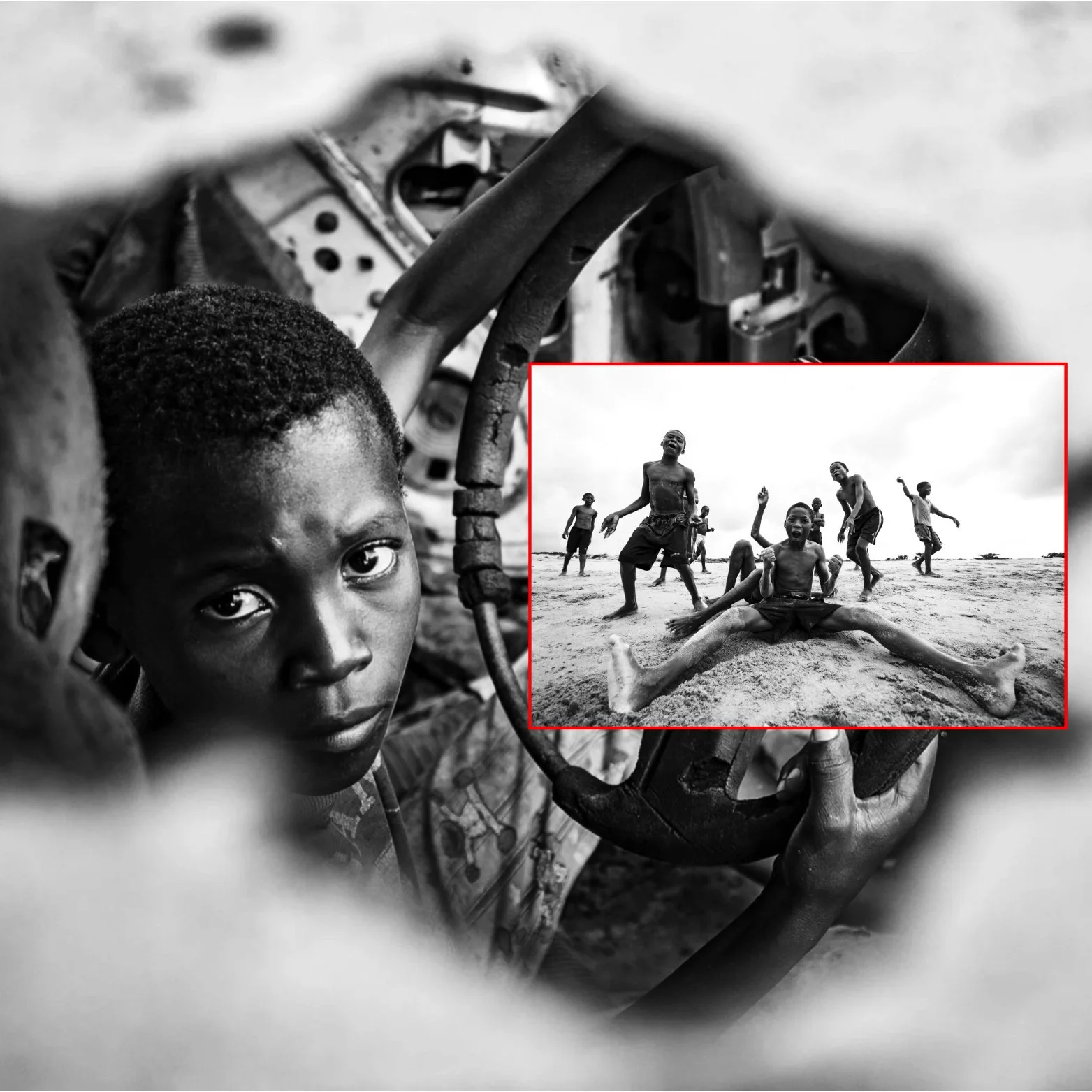
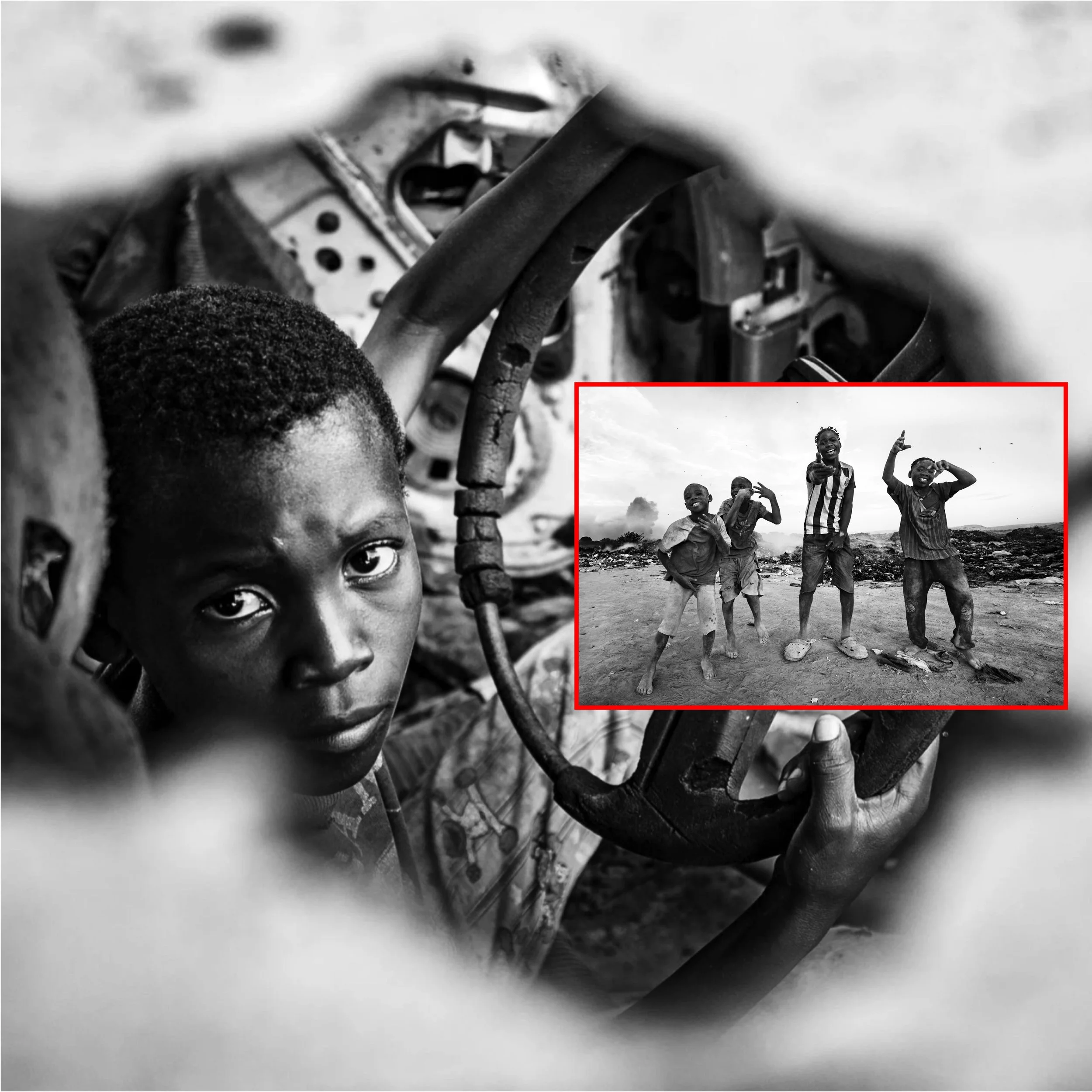
In this chapter, the music is born from nothing—or rather, it is born from within. Keto, an older brother who shares the same destiny, the same ground, and the same worn, soiled clothes, becomes the maestro of this improbable playground. Cupping his hands to simulate an imaginary microphone, he unleashes his voice. He sings Kuduro, the vibrant rap born from the streets of Angola, improvising verses that echo through the debris. His voice is the only available instrument, yet it carries the pulse of an entire community.
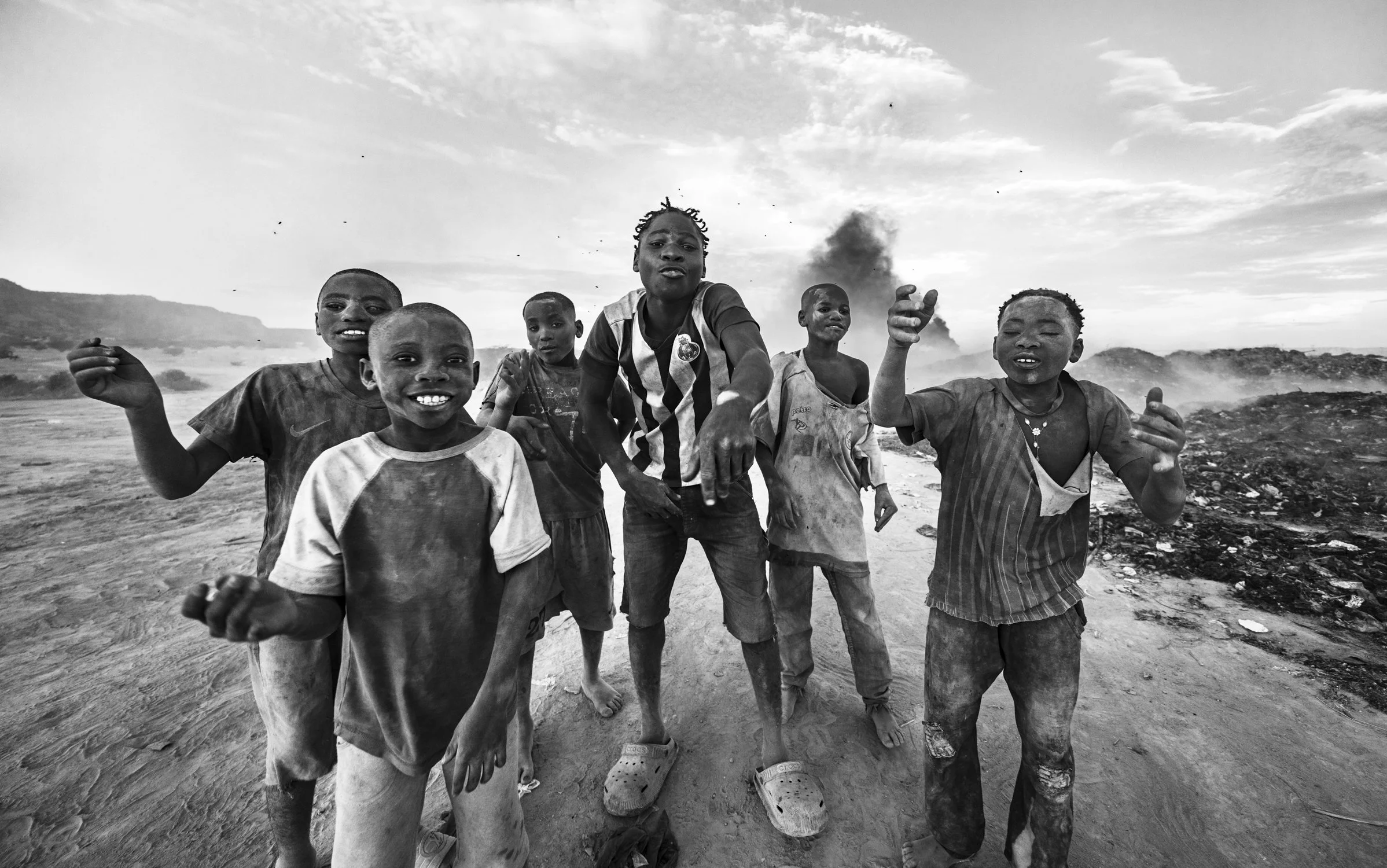
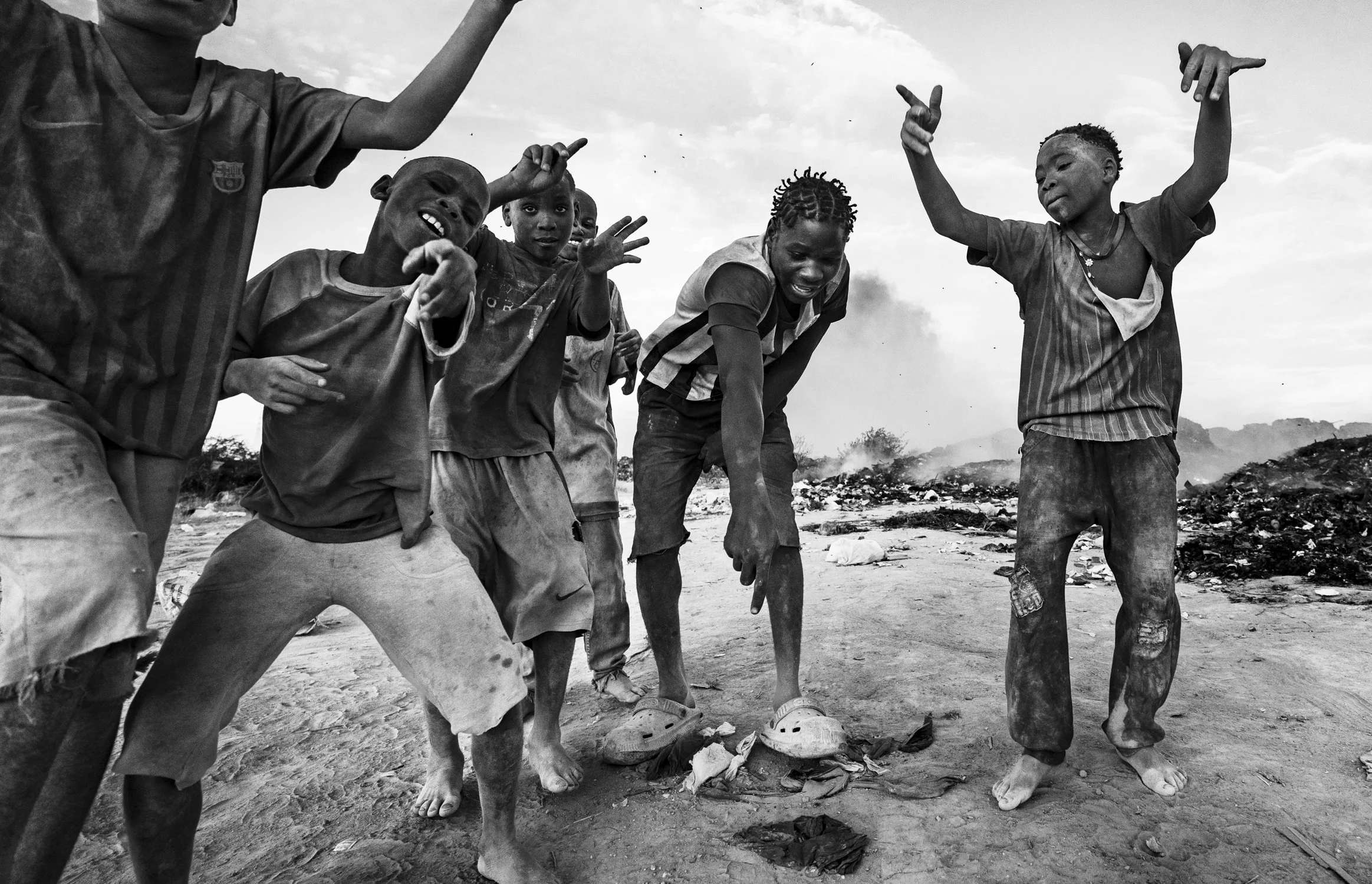
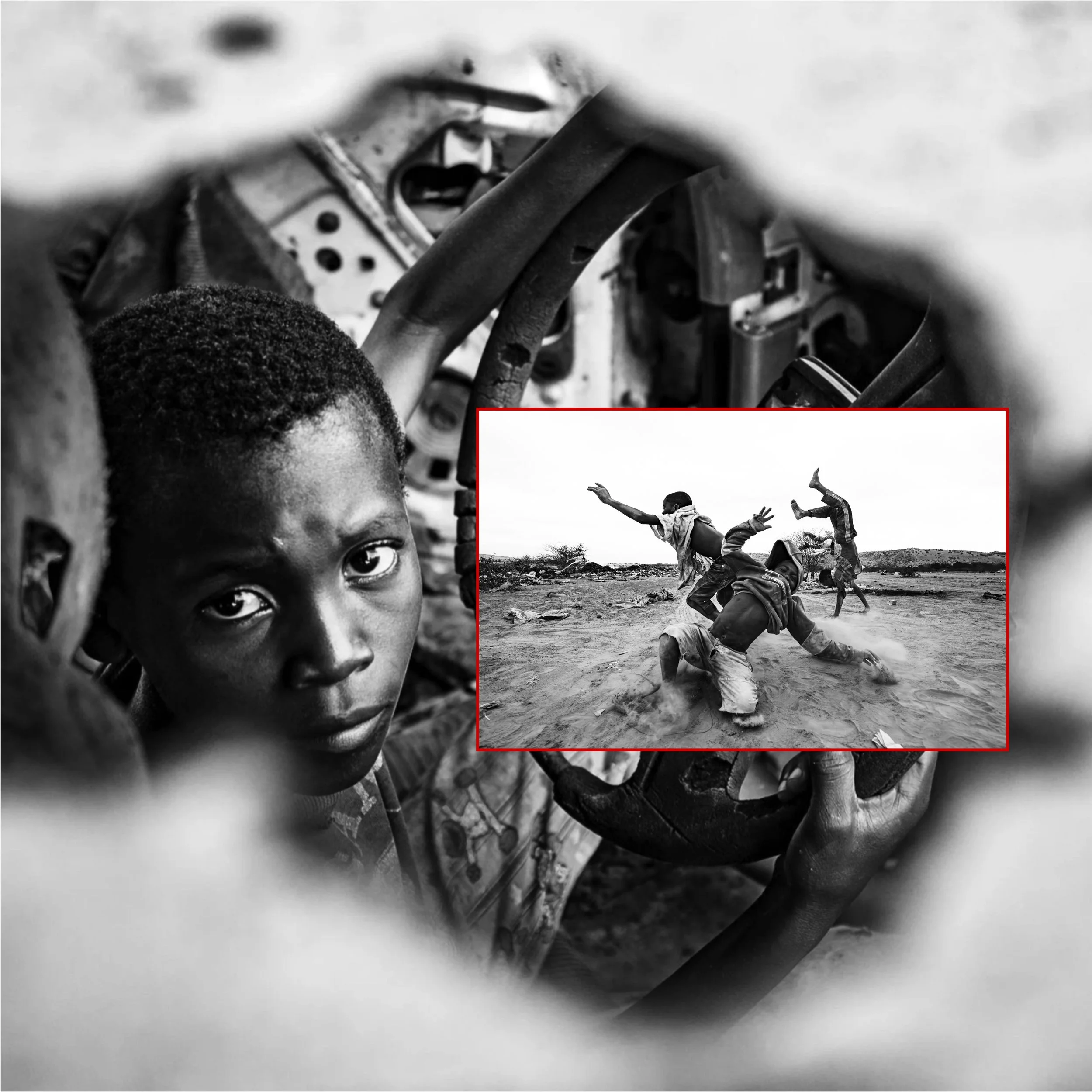
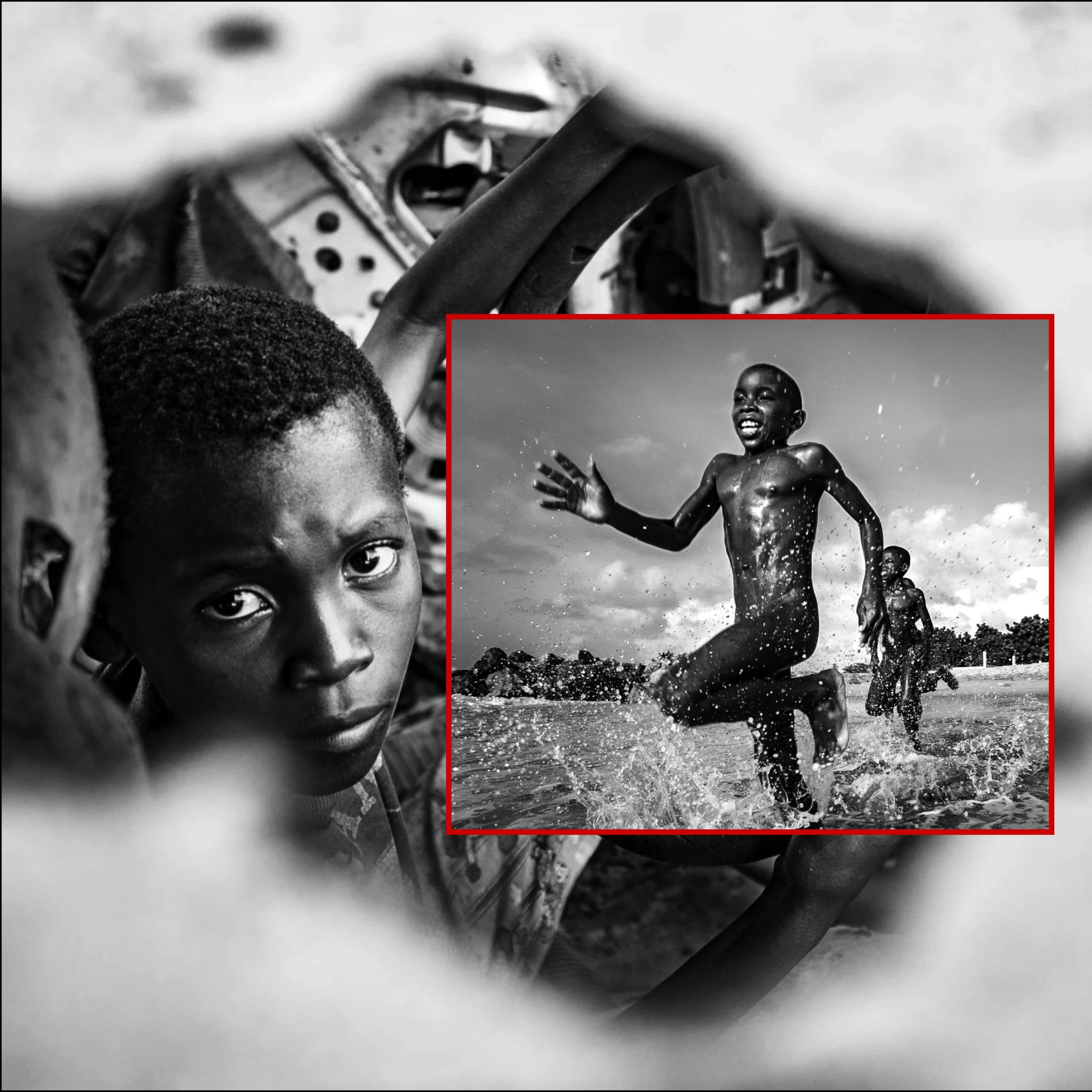
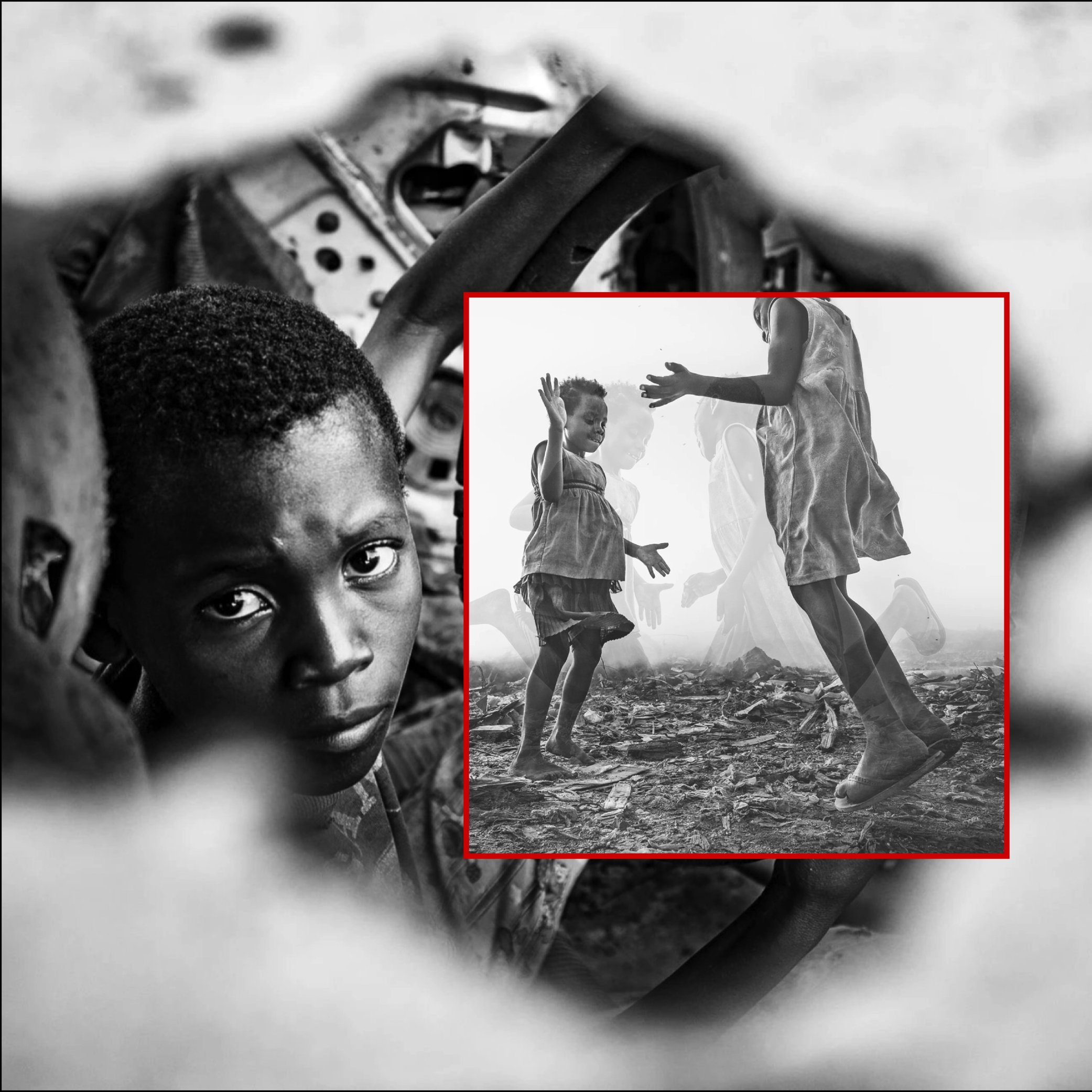
Around him, the miracle repeats itself. Hearing nothing but their friend's raw melody, the children burst into dance, jumping and leaping. Their faces light up with wide, open, and genuine smiles, in a celebration that defies the toxic smoke in the background. They do not need technology to find the rhythm; the voice of the one walking beside them is more than enough to ignite their joy.
These images capture the triumph of sharing and ingenuity over scarcity. Without artifice or possessions, these children prove that true fun cannot be bought—it is invented. As they dance barefoot on the dusty earth, guided solely by an improvised chant, they transform desolation into a poetic manifesto of freedom. In the absence of everything, their music is their own body, and their stage is life itself.