Some reflections on street photography by Diego Bardone
We are pleased to present this article, as we believe it will spark insightful discussions about the meaning, essence, and evolution of street photography today.
The world existed before photography and will continue to exist even if photography disappears one day. This may seem like a trivial idea, but it is worth considering when discussing photography. Before being captured in photographs, the world simply unfolds. People walk, meet, argue, laugh, wait, and even get bored. Extraordinary events and mundane moments occur, often at the same time. The street does not need us to exist; rather, we need the street to take photographs.
Perhaps this is where a reflection on street photography should begin: not from how a photograph should look, but from the motivations behind pressing the shutter. Each of us perceives the world differently. Some notice its absurdity, others its tenderness, chaos, solitude, geometric patterns, the ridiculous, or the invisible connections between people and their surroundings. No single way is correct. Instead, we can cultivate a perspective that is uniquely ours, and photography should be a natural extension of that perspective, not the other way around.
Contemporary street photography deserves careful observation for another reason. It is not that color has become overly important, that compositions are too cluttered, or that photographs are expected to resemble those of renowned photographers. The issue isn't the language of photography itself. The problem arises when the language supplants its essential motivation. For example, filling the frame can be a wonderful choice. It can convey the world's complexity, create unexpected relationships, and compel the viewer’s eye to explore the image. Alex Webb has crafted an extraordinary visual language from this approach. However, the key is not merely to fill the frame, but to understand why you are doing so. Webb is not the issue; on the contrary, he exemplifies how much one can explore photographic language without losing connection to the subject.
The real problem emerges later, when only the external techniques of a great artist remain. When the act of filling the frame, layering, employing color, and embracing complexity are reduced to a mere recipe, the essence of photography is lost. A similar critique can be made of other renowned photographers like Bruce Gilden, albeit for different reasons.
The extreme proximity, the flash, and the violence of the impact in photography are not merely aesthetic choices; they are part of a specific understanding of the road and how to engage with it. However, imitating the result without grasping the underlying necessity that produced it is problematic. This applies to any stylistic choice in photography. The flash, color, proximity, layering, geometry, and decisive moment can all be powerful when they stem from a personal need. Conversely, when we use these elements merely because we know they "work," the humanity before us risks becoming nothing more than a component of the composition—a color, a shape, a silhouette, or a contrast.
A photograph can be technically perfect yet still say nothing. The issue is not simply a matter of simplicity versus complexity; a richly detailed photograph can be profoundly human, while a seemingly simple one can appear empty. The humanity of a photograph does not necessarily depend on the presence of a person; it relies on the perspective of the photographer. This may be the key distinction between having a style and having a voice. Style can be learned, but a voice is something that develops over time, shaped by everything we have seen, loved, studied, and experienced.
However, it would be too simplistic to attribute everything to the photographers alone. In recent years, an ecosystem has emerged around street photography that highlights these dynamics. Photography brands often describe street photography as instantly accessible, suggesting that all you need is a camera, a street, and a few passers-by. While this has some truth, the reality is more complex. Taking street photographs is far from simple. What lies between the two—the ease of acquiring a camera and the challenge of capturing meaningful images—is everything that cannot be bought: a perspective, a sensitivity, and an ability to engage with the world before even picking up a camera.
Competitions, while playing an important and often commendable role, inevitably establish an aesthetic. This happens not necessarily out of bad intent, but because every jury must make choices, and each choice tends to reflect what it recognizes. Certain colors, specific compositions, particular frame densities, and especially striking or immediately recognizable situations are often favored. None of this is inherently wrong. The issue arises when what should be seen as a possibility becomes a strict rule.
As a result, photographers may begin to ask a different question. Instead of “What do I see?” they may wonder, “What will work?” This subtle but crucial difference highlights how the concept of “functioning” has become one of the most influential criteria in contemporary photography. Photographs now must excel in competitions, perform well on social media, be effective in exhibitions, and stand out at festivals. They should be immediately readable, recognizable, and surprising.
Festivals, which ought to be spaces for discussion and discovery, are not immune to this phenomenon. This often leads to the same authors, the same styles, and the same aesthetics being showcased repeatedly. While this isn't scandalous, it is typical of how cultural systems solidify over time. The risk here is that street photography increasingly begins to resemble what the system defines as street photography. This creates a curious paradox: a genre originally born from the unpredictability of the world sometimes risks becoming predictable in its representation.
However, I don’t believe there is any deliberate conspiracy to standardize street photography. Rather, it’s a simpler issue. Systems inherently reproduce what they recognize, what they know how to evaluate, and what they consider valid. Photographers, in turn, learn to navigate that system. Social media has accelerated this process. If a particular photograph grabs attention, it is shared; if it stands out among countless other images, even better. A cycle forms in which popular images are replicated, what is replicated is recognized, and what is recognized gains even more visibility.
The danger here is that the street becomes merely a place to apply a formula. Yet the real world offers much more than any single aesthetic. It continues to present situations that don’t necessarily fit the mold of what we identify as "good street photography." It brings us irony, drama, tenderness, absurdity, banality, and everything in between. Perhaps a photographer's primary task is simply to be present—observing, being surprised, and recognizing when something resonates with their own perspective of the world. The humanity captured in a street photograph should not be an element added at the end, like a final touch to a composition. Instead, it should emerge organically from the photographer's entire process: the way they look, what interests them, what excites them, what makes them laugh, what disturbs them, and how they understand others and the world.
The subject in front of the lens is not merely a subject; they represent the point where our perspective of the world converges with reality. It would be naive to assume that a photographer's role is to invent something entirely new. The history of photography includes influences, citations, developments, and contaminations. We observe other photographers' work, are influenced by it, and this can resurface in our images. It's always been like this; very few innovations genuinely alter the course of a genre. Over a century, these can probably be counted on one hand. Most of us work within existing frameworks. We can develop, adapt, and personalize it—there's nothing wrong with not inventing.
The real distinction lies in what occurs during this process. An image can resemble countless others yet still be deeply personal. It may use familiar styles, conventional compositions, or recognizable aesthetics. What’s vital is that everything leading to the photograph has come through our unique perspective. We don’t need to create a brand-new style of street photography. Instead, we should aim to express something through what already exists. Perhaps the true challenge isn’t in taking a photo that has never been captured before, but in crafting an image that acknowledges many influences while still being distinctly our own. After all, the world will continue its course, even in the absence of photography. It’s up to us to ensure that when we photograph it, it reflects our unique understanding, not just a learned recipe for capturing it.
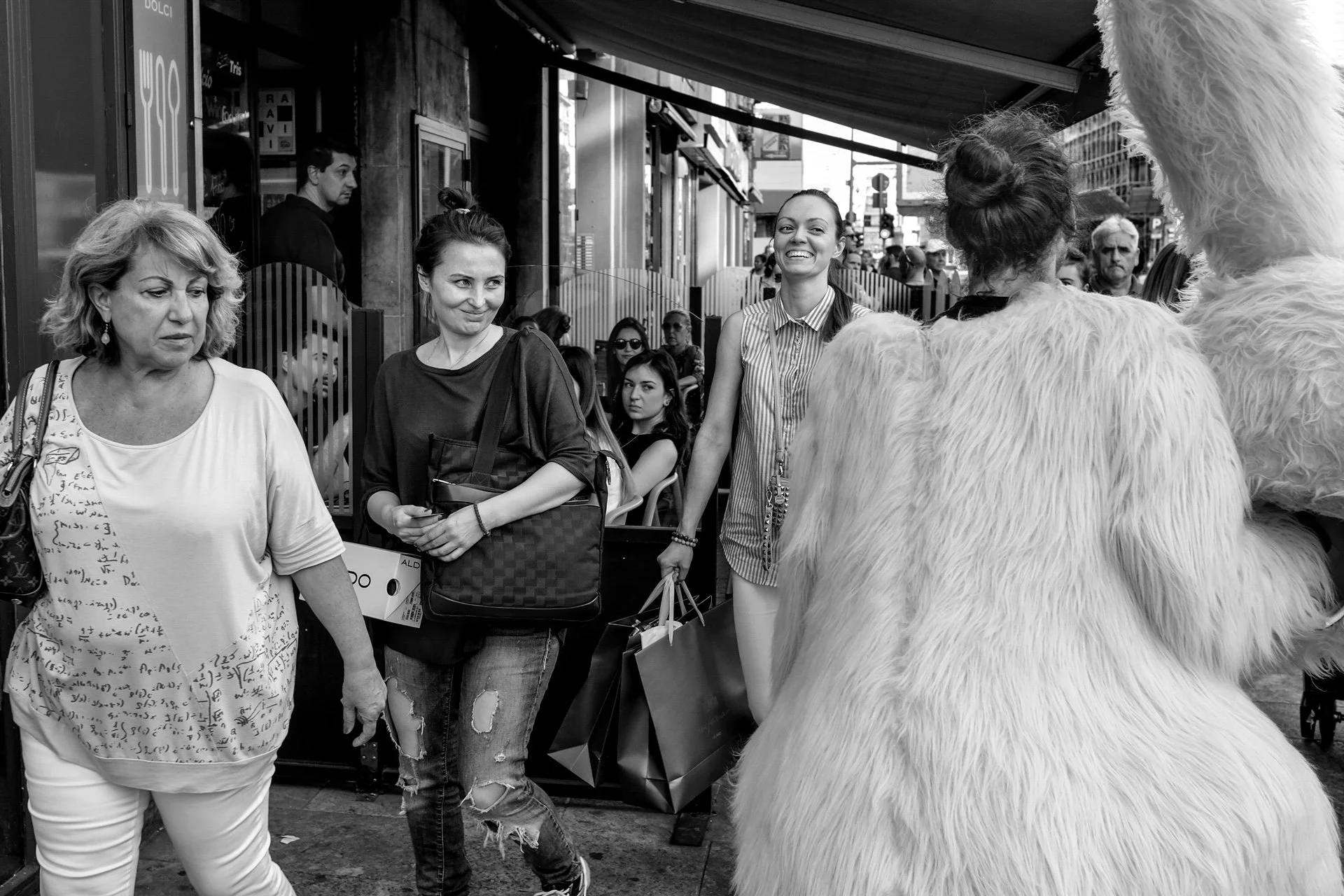
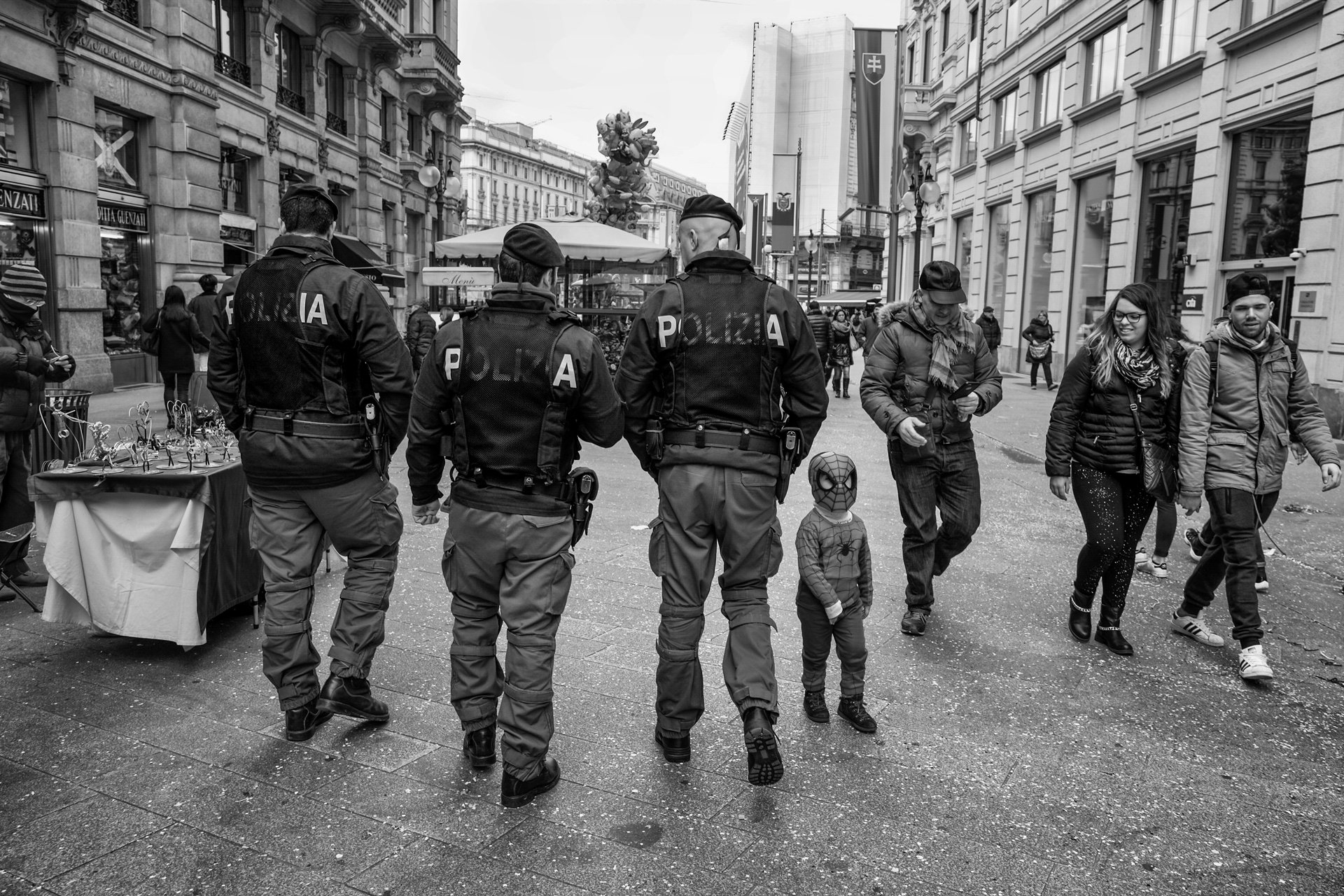
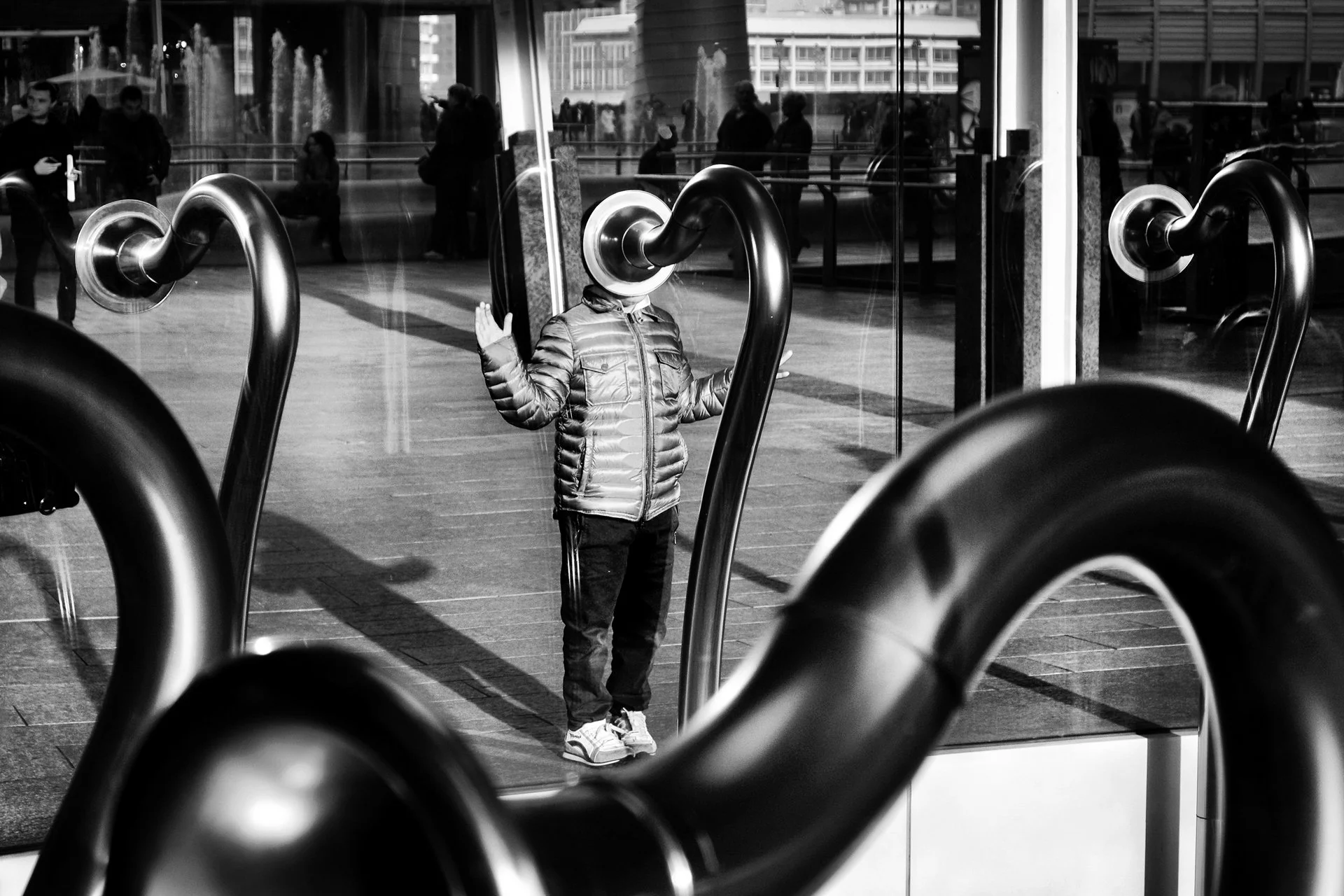
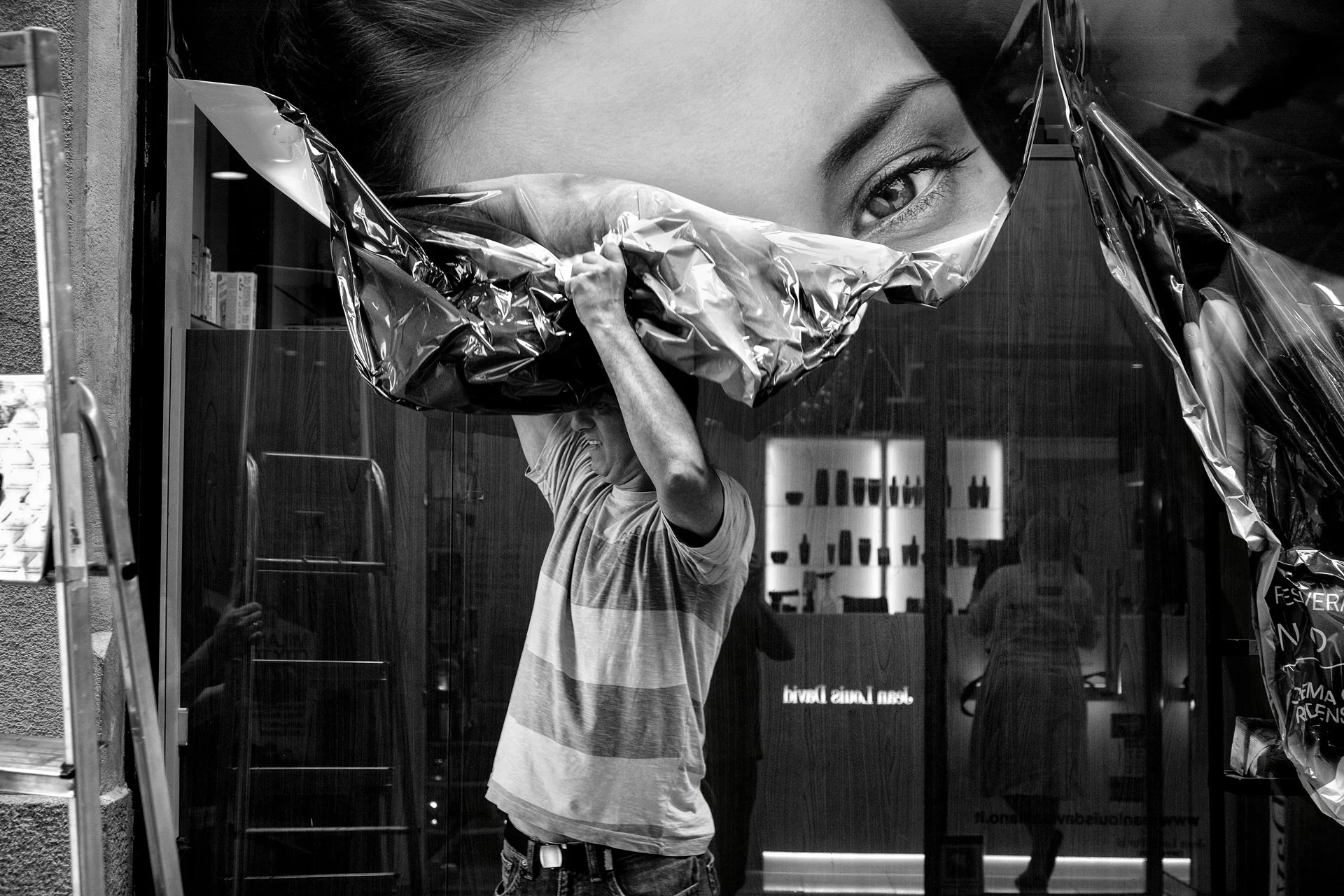
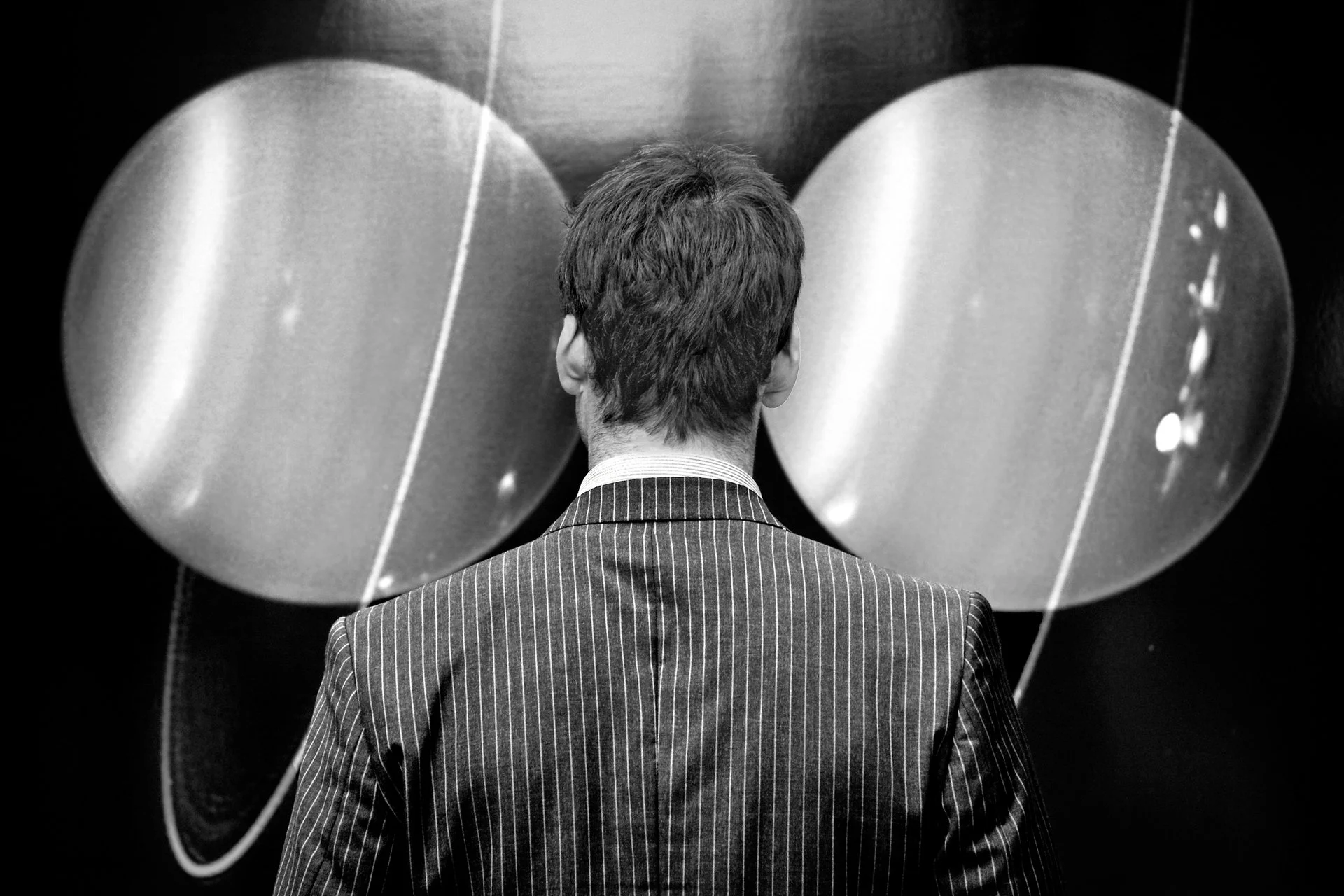
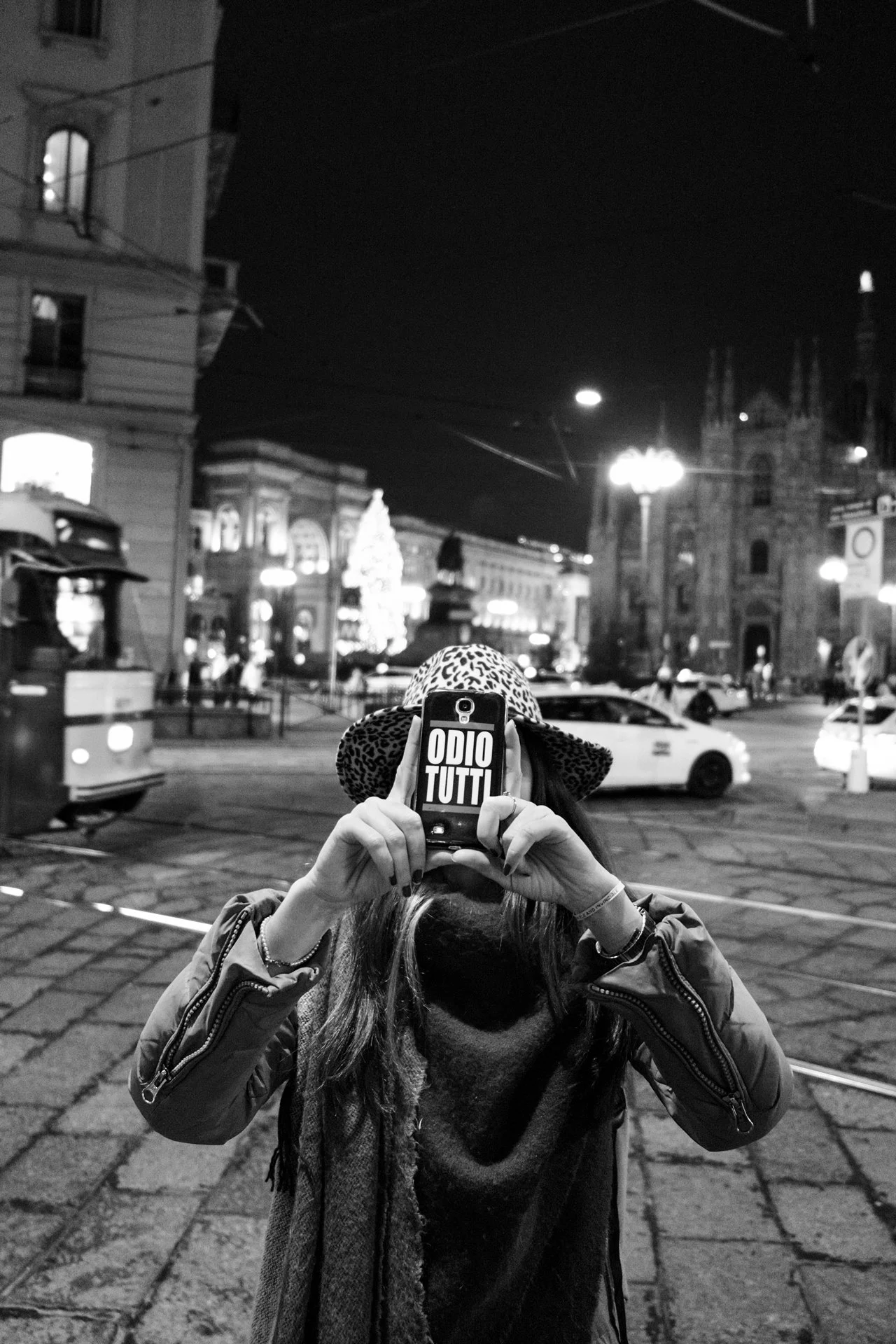
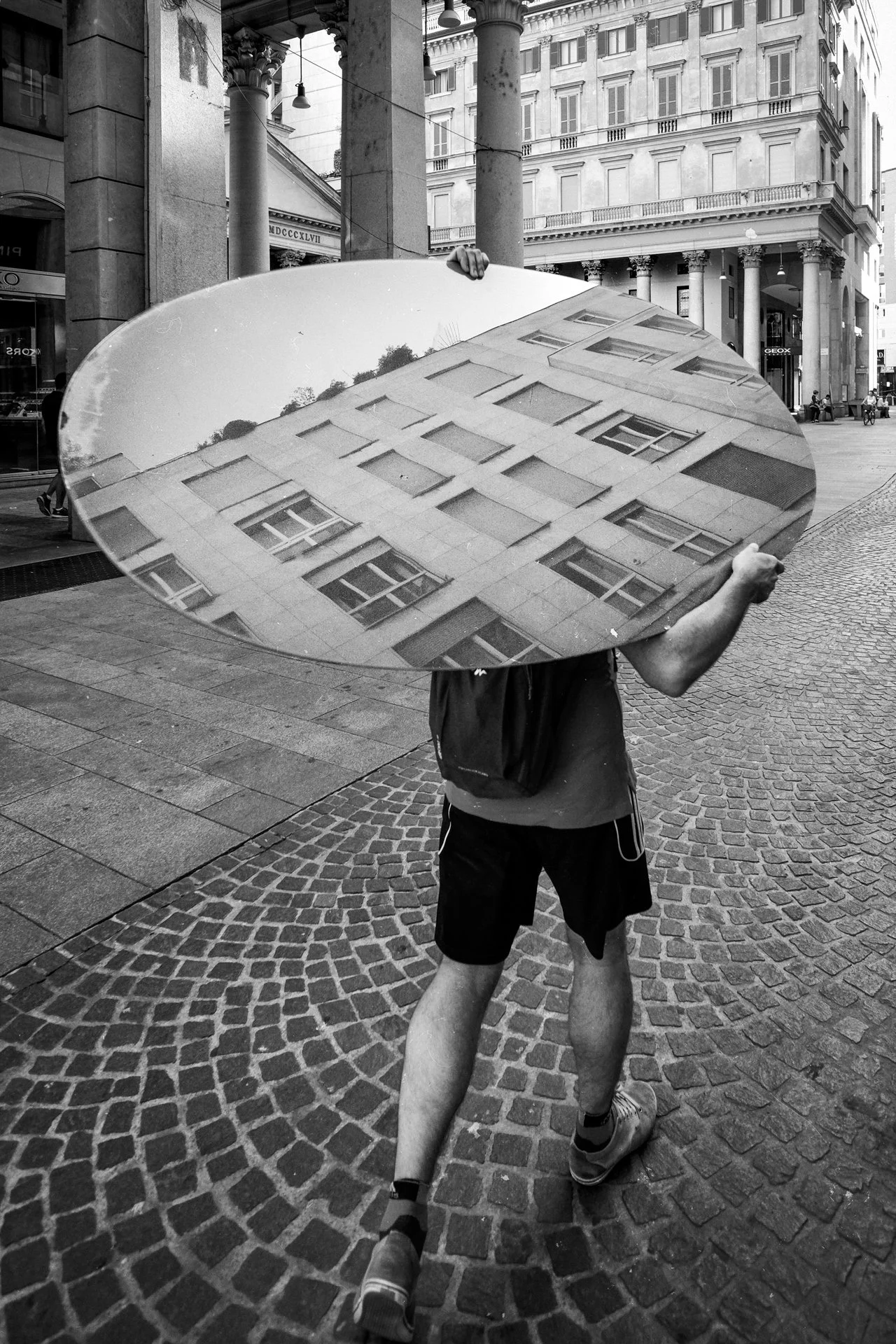
PHOTO RIDENS
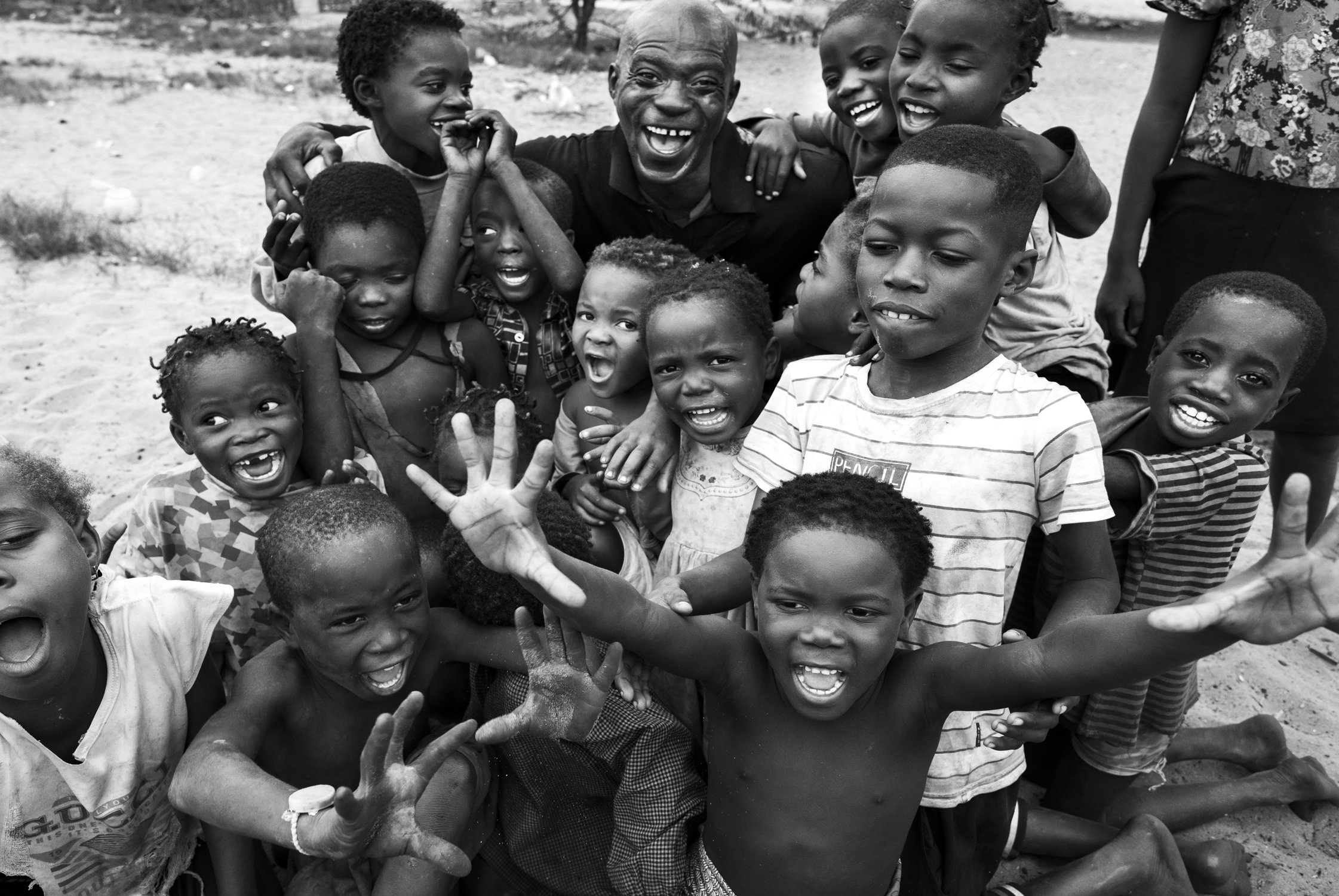
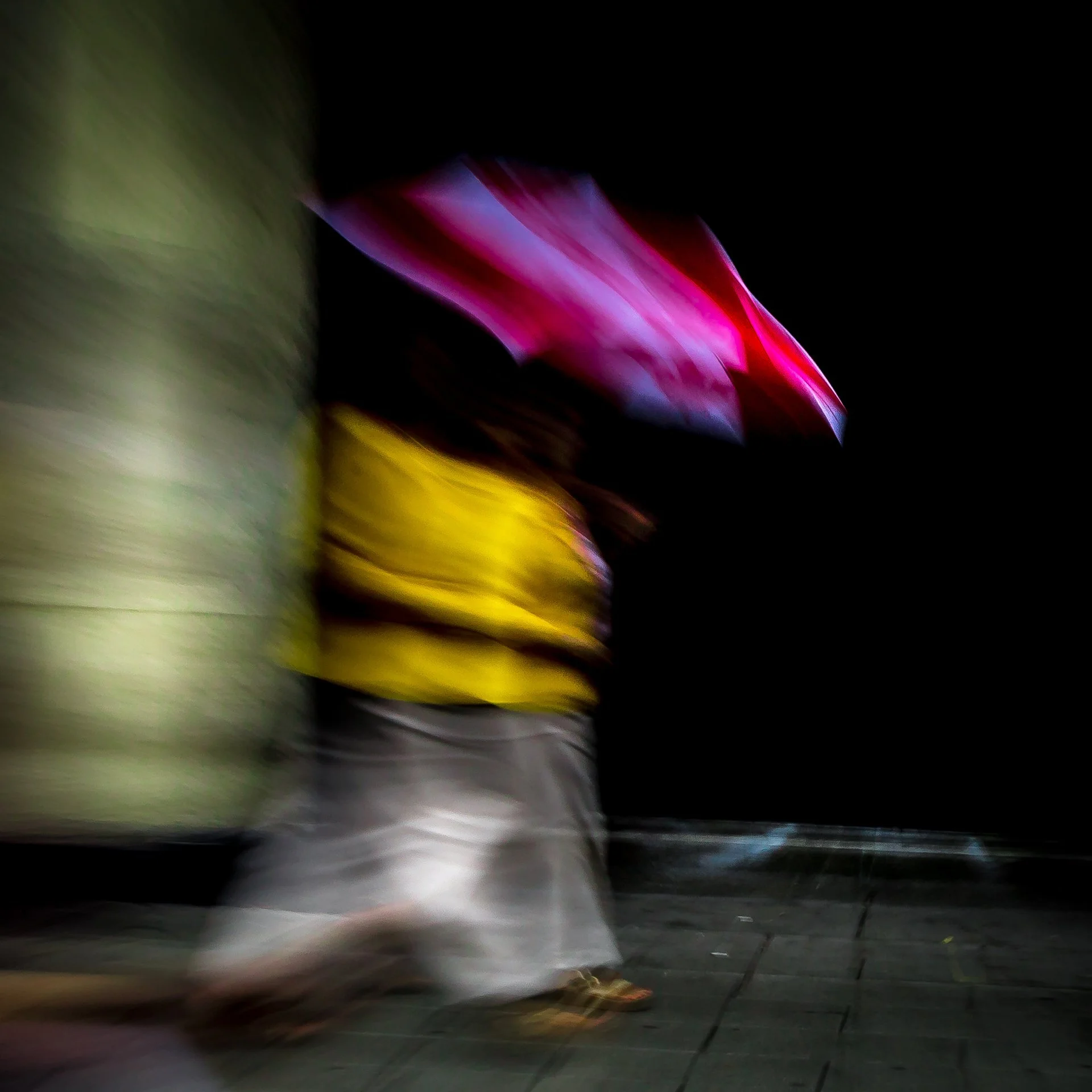
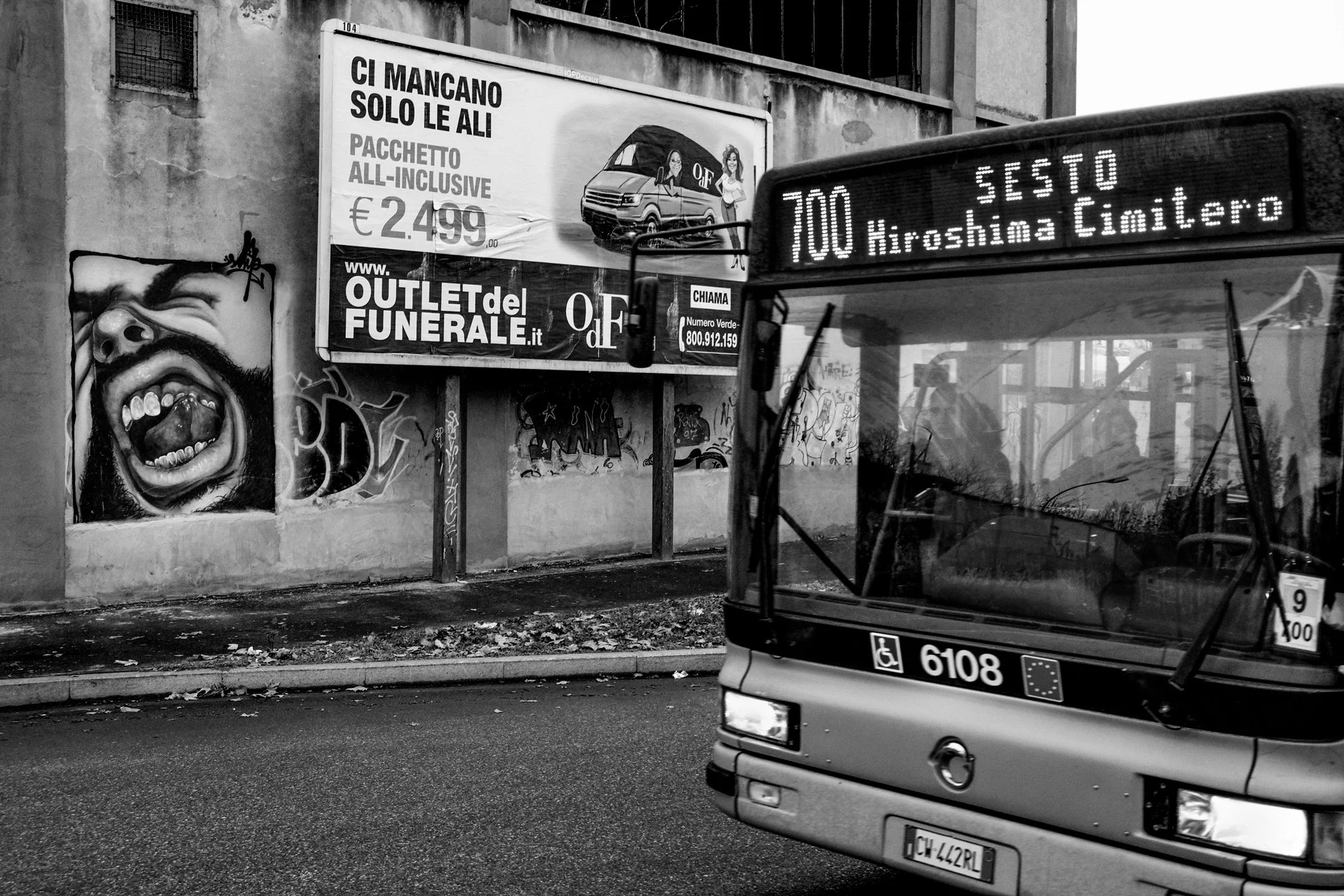
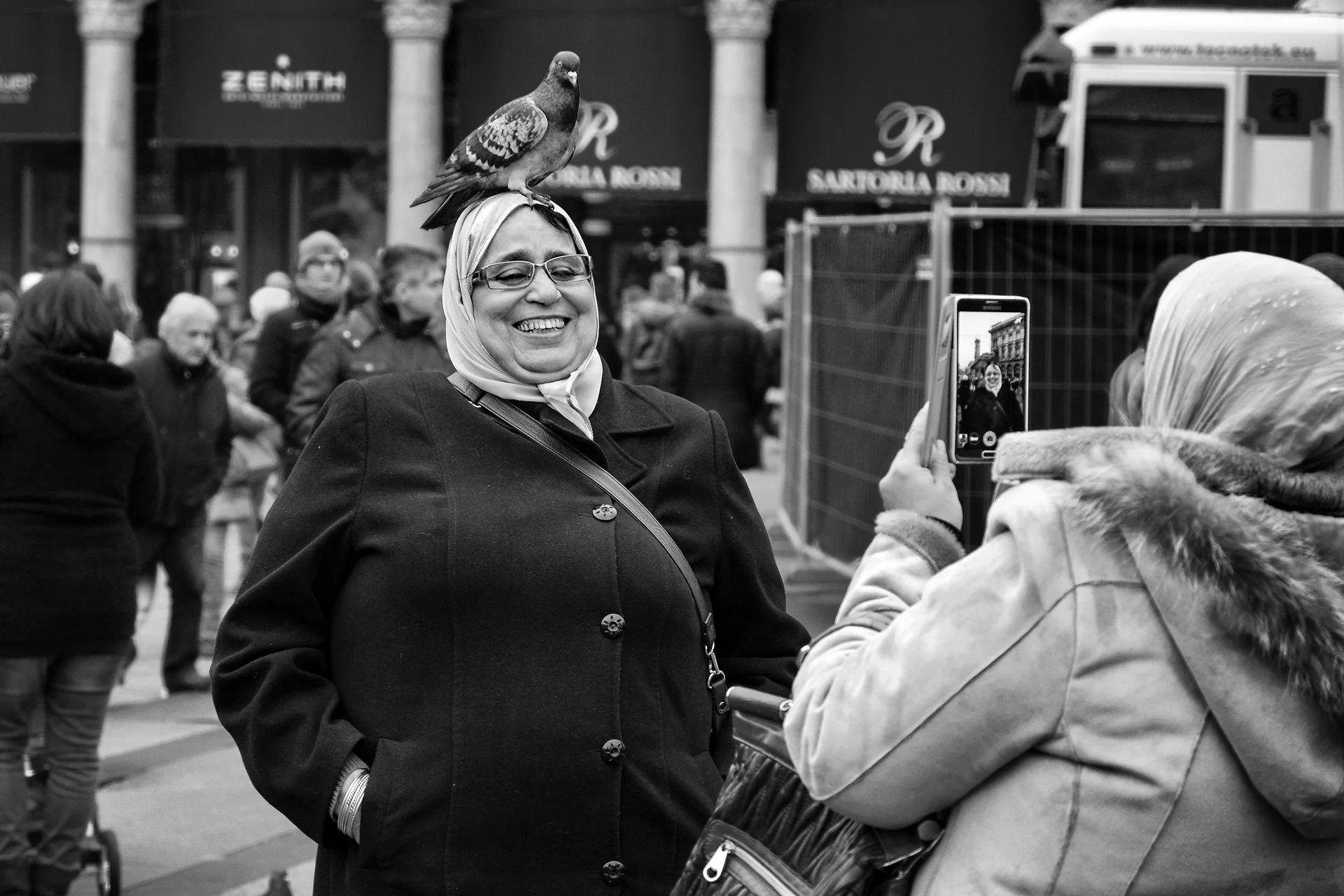
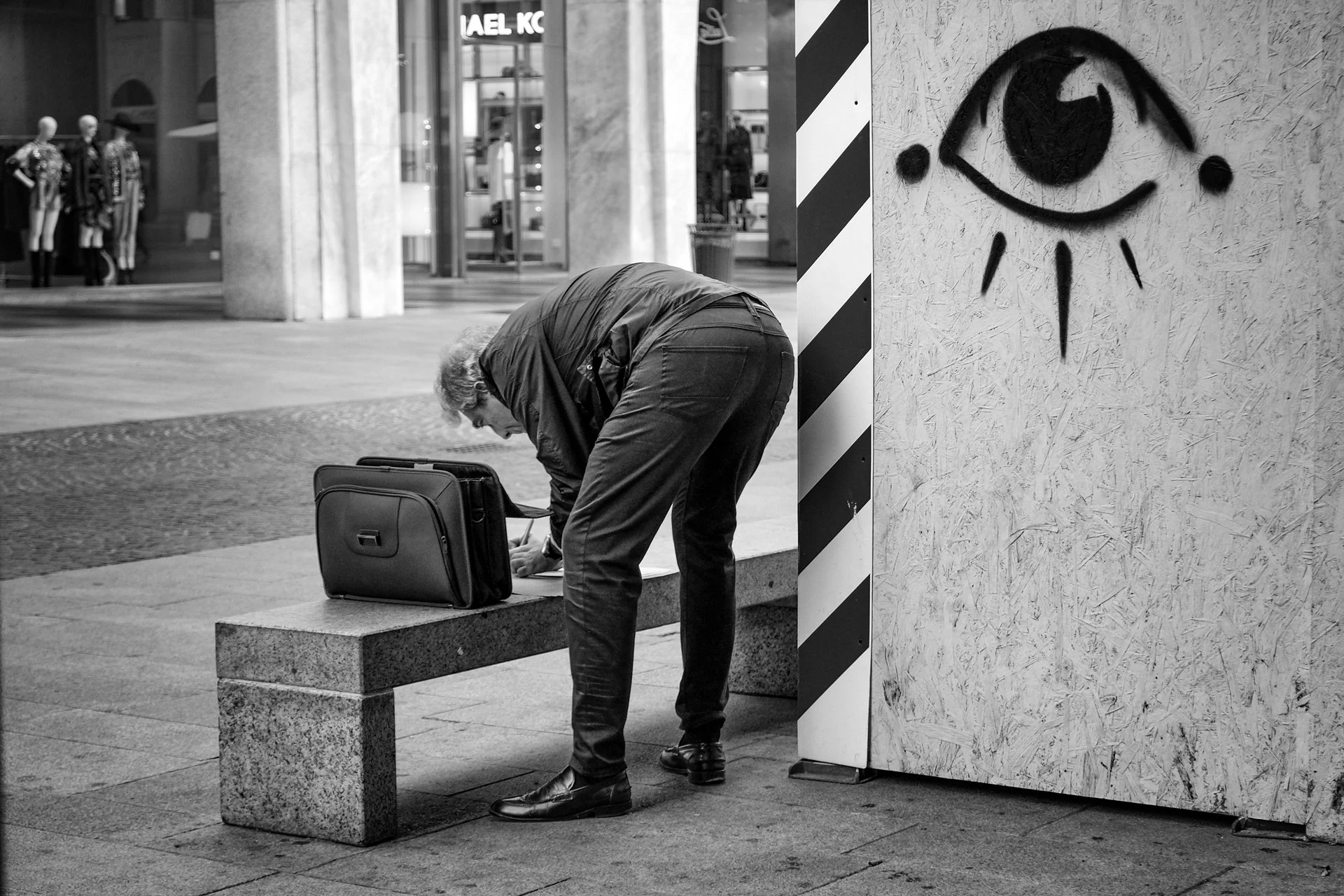
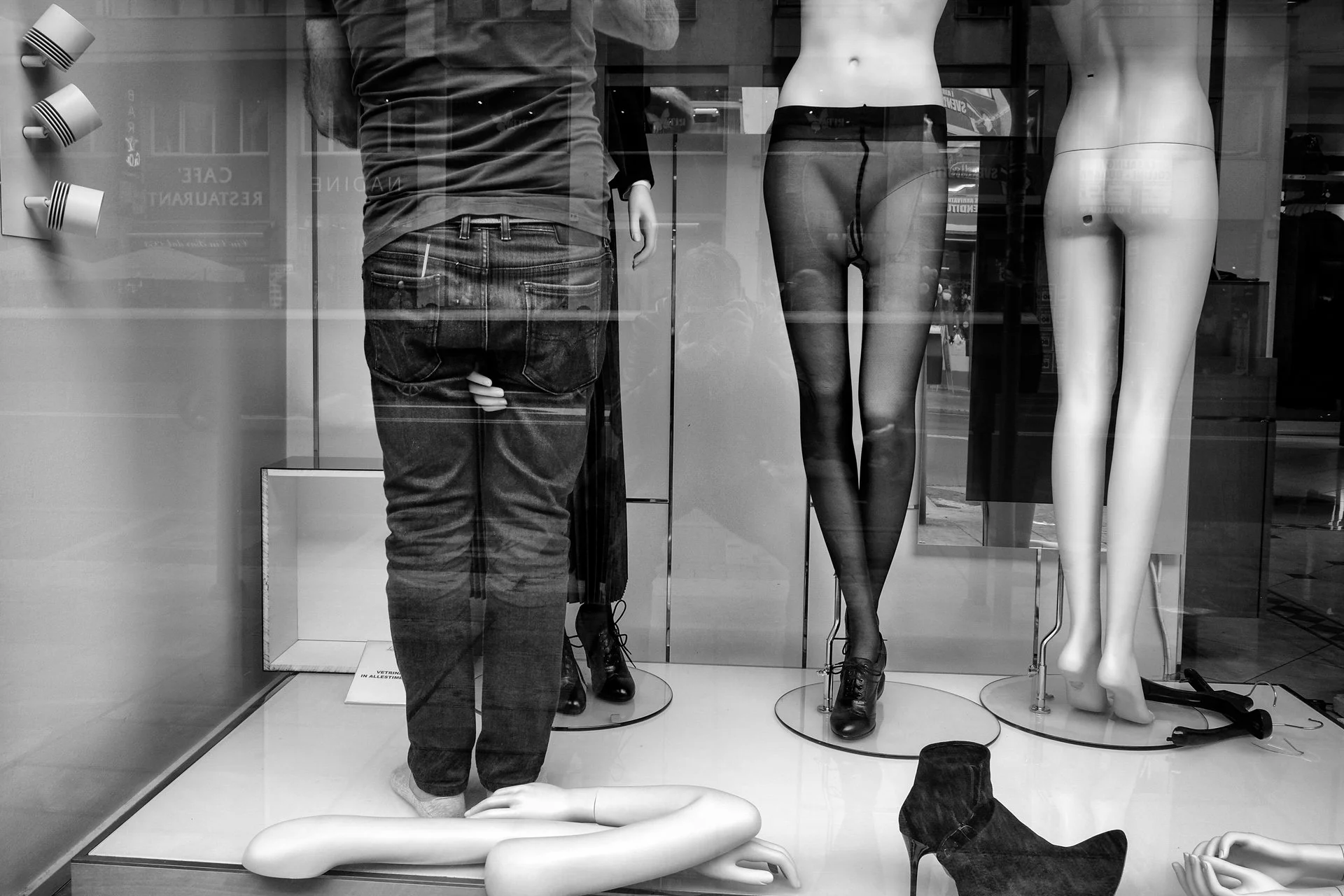
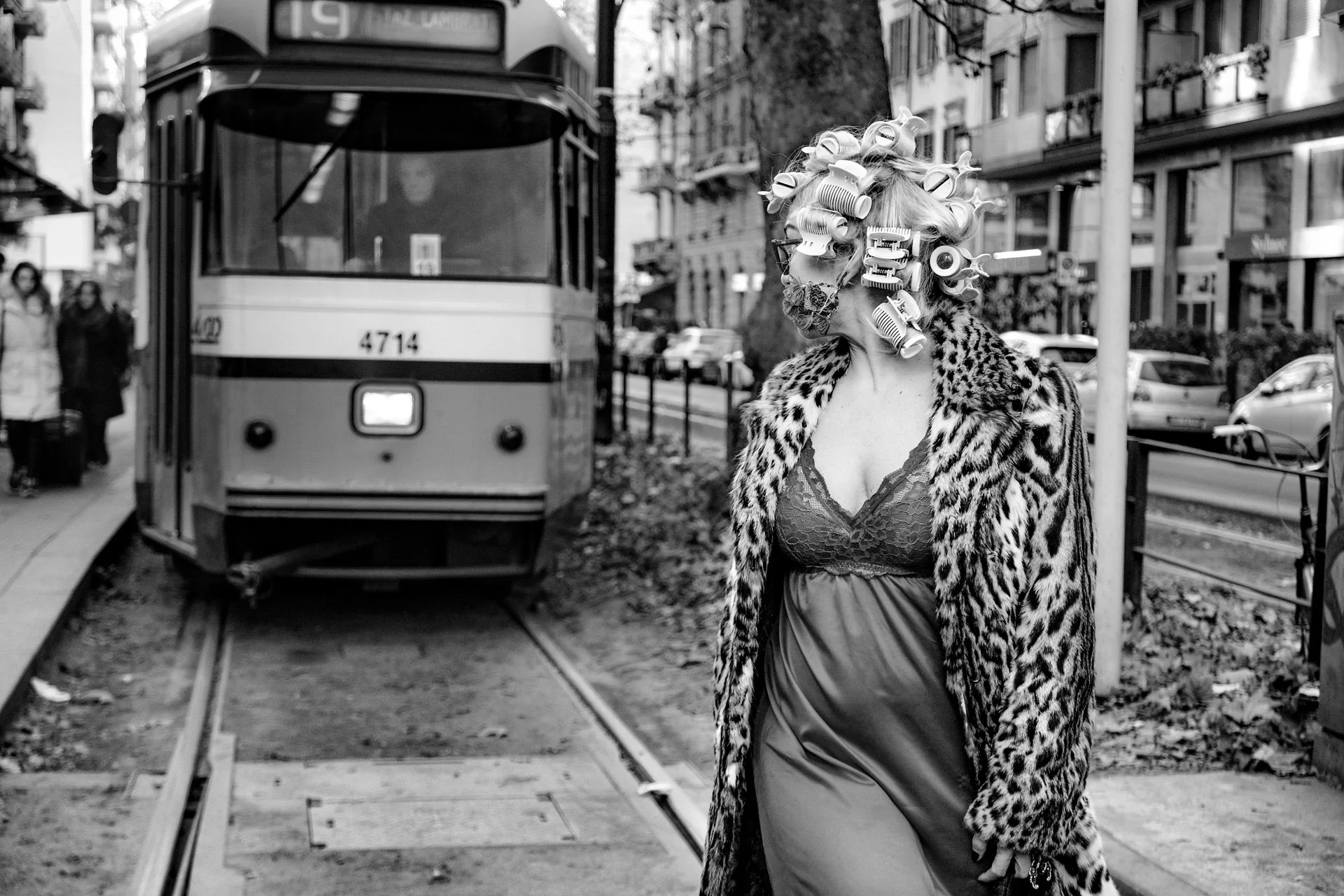
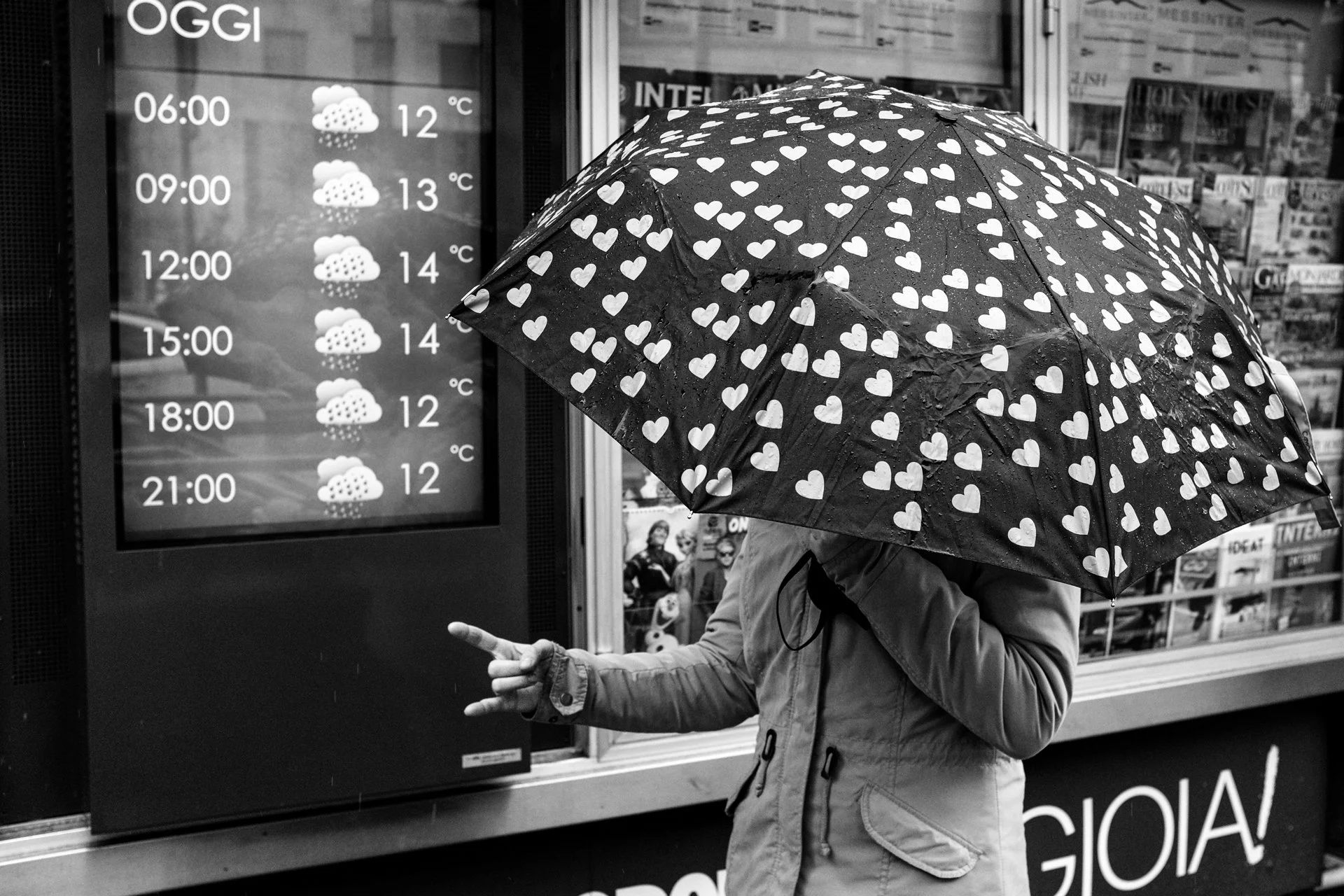
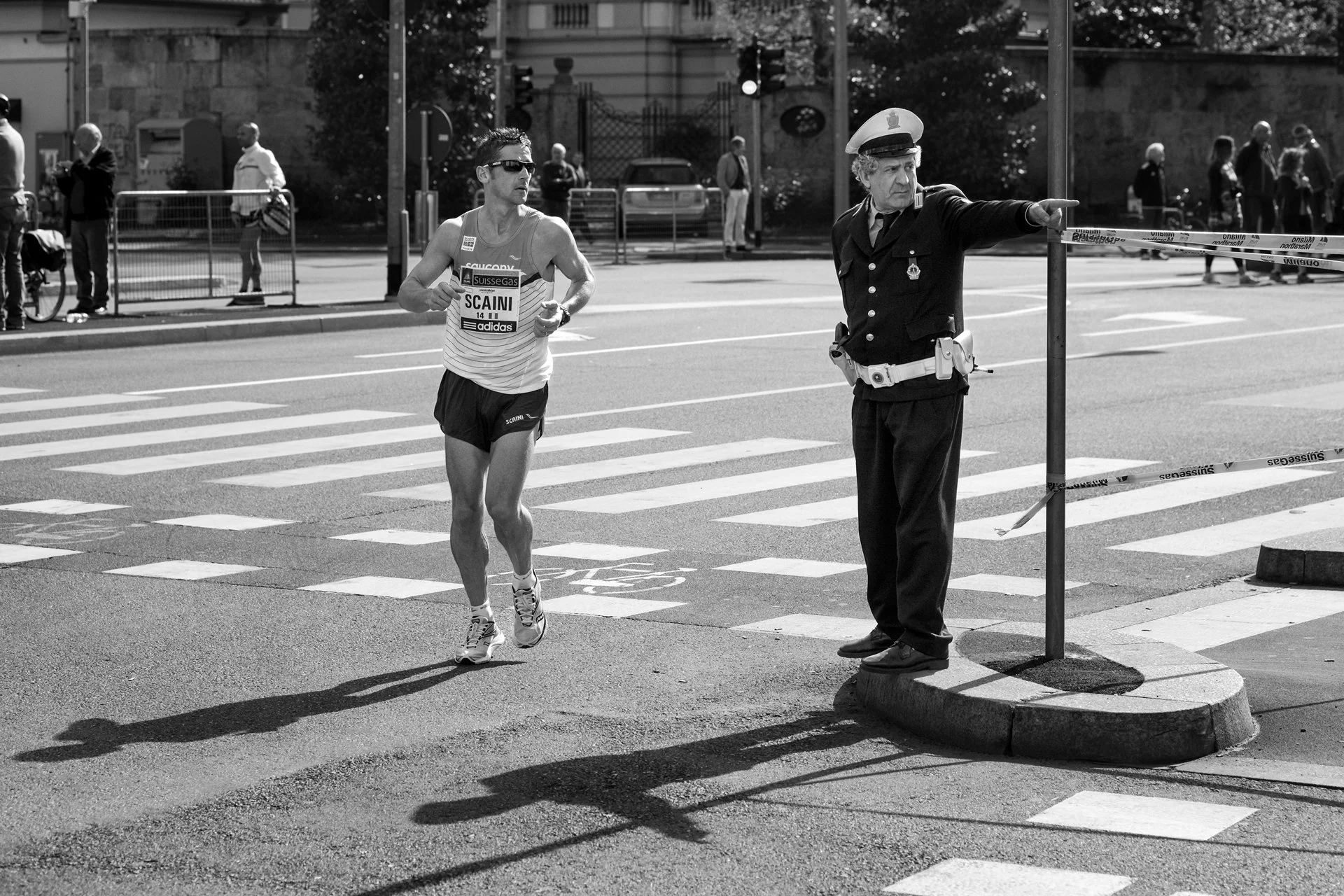
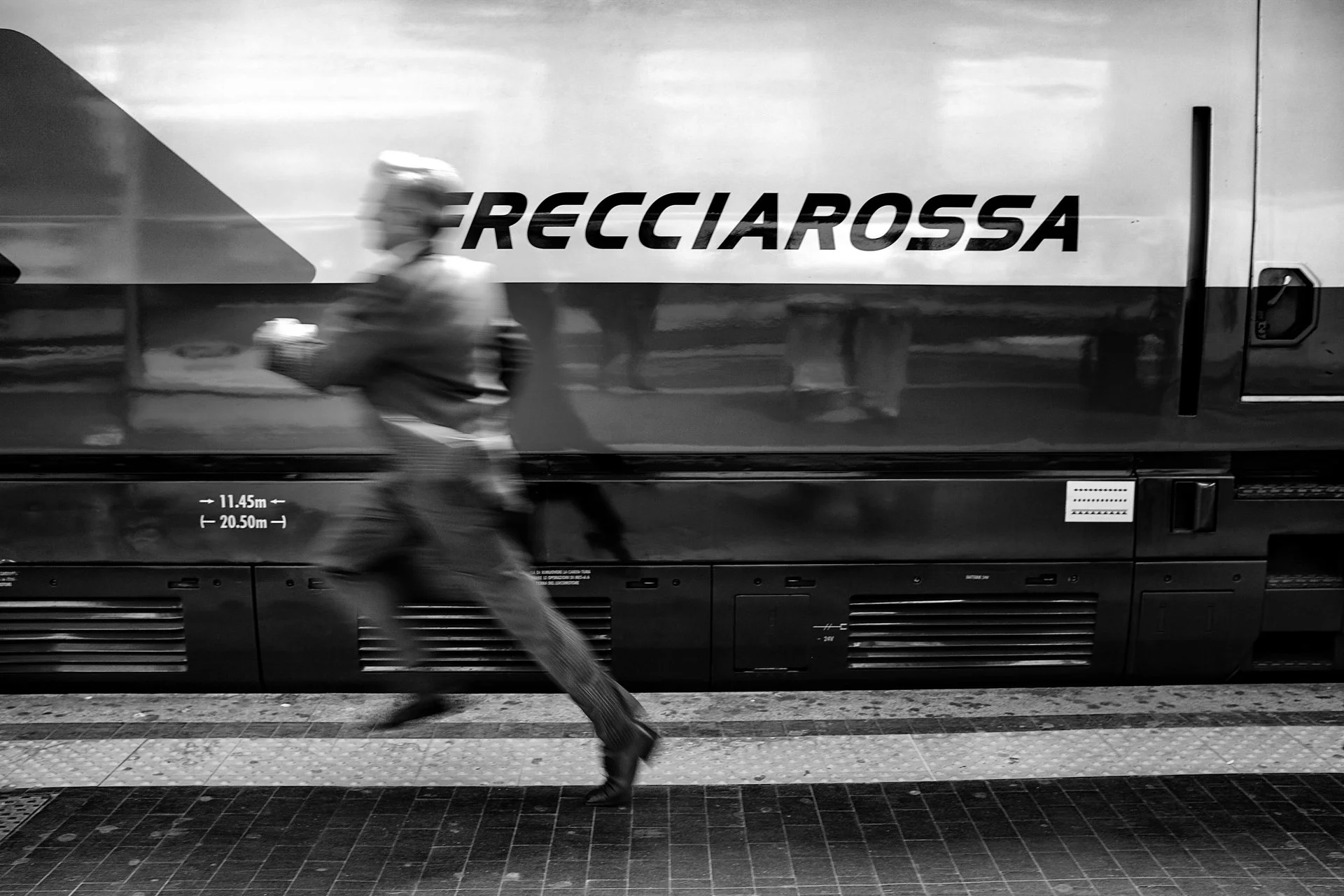
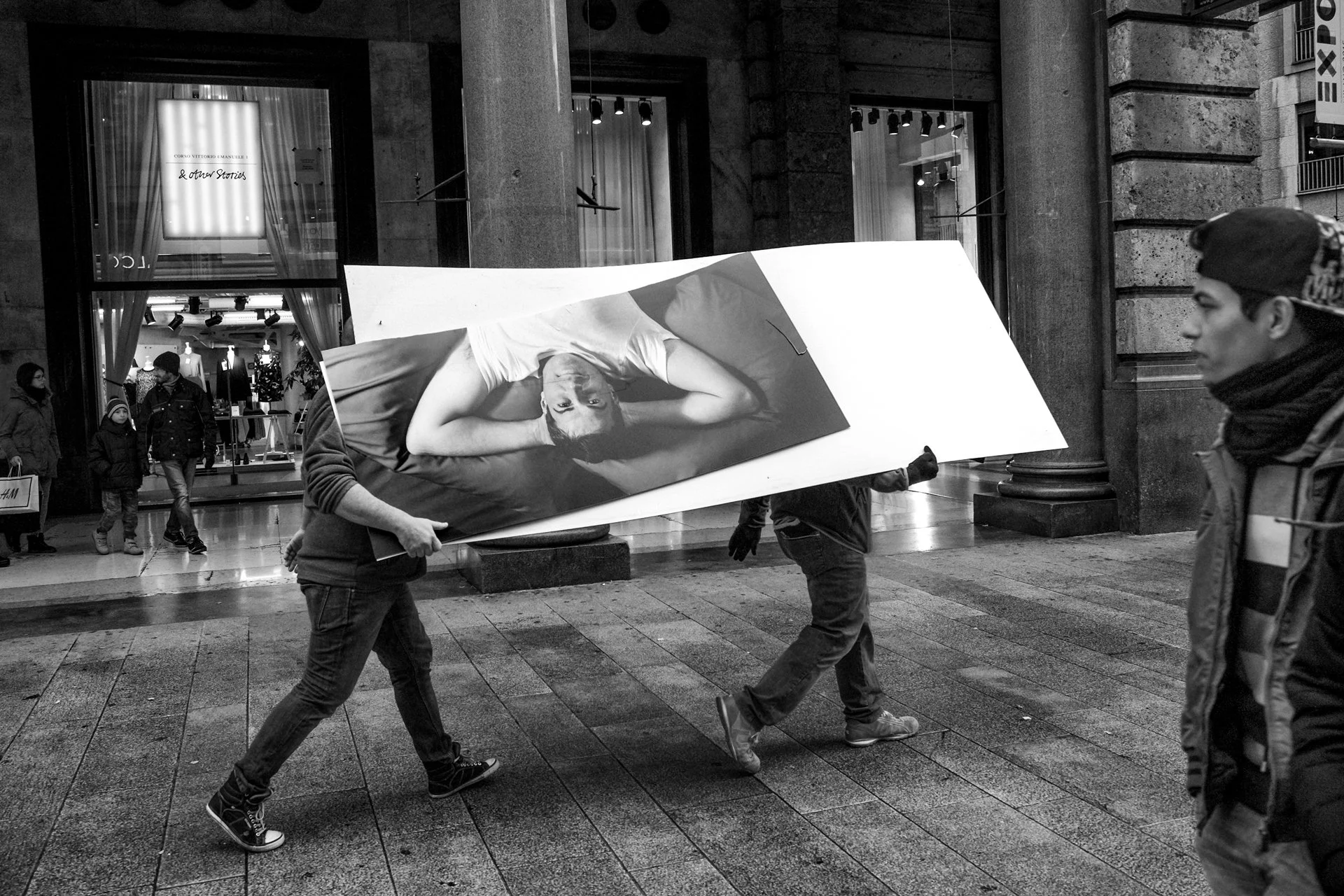
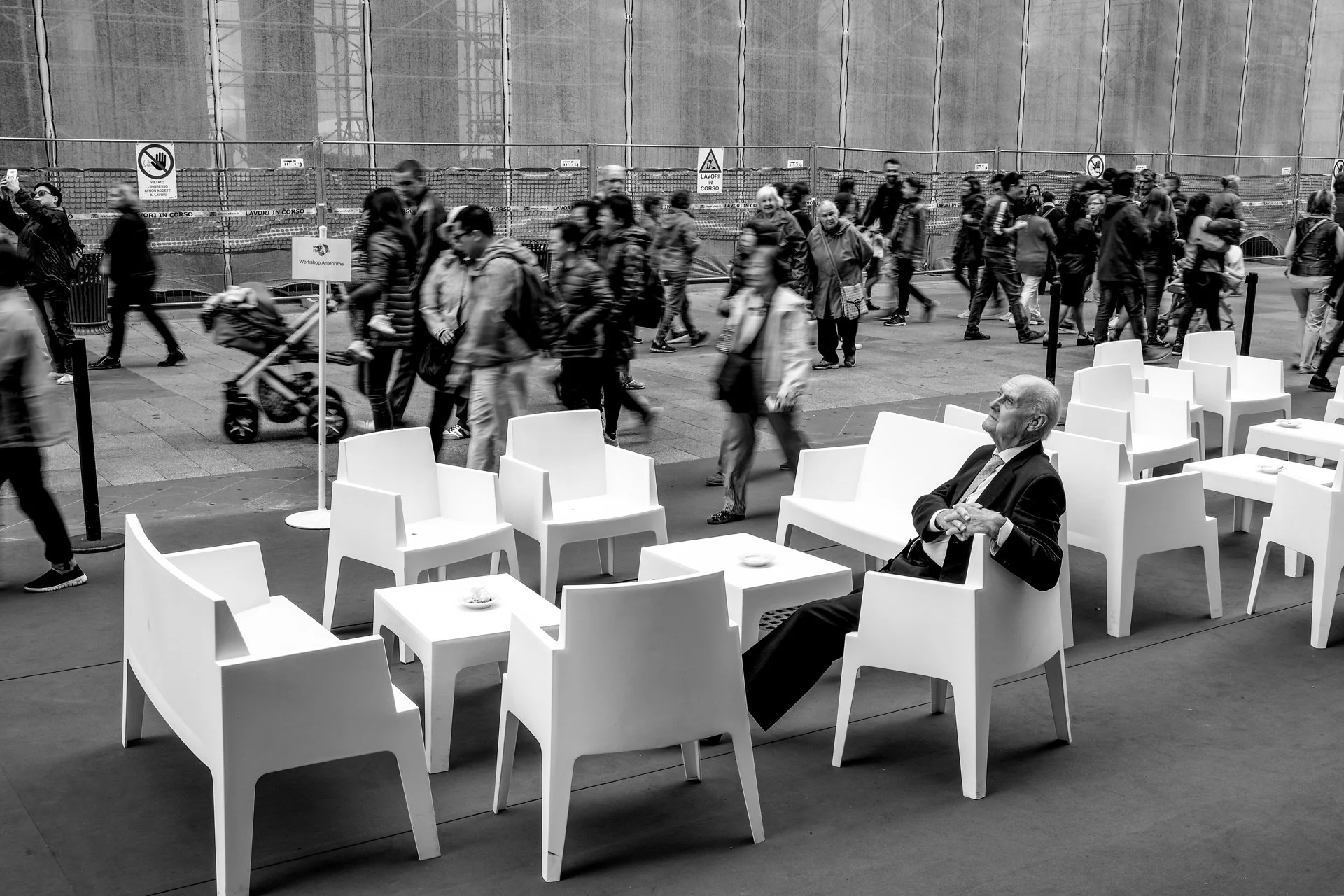
The comedian is already there, mixed with the rest, in the same place where fatigue, haste, elegance, and distraction coexist. It is a possibility, not an effect.
Il mondo c’era prima della fotografia e continuerà ad esserci anche se, un giorno, la fotografia dovesse sparire. È una considerazione banale, forse, ma non del tutto inutile quando si parla di fotografia. Perché prima di essere fotografato, il mondo semplicemente accade. Le persone camminano, si incontrano, litigano, ridono, aspettano, si annoiano. Succedono cose straordinarie e cose insignificanti, spesso nello stesso momento. La strada non ha bisogno di noi per esistere. Siamo noi ad aver bisogno della strada per fotografare.
E forse è proprio da qui che dovrebbe partire una riflessione sulla street photography: non da come una fotografia deve apparire, ma da ciò che spinge qualcuno a premere il pulsante. Ognuno di noi guarda il mondo in maniera diversa. C’è chi ne coglie l’assurdo, chi la tenerezza, chi il caos, chi la solitudine, chi le geometrie, chi il ridicolo, chi le relazioni invisibili fra le persone e ciò che le circonda. Non esiste una maniera giusta di guardarlo. Esiste, semmai, la possibilità di sviluppare uno sguardo che ci appartenga. La fotografia dovrebbe essere la conseguenza di quello sguardo. Non il contrario.
Ed è qui che, forse, qualcosa nella street photography contemporanea merita di essere osservato con attenzione. Non perché il colore sia diventato troppo importante, perché i fotogrammi siano troppo pieni o perché qualcuno abbia deciso che una fotografia debba necessariamente assomigliare a quella di un grande autore. Il problema non è il linguaggio. Il problema nasce quando il linguaggio prende il posto della necessità che dovrebbe esserci dietro. Il fill the frame, per esempio, può essere una scelta meravigliosa. Può restituire la complessità del mondo, creare relazioni imprevedibili, costringere l’occhio a muoversi dentro l’immagine. Alex Webb ne ha fatto un linguaggio straordinario.
Ma il punto non è riempire il fotogramma: è sapere perché lo si sta riempiendo. Webb non è un problema. Al contrario. È uno di quei fotografi che hanno dimostrato quanto sia possibile spingere il linguaggio fotografico senza perdere il rapporto con ciò che si sta guardando. Il problema arriva dopo, quando di un grande autore rimane soltanto la grammatica esteriore. Quando si prende il fill the frame, la stratificazione, il colore, la complessità e li si trasforma in una specie di ricetta. Lo stesso discorso, per ragioni completamente diverse, può essere fatto per altri grandi autori come Bruce Gilden. La sua prossimità estrema, il flash, la violenza dell’impatto non sono semplicemente degli espedienti estetici: sono parte di una precisa idea della strada e del modo in cui entrarci in relazione. Imitare il risultato senza possedere la necessità che lo ha prodotto è però un'altra cosa.
E questo vale per qualsiasi scelta stilistica. Il flash, il colore, la prossimità, la stratificazione, la geometria, il momento decisivo. Tutto può essere potentissimo quando nasce da una necessità personale. Tutto può diventare maniera quando viene utilizzato perché sappiamo che quella cosa “funziona”. A quel punto l’umanità che abbiamo davanti rischia di non essere più il soggetto del nostro desiderio, ma un elemento della composizione. Un colore, una forma, una silhouette, un contrasto. La fotografia può essere impeccabile e, tuttavia, non avere nulla da dire. Non è una questione di semplicità contro complessità.
Una fotografia piena può essere straordinariamente umana, così come una fotografia apparentemente semplice può essere vuota. L’umanità di una fotografia non dipende nemmeno necessariamente dal fatto che dentro ci sia una persona. Dipende dallo sguardo che la produce. Forse è questa la differenza fra avere uno stile e avere una voce. Lo stile si può imparare. Una voce, forse, si costruisce lentamente attraverso tutto ciò che abbiamo visto, amato, studiato e vissuto.
Ma sarebbe troppo semplice attribuire tutto ai fotografi. Attorno alla street photography si è costruito, negli ultimi anni, un ecosistema che ha contribuito a rendere questo fenomeno sempre più evidente. I brand fotografici hanno spesso raccontato la fotografia di strada come qualcosa di immediatamente accessibile. In fondo basta una macchina fotografica, una strada e qualche passante. È vero, almeno in parte.
Fotografare in strada è relativamente semplice. Fare fotografia di strada, invece, non lo è affatto. Tra le due cose c’è di mezzo tutto ciò che una macchina fotografica non può comprare: uno sguardo, una sensibilità, una capacità di stare nel mondo prima ancora che dietro ad una macchina fotografica. Anche i concorsi, pur svolgendo un ruolo importante e spesso meritorio, finiscono inevitabilmente per codificare un’estetica. Non necessariamente per malafede, ma perché ogni giuria deve fare delle scelte e ogni scelta tende a riconoscere ciò che è in grado di leggere. Certi colori, certe composizioni, una determinata densità del fotogramma, situazioni particolarmente spettacolari o immediatamente leggibili.
Nulla di tutto questo è sbagliato in sé. Diventa un problema quando smette di essere una possibilità e comincia a sembrare una regola. Così il fotografo rischia di porsi una domanda diversa. Non più: “Che cosa vedo?”. Ma: “Che cosa potrebbe funzionare?”. È una differenza sottile, ma decisiva. Perché “funzionare” è diventato uno dei criteri più influenti della fotografia contemporanea. Funzionare in un concorso. Funzionare sui social. Funzionare in una mostra. Funzionare in un festival. Essere immediatamente leggibile, riconoscibile, sorprendente. I festival, che dovrebbero essere luoghi di confronto e scoperta, non sono immuni da questo meccanismo. Spesso ritornano gli stessi autori, gli stessi linguaggi, le stesse estetiche.
Anche qui, niente di scandaloso: è il modo in cui i sistemi culturali tendono a consolidarsi. Ma il rischio è che la fotografia di strada finisca per assomigliare sempre di più a ciò che il sistema riconosce come fotografia di strada. Si crea così un paradosso curioso. Un genere nato dall’imprevedibilità del mondo rischia, talvolta, di diventare prevedibile nel modo in cui lo rappresenta. Non credo però che ci sia un complotto, né che qualcuno abbia deciso deliberatamente di omologare la street photography.
È qualcosa di molto più semplice. Un sistema tende naturalmente a riprodurre ciò che riconosce, ciò che sa valutare e ciò che ha già imparato a considerare valido. E i fotografi, naturalmente, imparano a loro volta a leggere quel sistema. Anche i social hanno semplicemente accelerato questo meccanismo. Se una certa fotografia cattura immediatamente l’attenzione, viene condivisa. Se è riconoscibile in mezzo a cento altre immagini, ancora meglio. Se un determinato linguaggio sembra funzionare, viene ripetuto. Si crea un circuito nel quale ciò che viene visto viene replicato, ciò che viene replicato viene riconosciuto e ciò che viene riconosciuto diventa ancora più visibile. Il rischio, a quel punto, è che la strada diventi semplicemente il luogo nel quale applicare una formula.
Eppure la strada continua a essere molto più vasta di qualsiasi linguaggio. Continua a produrre situazioni che non assomigliano necessariamente a quelle che abbiamo imparato a riconoscere come “buona street photography”. Continua a offrirci l’ironia, il dramma, la tenerezza, l’assurdo, la banalità e tutto ciò che sta nel mezzo. Forse il compito del fotografo è prima di tutto quello di esserci. Di osservare. Di lasciarsi sorprendere. Di riconoscere, quando accade, qualcosa che appartiene alla propria idea del mondo.
Perché l’umanità di una fotografia di strada non dovrebbe essere un ingrediente da aggiungere alla fine, come si aggiunge un elemento alla composizione. Dovrebbe essere il risultato di tutto ciò che è venuto prima: il modo in cui guardiamo, ciò che ci interessa, ciò che ci emoziona, ciò che ci fa ridere, ciò che ci inquieta, il modo in cui interpretiamo gli altri e il mondo nel quale viviamo. La persona davanti all’obiettivo, allora, non è semplicemente un soggetto. È il punto nel quale, per un istante, la nostra idea del mondo incontra il mondo reale.
Del resto, sarebbe ingenuo pensare che il compito di un fotografo sia quello di inventare qualcosa che non è mai stato fatto prima. La storia della fotografia è fatta anche di assorbimenti, influenze, citazioni, sviluppi, contaminazioni. Guardiamo le fotografie degli altri, ne rimaniamo colpiti, qualcosa ci resta addosso e prima o poi riemerge nelle nostre immagini. È sempre stato così. I geni, quelli che cambiano davvero il corso di un linguaggio, sono pochissimi. In un secolo probabilmente si contano sulle dita di una mano. Tutti noi, chi più chi meno, lavoriamo su qualcosa che esiste già. Possiamo svilupparlo, contaminarlo, portarlo altrove, farlo nostro.
Non c’è niente di male nel non inventare. La differenza sta forse in ciò che accade durante quel passaggio. Un’immagine può assomigliare a mille altre e, nello stesso tempo, essere profondamente personale. Può utilizzare un linguaggio già conosciuto, un modo di comporre già sperimentato, persino un’estetica riconoscibile. Quello che conta è che, prima di arrivare al fotogramma, tutto questo sia passato attraverso il nostro modo di guardare. Non abbiamo bisogno di inventare una nuova street photography.
Abbiamo bisogno, molto più semplicemente, di avere qualcosa da dire attraverso quella che già esiste. Forse allora la vera sfida non è fare una fotografia che nessuno abbia mai fatto prima. È fare una fotografia nella quale, pur riconoscendo mille padri, ci sia qualcosa che appartenga soltanto a noi. Perché il mondo continuerà ad accadere anche senza la fotografia. Sta a noi fare in modo che, quando lo fotografiamo, non sembri soltanto che abbiamo imparato bene la ricetta per fotografarlo.